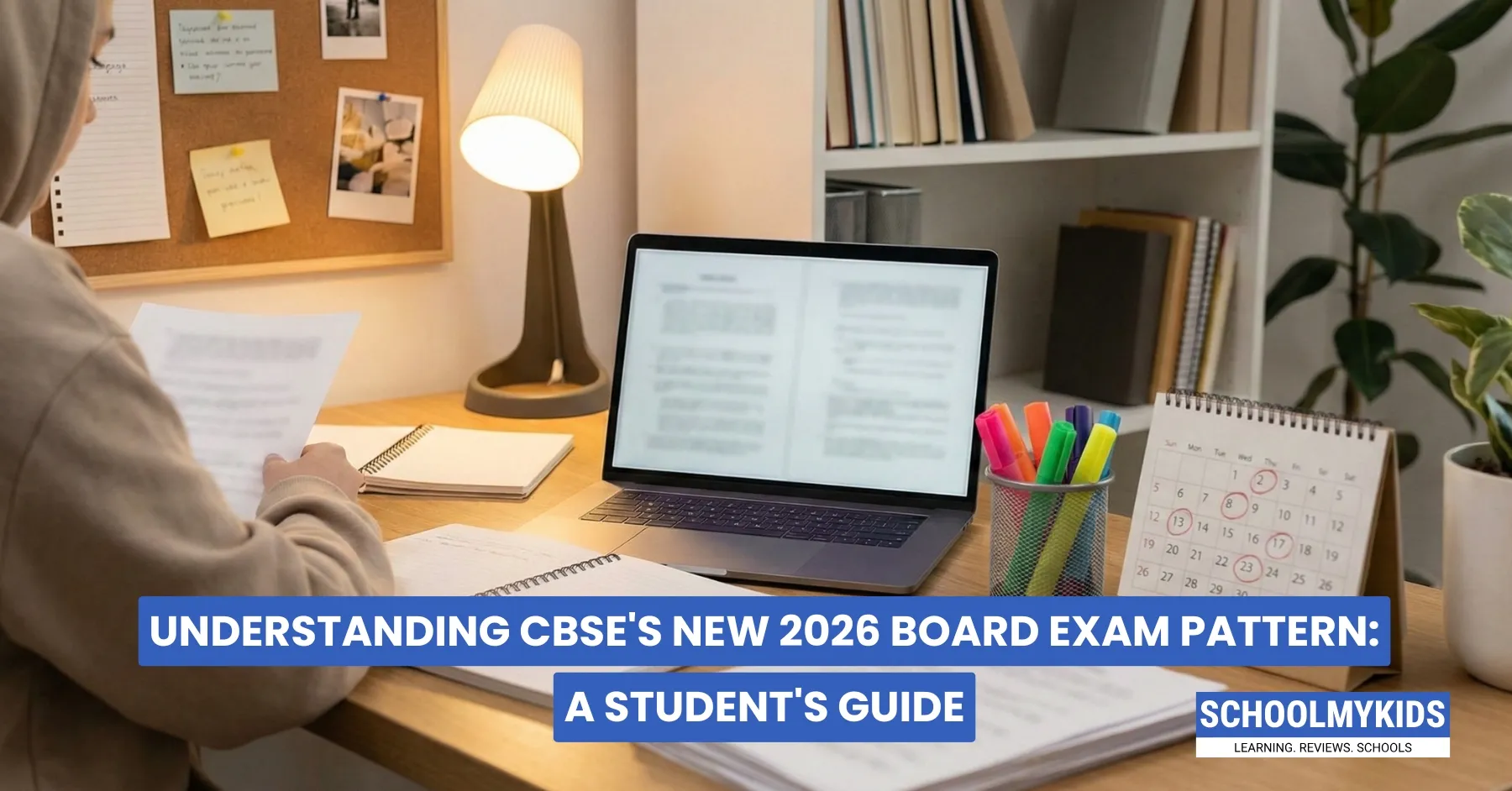
CBSE is changing things up for the 2026 board exams. And we get it, change can feel scary, especially when it's about something as important as your board exams. But here's the thing: these changes are actually designed to make things better for you.
What's Actually Changing?
Starting February 2026, your board exam paper is going to look different.
Half your exam will now be competency-based questions. These are things like case studies, real-life problem scenarios, data interpretation questions, and situations where you need to actually think and apply what you've learned.
Another 20% will be MCQs (multiple-choice questions), and the remaining 30% will be your regular short and long answer questions.
Compare this to what you're used to, where most of the paper was about writing long answers based on what you memorized from the textbook. That's changing.
But Why This Change?
When was the last time you used something you memorized word-for-word from a textbook in real life? Probably never, right?
CBSE is following the National Education Policy 2020, which basically says students should learn how to think, not just remember. The idea is that education should prepare you for the real world, not just for passing an exam.
So instead of asking you to write down the exact definition of photosynthesis, a question might give you a case study about a farmer's crop yield and ask you to analyze what's happening using your knowledge of plant biology. See the difference? It's about understanding, not memorizing.
What Does This Mean for How You Study?
Your study strategy needs to shift.
First, stop relying on just mugging up answers. That won't work anymore. Instead, focus on understanding the concepts. When you're studying a chapter, ask yourself: "Why does this happen? How does this work? Where would I see this in real life?"
Second, practice different types of questions. Get your hands on case-based questions, MCQs, and data interpretation problems. CBSE has released sample papers, so use them. They're your best friend right now.
Third, connect what you're learning to the real world. If you're studying acids and bases in chemistry, think about how they're used in everyday products. If you're learning about the Indian economy, relate it to what you see in the news. This kind of thinking is exactly what the new format is testing.
The Big News: Two Board Exams for Class 10
If you're in Class 10, you'll now have two chances to take your board exam in the same year.
The first exam happens in February 2026 (and this one is mandatory). Results come out in April. Then there's a second exam in May or June where you can improve your scores in up to three subjects. Your final result will show your best score.
This is actually really good news. It means if you mess up one exam or have a bad day, you're not stuck with that result forever. You get another shot within the same year. Less pressure, more flexibility.
Internal Assessments Matter Now
Internal assessments will carry more weight in your final grade.
This includes your projects, lab work, assignments, and class participation. It's not just about that one final exam anymore. What you do throughout the year actually counts.
This might feel like more work, but it's actually fairer. You're being judged on your overall learning, not just how well you performed on one stressful day.
How Should You Prepare?
- Start early: Don't wait until the last minute because cramming won't cut it with competency-based questions. You need time to understand concepts properly.
- Read your NCERT textbooks carefully: They're still your foundation. But don't just memorize; try to understand the logic behind everything.
- Practice MCQs and case studies regularly: These formats require quick thinking and decision-making. The more you practice, the better you'll get.
- Work on your time management: With 50% of the paper being MCQs and competency-based questions, you need to be quick and accurate. Practice with a timer.
- Don't skip your projects and internal assessments: They're part of your final grade now, so take them seriously.
The Real Reason Behind These Changes
CBSE isn't doing this to make your life harder. The goal is to make education more meaningful.
For years, students have been complaining that board exams are just about memory tests. You study hard, write the exam, and then forget everything in a month. That's not real learning.
These changes are meant to develop skills you'll actually use, including analytical thinking, problem-solving, and applying knowledge to real situations. These are skills that'll help you in college, in your career, and in life.
Plus, this brings Indian education more in line with global standards. Universities and employers worldwide value these competency-based skills.
Conclusion
Adjusting to this new format will take effort. You'll need to change how you study and how you think about exams.
But once you get used to it, you'll realize this system is actually better. It's less about pressure and more about understanding. Less about memorization and more about thinking. Less about one exam deciding everything and more about your overall performance throughout the year.
So take a deep breath. Start preparing with the right mindset. Focus on understanding over memorizing. And remember, you've got this. These changes are designed to help you succeed, not to trip you up.
Your board exams in 2026 won't just test what you know; they'll test how well you can think, analyze, and apply what you've learned. And that's exactly what education should be about.



Be the first one to comment on this story.