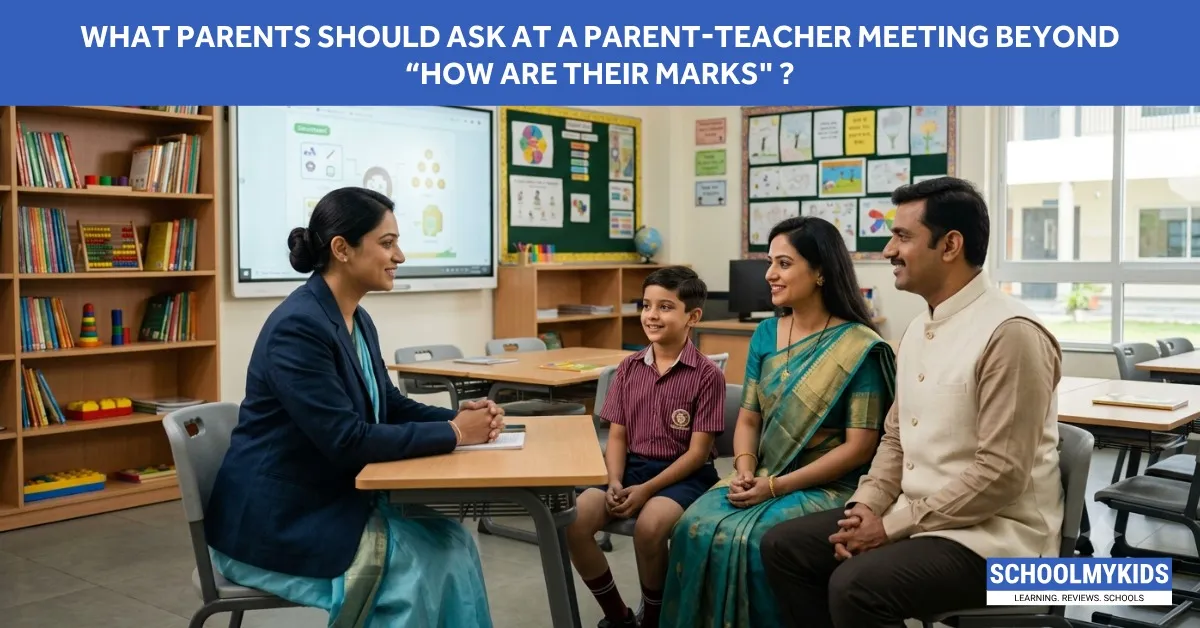
You sit down. The teacher says, “Your son’s doing well. Math is good. English needs work.” You nod. Walk out. Realize you have no idea what actually happened.
This is most parent-teacher meetings these days. Five minutes. Focus on grades. Completely miss everything that matters.
Your child’s relationship with learning. Whether they’re confident. If they’re anxious. How they handle failure. Whether they’re making friends. If the teacher even knows them as a person. None of that shows up in marks.
Yet those things determine whether your child succeeds in school or just survives it. Whether they love learning or hate it by Class 5. Whether they have resilience or fall apart under pressure.
Marks tell you how well your child performed on that particular test. Everything else tells you whether they’re okay.
What Actually Matters (And What Doesn’t)
A mark is one moment in time. Your child showed up on exam day. Performed at that moment. Got that score. That’s it. It doesn’t tell you if they understood the material. If they studied. If they care. If they have a learning disability. If they were sick.
But whether your child spoke up in class today. Whether they’re making friends. Whether they asked a question they were scared to ask. Whether they helped a classmate. Whether they’re curious. Whether they’re anxious about coming to school. That tells you everything about their actual experience.
A parent asked a teacher recently, “Is my daughter happy in your class?” The teacher looked confused. The question had never come up. Parents ask about marks. Teachers report marks. The actual child experience doesn’t get discussed.
The Questions That Actually Matter
“Does My Child Participate in Class?”
Not “Is my child smart?” Participation tells you if your child feels safe raising their hand. If they’re confident enough to risk getting an answer wrong. If they’re engaged or just sitting there.
A kid who never raises their hand might be shy. Might have anxiety. Might not understand and be too embarrassed to ask. Might be bored. Each requires a different response from you.
The teacher knows. Ask them. “When my child does speak up, what does it sound like? Are they thoughtful? Do they make jokes? Are they asking questions?” This tells you how your child experiences learning.
“How Does My Child Handle Mistakes?”
This matters a lot more than whether they got something right. When your kid makes a mistake, do they laugh it off? Do they get frustrated? Do they cry? Do they ignore it? Do they try to fix it?
How children handle failure strongly shapes their future. A kid who can laugh at mistakes and try again becomes an adult who takes risks. One who falls apart becomes an adult who avoids challenges.
Ask the teacher, “When my child gets something wrong, what happens next?” You’re not asking if they’re good at math. You’re asking if they have resilience.
“Is My Child Making Friends?”
This doesn’t mean “popular.” It means does your child have someone to sit with at lunch. Someone to do a project with. Someone they talk to.
Social connection is one of the strongest predictors of school success, often matching or exceeding the influence of IQ and family income in many studies. A child with friends thrives. A lonely child struggles no matter how smart they are.
Your child might be getting A’s and be completely isolated. That’s a crisis. The teacher sees social dynamics you don’t. Ask them directly.
“Does My Child Seem Anxious?”
This is specific. Not “Is my child fine?” But actual anxiety symptoms. Do they panic about tests? Do they get stomachaches before school? Do they avoid certain situations? Do they seem tense?
Anxiety that shows up in Class 3 and goes unaddressed often becomes more severe by Class 8. It compounds. The teacher sees the early signs. Parents miss them because they see their kid at home where they’re comfortable.
If a teacher says “your child seems stressed,” take that seriously. That’s not a minor thing.
“What Does My Child’s Learning Style Actually Look Like?”
Your kid learns differently than other kids. Some focus better with visual support. Some need movement. Some need quiet. Some need to talk it through.
The teacher watches your child learn for six hours daily. They see how your child takes in information. What helps them focus. What distracts them.
This isn’t magical learning-type testing. It’s just observation. “Your daughter learns really well in groups” or “your son focuses best when there’s no distractions” or “your kid needs to move around while learning.” This is actionable information you can use at home.
“Are There Any Challenges I Should Know About?”
Not “is my child struggling?” But are there specific things making school harder. Difficulty concentrating. Trouble with reading. Conflict with a classmate. Something at home that’s affecting school.
A teacher might mention “I noticed your child gets tired after lunch” or “seems really frustrated with writing” or “had a conflict with another student last week.” These are things you can actually work on.
“What Should I Be Supporting At Home?”
Instead of asking the teacher to fix everything, ask what you should support. Maybe your child needs to read more. Maybe practice certain math skills. Maybe they need to work on time management. Maybe they just need more sleep.
Specific, actionable guidance beats general advice. “Your son would benefit from reading together” is useful. “Reading is important” means nothing.
“What Are They Actually Good At?”
Ask the teacher what your child is genuinely good at. Not where they’re excelling academically. What are they actually excellent at? Problem-solving? Making friends? Being creative? Being kind? Leading others?
Every child has strengths. Schools focus on weaknesses. You need to know what your child’s actual strengths are so you can build on them.
Questions NOT To Ask
“Can You Raise Their Marks?”
This puts the teacher in an impossible position. If they could just raise marks, everyone would have perfect grades. This question shows you don’t understand how learning works.
Instead ask, “What are the gaps in their understanding that we could work on?”
“Why Aren’t They Getting A’s Like The Neighbors’ Kid?”
The neighbor’s kid is different. Has different abilities. Different home situation. Different brain. This comparison helps nobody. It makes your kid feel inadequate. It makes the teacher defensive.
Focus on your own child’s progress, not relative standing.
“Is Something Wrong With My Child?”
Don’t ask this. It puts the teacher in a position where they have to either reassure you (which isn’t their job) or make concerning observations that freak you out (also not appropriate in a five-minute meeting).
If you’re genuinely concerned about your child’s development, see a specialist.
How To Actually Have This Conversation
Come prepared. Write down the questions. Not to read verbatim. But so you remember them. Parent-teacher meetings are stressful. Your brain goes blank.
Start with something positive. “Thanks for teaching my child. I’ve noticed they’re more interested in reading now.” This sets a collaborative tone. You’re not accusing. You’re working together.
Listen more than you talk. The teacher has valuable information. Your job is to get it. Not to defend your child or explain why they’re like that.
Take notes. Seriously. Write down what the teacher says. After the meeting, you’ll forget half of it.
End with clarity. “So what I’m hearing is…” and summarize. Make sure you understood. Make sure the teacher understands you heard them.
What The Teacher Actually Wants You To Know
Teachers care about more than marks. They care about whether your child is learning. Whether they’re okay emotionally. Whether they’re developing as a person.
But parents always ask about marks. So teachers lead with marks. It’s what they expect.
If you ask different questions, the conversation changes. Suddenly the teacher can talk about the actual kid. About what they see. About concerns and hopes and observations that matter.
Teachers spend a large share of your child’s waking hours with them during the school week, often six or more hours a day. They have insights you need. You just have to ask the right questions.
The Real Goal Of A Parent-Teacher Meeting
It’s not to get information and leave. It’s to create a partnership. You and the teacher should be on the same team working toward your child’s well-being.
That means sharing concerns. Listening to observations. Asking for guidance. Following up at home. Staying in touch.
A single PTM meeting where you ask about anxiety and resilience and learning style and strengths creates a foundation. The teacher knows you care about your child as a whole person. You understand they’re more than grades. That opens real communication.
After The Meeting: What To Do
If something concerning came up, don’t panic. Get more information. Ask the teacher for specific examples. Ask how you can help at home. Maybe there’s nothing wrong. Maybe they’re just being descriptive.
If something wonderful came up, like your child has a strength you didn’t know about, build on it. Give your child space to develop that strength.
If the teacher mentioned anxiety or struggles, don’t ignore it. Take steps. Talk to your child. See if you notice the same things at home. Consider professional support if needed.
Key Takeaways
Marks show performance on one test, not overall wellbeing
Social skills, resilience and confidence often matter as much as (or more than) marks for long-term life success
Teachers see your child for six hours daily and have valuable observations
Asking about anxiety, friendships, and participation reveals the real picture
Learning style information helps you support at home
Strength identification matters as much as weakness identification
Partnership with teachers requires asking the right questions
Why This Matters Right Now
The current generation is more anxious and stressed than previous ones. Schools are focusing on academics while mental health suffers. Marks may be rising in many places, but childhood well-being and happiness indicators have been moving in the opposite direction.
Your job as a parent is to understand your child’s actual experience. Not the grades. The experience. Are they okay? Are they happy? Are they developing resilience and connections and confidence?
The teacher can tell you these things. If you ask.







Be the first one to comment on this story.