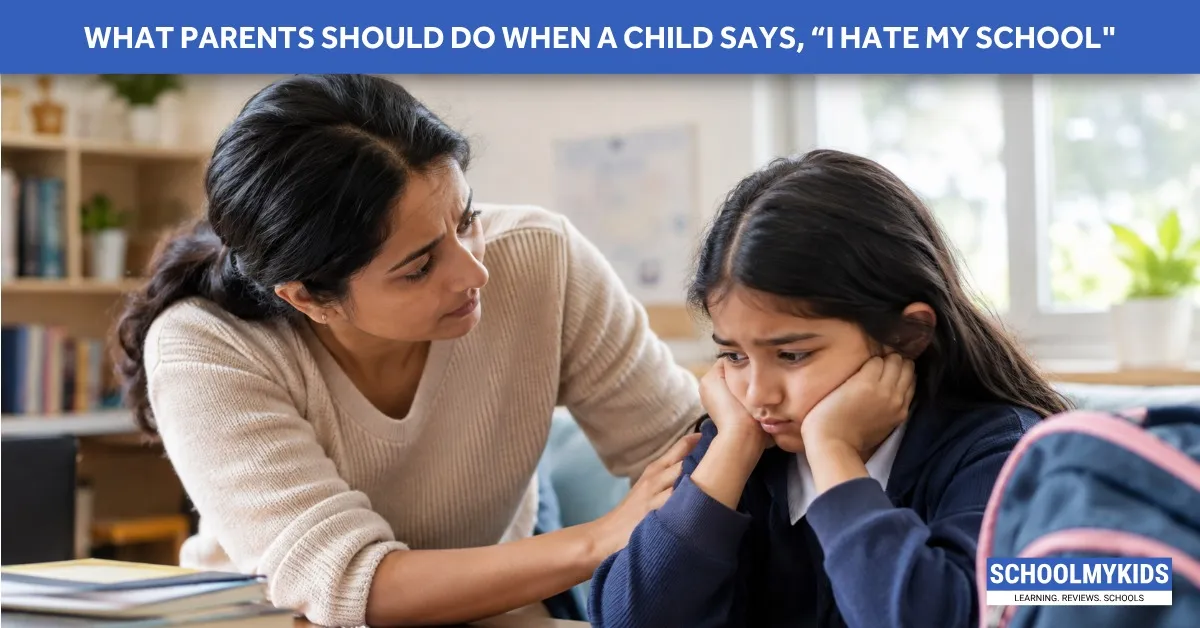
Your kid comes home or refuses to get in the car. “I hate school.” Your stomach drops.
School counselors and principals have learned that children are almost never talking about school itself.
They’re talking about something that happens at school. A friend turned cold. They got embarrassed during reading time. Everyone’s better at math. They don’t fit in at lunch. Something.
But kids don’t have the words for that yet. So it comes out as “I hate school.”
A third grader wouldn’t get in his car one morning. Arms crossed. Backpack still on. Shut down completely. When his principal asked what happened, there was silence. Then, “I’m bad at reading out loud. Everyone knows.”
That kid didn’t hate school. He hated the feeling in his stomach when the teacher called his name.
What’s Actually Going On: Common Reasons
Kids hate school for specific reasons, not school in general.
A friend excluded them. That one friend group that matters? Gone. So school feels empty now.
They’re struggling with something. Multiplication. Writing. Tests. Whatever. And they see other kids getting it. So they feel behind. Embarrassed. Less than.
Something embarrassing happened. They tripped. They cried. They said something stupid. Now they think everyone remembers and judges.
Anxiety. Tests coming up. Presentations. Being called on. The bus is weird. The cafeteria is too loud and crowded.
They’re tired. Actually tired. Growing, processing information all day, dealing with social stuff. Kids are exhausted.
Physical stuff. Headaches. Stomach aches. Not feeling well. Easier to say they hate school than “I feel sick.”
What NOT To Do: The Mistakes Parents Make
Don’t panic immediately. Your kid doesn’t hate school. Something’s bothering them. Fixable things.
Don’t jump to solutions. “Well, maybe we’ll find a different school.” Your kid just needs you to listen, not to overhaul their life.
Don’t dismiss it. “Oh, you’ll feel better after snack time.” Maybe. But probably not. There’s something underneath.
Don’t add fuel. Your kid says “My teacher is mean.” Don’t say “Yes, I noticed that too.” Now you’re allies against the teacher. That makes it worse, not better.
Don’t interrogate them. “What happened? Who? When? Why?” Rapid-fire questions shut kids down. They clam up more.
What Actually Works (The Real Process)
Pause. Don’t fix immediately.
Your instinct is to solve it fast. Make it better. That’s parenting. But this needs time.
When your kid says they hate school, your response should be “That sounds hard. Tell me what happened.”
Then wait. Don’t fill the silence. Let them think.
Ask open questions at random times.
Not in the moment. Not when they’re upset.
In the car. At dinner. Walking the dog. Bedtime. Casual moments when they’re not expecting an interrogation.
“What was the best part of today?” “Worst part?” “Anyone being mean?” “Feeling okay?” “What made you upset?”
Let answers come naturally. Patterns emerge over days, not in one conversation.
Listen for what they’re not saying.
A parent’s daughter kept saying she hated school. It took days of casual questions to figure it out. It wasn’t the school. It was one specific lesson. Math. She felt lost. Too embarrassed to ask the teacher for help. Thought she was the only one who didn’t understand.
Once the parent knew that, it was fixable. Extra help. A heads-up that the teacher would check in with her. Done.
When To Actually Worry: The Patterns
One bad day? Normal. Kids have bad days.
But watch for patterns. Actual patterns, not just feelings.
Stomach aches that only happen on school days. Monday through Friday. Not weekends. These, along with morning headaches, are among the most common physical signs of school-related anxiety.
Actual vomiting or headaches before school. This is anxiety.
Refusing to get in the car. Repeatedly. Not just a bad morning.
More frequent visits to the nurse. Finding reasons to leave class.
Growing reluctance to talk about school. Getting quieter. Withdrawn.
A sudden shift from liking school to dreading it.
If you see patterns, that’s when you call the school counselor. They’re trained to notice things you might miss.
Talking To The School: The Conversation
Don’t email about this. Seriously. Tone gets lost. Back and forth takes forever.
Call and ask for a face-to-face meeting. With the teacher. Or counselor. Or both.
Say something simple: “My child’s really struggling. I want to understand what’s happening and how we can help.”
In the meeting, remember that your child’s perception is completely valid. But it’s missing context.
If your kid says “The teacher hates me,” that’s not true. But the kid feels it. Why do they feel that? That’s the real question.
The teacher might say, “Oh, I call on her a lot because I see potential.” Kid heard “I’m being singled out.”
Finding that gap is where the fix happens.
Real Situations That Parents Have Figured Out
A fourth grader started hating school. Turned out a friend group had shifted. The kid was outside looking in. Solution: helping her build other friendships. Sitting with different people at lunch. Joining a club. Not complicated once you know what’s wrong.
Another kid couldn’t read out loud. So the teacher gave a heads-up before that kid’s turn. They practiced at home. Less panic. It got better.
A third grader was exhausted. Just tired. Parent adjusted bedtime. Kid’s whole mood about school changed.
A kid had actual anxiety. School counselor worked with them. Breathing techniques. Coping strategies. Parent involvement. It got better.
What This Isn’t: Important To Remember
This isn’t a reflection of your parenting. Your kid isn’t broken. You didn’t mess something up.
Kids are developing. They’re learning how to handle frustration, embarrassment, social stuff. They’re bad at it. That’s normal.
A 2024 Tyton Partners survey of more than 2,000 open-minded parents (those already interested in school options) found that 46% named their child’s mental health as a primary reason they would consider a change. You’re not alone. This is common.
The Thing That Actually Helps Most
Resisting the urge to panic. Resisting the urge to fix it all at once.
One parent said the best thing she did was slow down. Listen. Then work with the people around her child.
Those difficult mornings? They became the start of something better. Not a sign that everything was broken.






Be the first one to comment on this story.