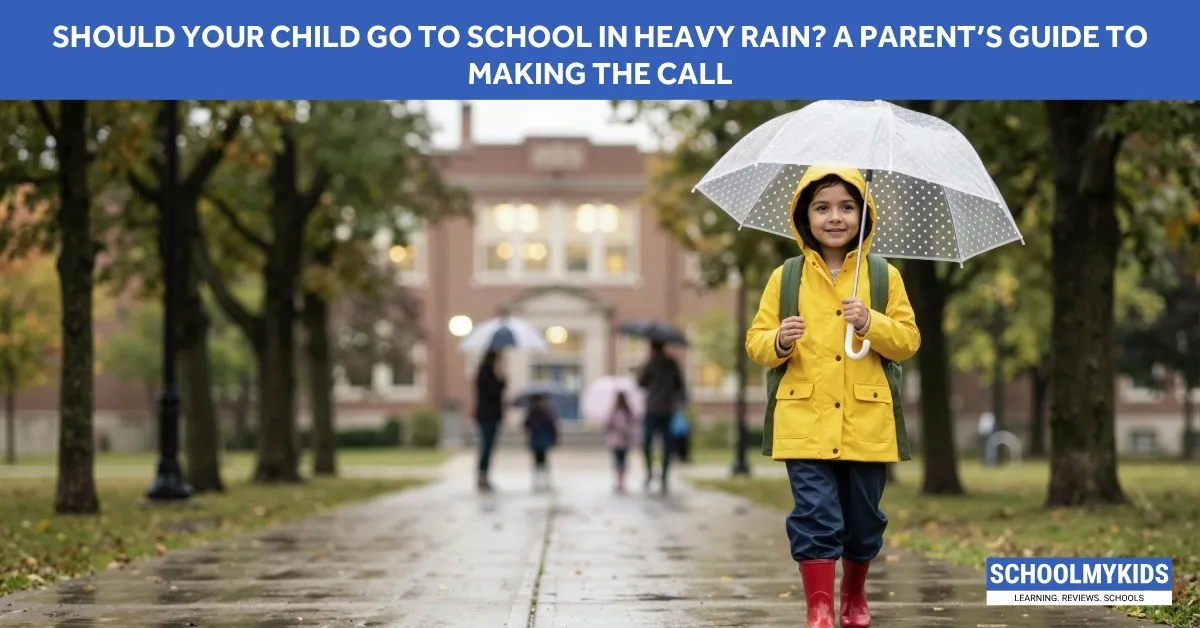
Your kid wakes up. It’s raining. Hard. The kind of rain where visibility is low, and gutters are overflowing. You look at your phone. No notification from school saying it’s closed. So you’re stuck. Do you send them or keep them home?
This decision happens to parents constantly during monsoon season. And there’s no clear answer because the answer genuinely depends on specific situations. This year, July 2026 alone recorded 269 extreme heavy rainfall events across India, as stated by IMD Director-General Mrutyunjay Mohapatra. That’s a lot of days where the decision got complicated.
What The Weather Data Actually Shows This Year
July 2026 finished with 283.3 mm of rainfall against the long-period average of 280.5 mm. That’s roughly 1 percent above normal for July. But the pattern wasn’t steady. You got intense bursts followed by dry spells. That combination creates confusion. Some days, flood-level rain. Other days, barely any rain. Your kid’s school attendance decision can’t be based on a seasonal average. It has to be based on what’s actually happening today.
By late July, large parts of the country were dealing with deficient rainfall (20-59 percent below normal) in some districts while other districts recorded extremely heavy rainfall events in the same period. The monsoon was erratic. Not predictably heavy everywhere. Pockets of intense downpours mixed with dry periods.
August 2026 forecast showed below-normal rainfall overall. But that doesn’t mean no rain. It means inconsistent patterns. Some days, torrential. Other days, light drizzle.
When To Actually Keep Your Kid Home
Heavy Rain Scenario 1: You Can’t See The Road
If visibility is so low that drivers can’t see clearly, your child shouldn’t be commuting. This is simple physics. Buses and cars need visibility to operate safely. If rain is causing visibility issues, school can wait.
How to tell: Look outside from your window. Can you see the house across the street clearly? Can you see parked cars? If not, it’s too heavy.
Heavy Rain Scenario 2: Flooding On The Route
Your child’s route to school passes through low areas that flood. You know this from previous years. Heavy rain today means those areas are underwater. Don’t send them through that.
Many parents say “I’ll risk it and see.” Don’t. Water moving across roads is dangerous. Kids in vehicles sitting in flooded areas can get swept away if the water has force. It’s not worth it.
Heavy Rain Scenario 3: Landslide Or Waterlogging Risks
If your area is hilly or prone to landslides, heavy sustained rain is a signal. July 2026 data showed landslide activity increased during extreme rainfall events, as noted in IMD updates and state disaster reports from Assam, Himachal Pradesh, Jammu and Kashmir, and Gujarat. If your school is in a vulnerable zone, check local news. If warnings are issued, keep your kid home.
Heavy Rain Scenario 4: Your Gut Says No
If you’re genuinely worried and can’t pinpoint exactly why, keep them home. Your parental instinct developed from living in your area and knowing actual conditions. Trust it.
When School Probably Shouldn’t Close But You Should Be Cautious
Light To Moderate Rain
Kids going to school in regular monsoon rain is normal. This is India. Rain doesn’t stop school life. Your child needs to learn to handle it.
Light rain means go. Moderate rain means go. Heavy rain is the threshold.
Waterlogging Without Flooding
Waterlogging (water pooling on streets) isn’t the same as flooding (water crossing roads with force). Kids can walk through waterlogged areas. They’ll get wet. They’ll be fine.
Rain That’s Supposed To Ease Off
If the forecast says heavy rain for the morning but it’s supposed to stop by afternoon, school usually stays open. Morning rain isn’t a reason to close. Your kid can handle being wet.
What The School Should Tell You (And What Probably Won’t Happen)
Ideally, schools would send notices saying exactly what conditions trigger closure. Like “school closes if visibility falls below 50 meters” or “school closes if waterlogging exceeds ankle depth on main routes.”
Most schools don’t do this. They just decide. Sometimes they notify parents. Sometimes they don’t. Sometimes parents find out the school never actually closed because they took their kid home unnecessarily.
This is frustrating. But it’s the reality. Schools operate on their own criteria. Those criteria aren’t always published.
The Practical Decision Framework For You
Ask yourself these in order:
Is my child’s commute safe in this rain right now?
Are there waterlogging or flooding issues on the route specifically?
Is the school actually open (call or check their social media)?
Is the rain forecasted to worsen or ease?
Do I have childcare coverage if I keep them home?
If the answers all work out, send them. If any of them are concerning, don’t.
The Guilt Thing About Keeping Them Home
Parents feel guilty. “Is this heavy enough?” “Are other parents sending their kids?” “Will my child miss important content?”
One day of school missed during monsoon season won’t destroy their education. Wading through unsafe conditions might hurt them. The risk calculation is simple. One missed day of learning is minimal risk. One accident in heavy rain is not.
Missing one day doesn’t hurt. Unsafe commuting might.
What Happens If School Is Open But You Think It Shouldn’t Be
You can keep your child home. Most schools won’t penalize you for a one-day absence during heavy rain. The school might not have closed, but your risk assessment is independent of theirs.
Document it. Note in the school records “Heavy rain on [date], visibility compromised.” If patterns emerge, bring it up with school administration.
The Practical Realities of the July- August 2026 Monsoon
This year (2026) has been unpredictable. Extreme rainfall events (269 total in July) mixed with deficit rainfall periods. Your area might experience intense downpours suddenly.
What this means: Monitor weather actively. Don’t assume “it’s monsoon season, so normal rain.” Track the daily forecast. Notice when your local area gets warnings for heavy rainfall.
The erratic pattern is exactly why you can’t have one fixed rule. Some rainy days are fine. Some rainy days require keeping kids home.
Key Takeaways
269 extreme heavy rainfall events happened in July 2026 across India, according to IMD, creating erratic monsoon patterns
Visibility compromise is the clearest signal to keep children home
Flooding on known routes is a non-negotiable reason for staying home
Waterlogging (pooling) is different from flooding (flowing water)
School closure decisions vary by institution and aren’t always transparent
One day of missed school during dangerous weather is acceptable and worth the safety trade-off
Your parental judgment about safety matters more than school’s decision
Monitor daily forecasts rather than relying on seasonal averages
Landslide-prone or low-lying areas warrant extra caution during sustained heavy rain
Frequently Asked Questions From Parents
Q1: The school is open but I’m worried about my child’s route. Should I send them?
No. Your assessment of your child’s specific route matters more than the school’s general decision. Keep them home if their commute is compromised.
Q2: My child will miss content if they stay home. Is that actually a big deal?
No. One day isn’t significant academically. The teacher will catch them up, or they can review notes. Safety matters more than one day’s curriculum.
Q3: Will the school punish my child for absence during heavy rain?
Most won’t issue detention or penalties for weather-related absences. If they do, that’s worth addressing with administration. Reasonable schools understand monsoon season.
Q4: How do I know if it’s “heavy rain” versus just regular monsoon rain?
Heavy rain reduces visibility noticeably. You can’t see across the street clearly. Roads start showing waterlogging. The sound of rain on the roof is intense. Regular monsoon rain is just wet but visibility and movement are normal.
Q5: What if other parents are sending their kids but I think it’s unsafe?
Do what you think is right for your child’s safety. Other parents’ decisions don’t override your judgment about your child’s specific situation.







Be the first one to comment on this story.