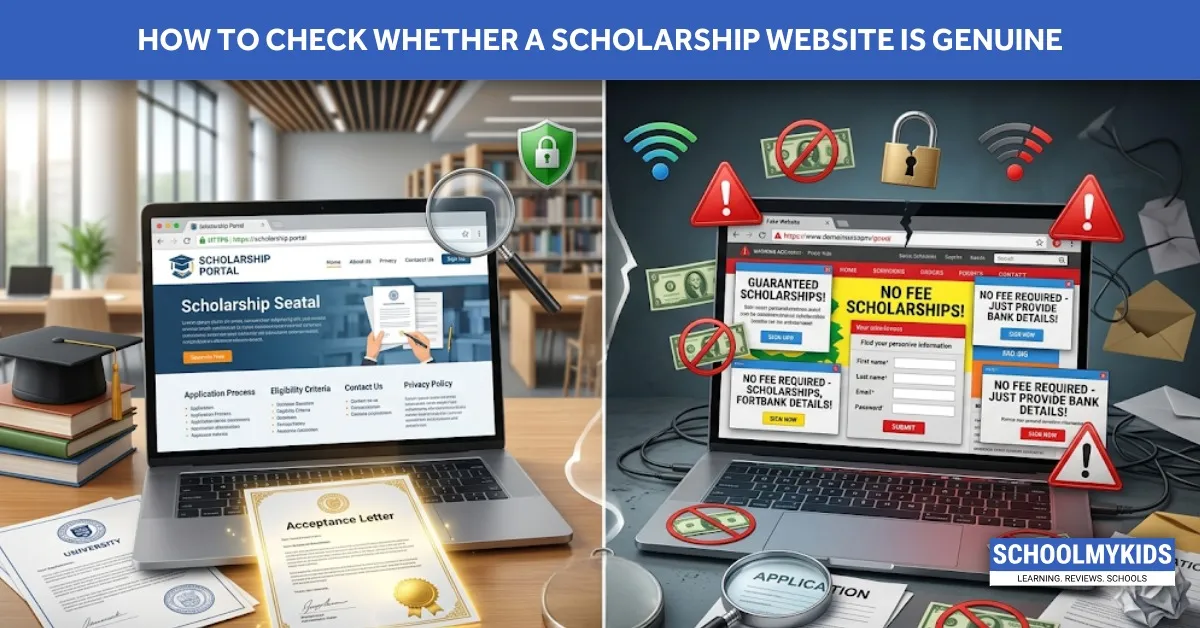
You’re scrolling. Someone shares a link in your school WhatsApp group. “100% scholarship. No merit needed. Apply now.”
Your heart jumps. Free money for college. This could actually solve things.
Then you pause. Something’s weird. But you’re not sure what.
That feeling? Trust it. It’s usually right.
Scholarship scams are a big deal in India. Students lose money every year. Some lose way more than money. They lose their personal info, bank details, everything.
The Actual Scholarship Scams Happening Right Now in India
There’s this site that looks exactly like the AICTE scholarship portal. Same colors. Same logo. Same layout. Except the URL is slightly different. Like aicte-scholership.com instead of aicte.ac.in.
You apply. They ask for registration fees. 500 rupees. 1000 rupees. “Processing fee,” they call it.
You pay. Then what? Nothing. They disappear or ask for MORE money. Government probes have already flagged losses running into hundreds of crores through fake institutes and ghost beneficiaries on the National Scholarship Portal.
Another one: WhatsApp groups. “Join our group. We know someone in the ministry. Guaranteed scholarship. Message us.”
They ask for documents. Copies of your marks. Aadhaar. Bank details. They say it’s for “verification.”
It’s not. It’s for identity theft.
Then there are the study abroad scholarship ones. “Go to UK for free. We’ll get you a scholarship. Just send 50,000 rupees for application fees.”
You never hear from them again.
These aren’t rare. They’re common. Plenty of students in most schools have run into at least one.
The One Red Flag That Means Instant Fake
Any website asking for money upfront.
Real scholarships don’t ask you to pay to apply. Government scholarships? Free. Private scholarships? Free. NGO scholarships? Free.
If they ask for a “processing fee” or “registration fee” or “application fee,” it’s fake.
That’s literally it. One rule. If they want money before they give money, they’re scamming.
How to Check If a Scholarship Website Is Genuine
Check the actual URL.
Government sites end in .gov.in or .nic.in. Like aicte.ac.in. Or scholarships.gov.in.
If it says “aicte-scholarship.com” or “aicte-scholarship.in,” it’s fake. The .com is a giveaway.
Type the official site yourself in the browser. Don’t click links from emails or messages. Type it. Check if the scholarship is actually listed there.
Look at the site quality.
Real government sites look okay. Not fancy. Lots of text. Boring design. They’re built by government people, not designers.
Fake sites sometimes look too good. Super fancy. Professional. Lots of marketing language. “Get guaranteed scholarship in 48 hours!”
Government sites would never say “guaranteed.” They’d say “eligible candidates may apply.”
Check contact info.
Real sites have actual office addresses. Phone numbers that work. Email addresses.
Try calling. Actually call. If you get a real person in a government office, it’s probably legit.
If the number doesn’t work or it’s a personal WhatsApp number, fake.
Search the site name on Google.
Type the site name + “scam” or “fake” in Google. See what comes up.
Also search the organization name on their official government listing. Like if they claim to be AICTE, go to aicte.ac.in and see if they mention this scholarship program.
If the organization doesn’t list the scholarship on their official site, the scholarship is probably fake.
What Real Scholarships Actually Ask For
Real scholarships ask for: your marks, your income certificate, your caste certificate (if applicable), maybe an essay, maybe an interview.
They might ask for bank account details after you’re selected. Not before.
They send formal letters, not WhatsApp messages.
They have official websites listed on government portals.
They don’t promise anything. They say “eligible candidates will be considered.”
If the scholarship does all this, it’s probably real.
Legitimate Scholarship Websites You Can Trust
The National Scholarship Portal lists actual scholarships. scholarships.gov.in. That’s the real one.
AICTE scholarships are listed on aicte.ac.in. The actual site ends in .ac.in.
State governments have their own scholarship portals. Maharashtra uses the MahaDBT portal. Check your state government website directly.
UGC (University Grants Commission) lists scholarships on ugc.ac.in.
NGOs and foundations linked to people like Narayana Murthy or the Gates Foundation have legit websites. You can verify them by checking their official social media (verified blue checks) and contacting their office directly.
Merit scholarships from colleges are given when you get admission. They contact you. Not the other way around.
If a scholarship is real, you’ll find it on official government websites or verified NGO websites. If you can’t find it there, it’s probably fake.
Why Your Brain Wants to Believe the Fake Ones
You’re stressed about college fees. This scholarship appears. It seems too perfect.
Your brain will find reasons to believe it. “Maybe this website is just new, so it’s not fancy.” “Maybe it’s a small NGO so there’s no office.” “Maybe they’re just being cautious with the fee.”
Stop. Your brain is being tricked by hope.
Real opportunities are boring. Real government sites are not fancy. Real processes take time.
Fake ones are exciting and fast. They feel too good to be true because they ARE.
What Happens If You Fall for a Scholarship Scam
Best case: you lose 1000-5000 rupees and never hear from them again.
Medium case: they keep asking for more money. You keep paying, hoping to get the scholarship.
Worst case: they use your personal info to open bank accounts, take loans in your name, steal money from your account.
This last one is scary, but it happens. Not as often as the first two. But it happens.
So don’t share your bank details, Aadhaar, password, anything like that with unknown scholarship sites.
What to Do If You Already Got Scammed
If you paid money, report it to:
Your bank immediately (they might reverse the transaction)
Call 1930 right away (national cybercrime helpline)
File a complaint on the Cyber Crime Complaint Portal (cybercrime.gov.in)
Local police station (file an FIR)
National Consumer Helpline (1915 or 1800-11-4000)
Don’t be embarrassed. Lots of people get scammed. It’s not stupid. Scammers are professionals at making things look real.
If they have your personal info, check your credit score online. See if any loans were taken out in your name. You can request a free credit report.
Real Talk About Actual Scholarships
Real scholarships are hard to get. There’s competition. Your marks matter. Your income matters. Your background matters.
No real scholarship says “guaranteed” or “100% approval rate” or “no merit needed.”
If it sounds easy, it’s fake. Real scholarships are competitive.
The good news: there ARE real scholarships. Lots of them. Through government, through colleges, through NGOs.
They just require an actual application. Actual competition. Actual wait time.
But they don’t cost money upfront. That’s the guarantee.
Why Scholarship Scams Work So Well on Students and Parents
Most students (and parents) don’t know what a real scholarship looks like. So when a fake one appears, it seems plausible.
Also, there’s desperation. College is expensive in India. Scholarships feel like the only way out for many families.
Scammers exploit that. They know families are desperate. So they offer false hope.
That’s why you gotta stay skeptical. Not paranoid. Just verify before you trust.
If Your Parent Falls for a Scholarship Scam
If your parent falls for a scholarship scam, don’t blame them. It happens to educated people too.
Just help them verify. Show them how to check the government site. Call the official number together.
Sometimes parents trust things because they want to believe them. That’s human.
But together, you can fact-check. That’s what matters.
Key Points to Remember
Real scholarships never ask for money upfront
Check the actual URL carefully (.gov.in, not .com)
Government sites are boring and text-heavy, not fancy
Search the site name + “scam” on Google
Call the organization directly to verify
If you can’t find it on official government portals, it’s probably fake
Real scholarships are competitive, not “guaranteed”
If scammed, report to cybercrime.gov.in and your bank (and call 1930)
Your hope and desperation are what scammers exploit
Verify everything before you share personal info
FAQs on Fake Scholarship Websites
Q1: I got an email from a scholarship with an official-looking letterhead. Is it real?
Probably not. Letterheads are easy to fake. Check the email address. Real government emails end in @gov.in or similar. Not Gmail or Yahoo. Also, real organizations contact you through official websites first, not random emails. Go to the official website and see if there’s a “recent updates” section mentioning this scholarship. If not, it’s fake.
Q2: My teacher recommended this scholarship website. Should I trust it?
Teachers can get scammed too. Just verify the site yourself using the methods above. Even if your teacher recommends it, check independently. Doesn’t mean your teacher is bad. Just means they didn’t verify properly.
Q3: The site looks super professional and has a YouTube channel with thousands of subscribers. Can it still be fake?
Yeah. Scammers invest in looking professional now. They make YouTube channels, create social media, everything. Having a professional website or YouTube channel doesn’t mean it’s real. Check if the YouTube channel is linked from the OFFICIAL government site. If not, it’s probably fake. Also, real government scholarships wouldn’t need YouTube marketing. They’d be on official portals.
Q4: What if I’m not sure if something is a scam? What should I do?
Ask an adult you trust (parent, teacher, school counselor) to verify it with you. Go to the official government site for that scholarship and compare. Call the government office directly. Ask questions that scammers can’t answer well. Like “What is your office address, and can I visit?” Real organizations will answer. Scammers will make excuses. When in doubt, don’t share money or personal info. It’s better to miss one real scholarship than to fall for ten fake ones.







Be the first one to comment on this story.