Class 12 finishes. Everyone asks the same question. “College? Which one?”
But you’re thinking… maybe not? Maybe not right now?
That thought alone probably makes your parents nervous. Makes your friends weird around you. Makes YOU nervous because everyone acts like this is insane.
It’s not insane. Lots of people do it. But if you’re actually thinking about skipping college immediately, you need to know what works and what just sounds good.
Why Students Skip College Right After 12th
It’s not always about being tired of school. Sometimes yes. But usually it’s more than that.
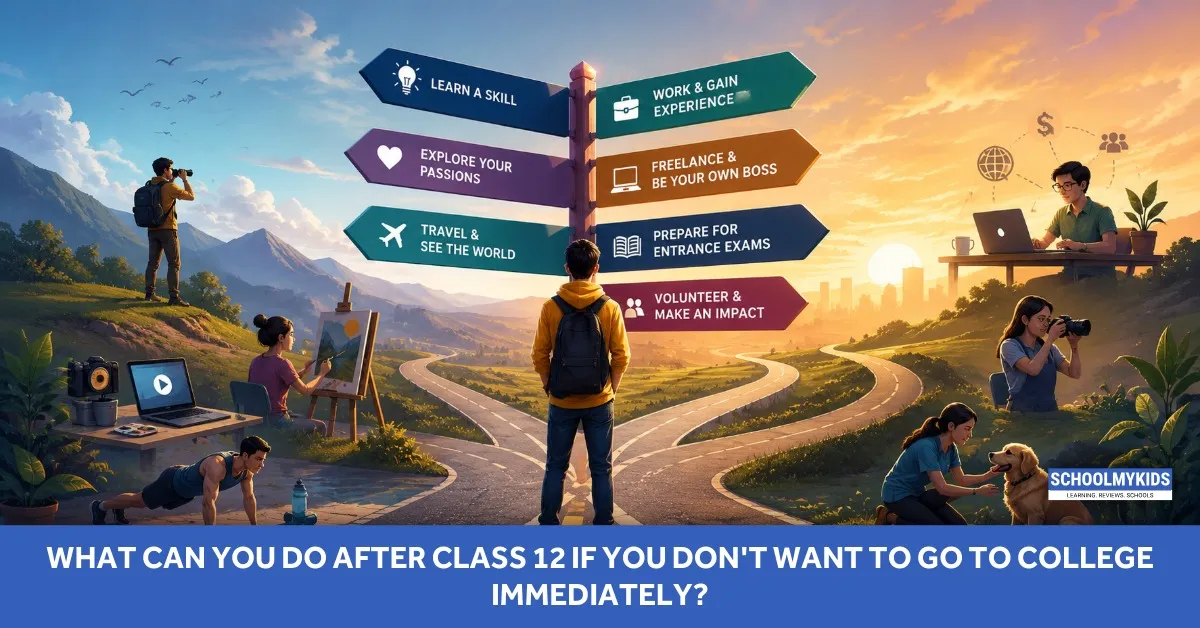
Some people get into coding and think, “I’ll just build stuff.” Some get a job offer that feels too good to pass up. Some have money problems and need to work. Some just aren’t ready for the college grind and think waiting a year will help. Some want to try starting something on their own.
The reasons are different. The pressure is the same though. Everyone thinks you’re making a mistake.
Gap Year After 12th: When It Actually Works
This is the safest option if your parents can support you. Take a year. Do something focused.
Lots of students do this now. They take coding bootcamps. Or online certifications. Or travel and volunteer. Or just chill and figure out what they want.
The actual advantage? You’re not in school debt. You’re building skills or experience. You can still go to college after if you want. Colleges don’t care if you took a gap year. They care about what you did in that year.
But a gap year only works if you actually USE it. If you spend the year playing games and watching YouTube, you’re just procrastinating. When you try to get into college later, people will ask, “What did you do?” and “played games” doesn’t sound good.
So if a gap year appeals to you, have a PLAN. “I’m going to complete this course. Learn this skill. Build this project.” Not “I’ll figure it out.”
The cost for most bootcamps or online courses sits around 50,000 to 2–3 lakhs, depending on what you pick. Coding bootcamps (especially the better-known ones) run higher, often 1.5–4 lakhs. Basic skill courses stay cheaper.
Timeline? 3 months to 1 year, depending on what you choose.
Taking a Job Right After 12th
Some students get job offers. Like, entry-level positions. Maybe 3-5 lakhs annually. Feels amazing after being a student.
The salary seems huge compared to pocket money. But think about it. If you’re living with parents, you need to give them some money for rent/food. Your own expenses. Savings. After all that, it’s not as much as it looks.
Also, without a degree, your salary has a ceiling for many people. You can work for 5 years and maybe hit 10-15 lakhs. A college grad in the same field often lands a bit higher, though strong skills and portfolios close that gap faster than they used to. That gap compounds over time.
The advantage? You’re getting work experience. You’re learning stuff that college won’t teach. You’re earning.
The disadvantage? If you want to go to college later, it’s harder. Your gaps in education become obvious. And going back to college after working is mentally tough because you’re older than classmates.
Government Jobs After Class 12
If you want stability and a steady pay cheque, several government routes are open right after 12th.
SSC CHSL (Lower Division Clerk, Data Entry Operator), SSC MTS, Railway Group D, State Police Constable, India Post GDS, and Agniveer in the Armed Forces.
Most of these need only Class 12 and a written test or physical test. Starting pay is usually in the ₹18,000–30,000 per month range plus benefits.
The advantage is job security and government perks. The catch is competition and waiting time for results.
If this route interests you, start preparing for the next notification cycle while you build other skills on the side.
Skill Courses and Bootcamps After 12th
Lots of platforms teach specific skills. AI training. Digital marketing. UX design. Web development. The ones that currently convert fastest into freelance or junior roles are digital marketing, graphic design, web development, content writing, and basic data analysis.
Some students do these courses (3-6 months) and get jobs based on portfolios. Not degrees.
The costs vary wildly. Cheap courses are 10-20k. Good courses are 50-100k. Premium bootcamps are 2+ lakhs.
Does it work? Sometimes. If you actually do the projects. Build a portfolio. Apply for jobs.
The risk? A course certificate doesn’t guarantee a job. You’re competing with people who have degrees. You need to be noticeably better.
But some companies now hire based on portfolio, not degree. So if you’re building stuff that’s actually good, you have a shot.
Starting a Business or Freelancing After 12th
Some people want to start a business or freelance project right after 12th.
Like, they might want to start a YouTube channel. Freelance design. Tutoring. Small online business.
The advantage: you’re not working for someone else. You learn fast. You might actually make good money if it works.
The massive disadvantage: most things fail. You’ll spend months with zero income. Your parents will get stressed. You’ll get stressed.
If you try this, have a timeline. “I’ll try for 6 months. If it’s not making basic money, I’ll get a normal job or go to college.”
Without a timeline, you’re just delaying real work while calling it entrepreneurship.
The startup ecosystem is getting better though. Government schemes, incubators, mentors. If you’re serious about this, look up Startup India or local incubators in your city. But don’t assume any of this will help immediately.
NDA and Defence After Class 12
NDA and SSB. You can take these after 12th. (CDS requires a graduation degree, so it is not an option right after Class 12.) If you get in, you’re in the Indian Armed Forces.
This is a specific path. Starting pay after commissioning is higher than most people expect. A Lieutenant’s basic pay is ₹56,100 plus Military Service Pay of ₹15,500, DA and allowances. In-hand usually lands between ₹70,000 and ₹1.2 lakh a month, depending on posting and rank. But job security is the best in India. Plus benefits. Plus respect.
The catch? It’s disciplined. You’re not your own boss. NDA leads to a Permanent Commission (career till retirement age). Short Service Commission options in other entries run 10 years, extendable to 14.
If you like structure and security and don’t mind military life, this could work. But it’s not for everyone.
How to Explain Your Plan to Parents
If you explain your plan clearly, parents often chill out. They panic because it looks like you’re doing nothing.
“I’m taking this coding course and building projects. My goal is to freelance or get a job in 6 months. If it doesn’t work, I’ll apply to colleges” sounds way better than “I’m not going to college.”
Having a timeline and a plan makes this feel like a decision, not a default.
Also, most of these options are reversible. A gap year, then college. A job for 2 years, then college. Most colleges don’t care. They see the actual person applying, not a perfect 18-year-old.
The Real Cost of Skipping College
If your family can’t support you, not going to college immediately is harder. Most bootcamps or skilling courses cost money. Starting a business needs capital. Gap years require living expenses covered.
If you need to work to help your family, that’s different from skipping college to find yourself. Working to support family while you build skills on the side? That’s valid. That’s responsibility.
But make sure you’re actually building something, not just accepting it as permanent.
Also, scholarships and education loans exist for college. If cost is the reason you’re avoiding college, look into financial aid first. Sometimes college is actually cheaper than you think with scholarships.
Mental Health When You’re Not in College
Not going to college when everyone else does? That messes with your head sometimes. Your friends are in college. You’re not. You feel left out or stupid or like you made a mistake.
This is real. Having a community helps. So if you’re doing a bootcamp, pick one with a cohort. If you’re freelancing, join online communities. If you’re working, find people in the same situation.
Isolation makes good decisions feel like mistakes.
What Actually Predicts Success
Whether you go to college immediately or skip it doesn’t actually predict success. Lots of college grads struggle. Lots of non-college people do fine.
What DOES predict success: you actually work on something consistently. You learn from failures. You don’t just coast.
A student who skips college and sits at home doing nothing? Will fail. A student who goes to college and attends parties instead of studying? Will also fail.
A student who skips college and genuinely learns a skill through courses and projects? Often does better. A student who goes to college and actually engages? Also does fine.
So this decision isn’t “college or no college.” It’s “what am I actually going to do with my time?” That’s what matters.
Honest Questions to Ask Yourself
Ask yourself honestly: are you skipping college because you have a specific plan? Or because you’re scared and looking for an escape?
Both are okay. But they need different answers. If it’s a plan, go for it. Build it.
If it’s escape, maybe going to college for a semester and seeing if you like it is better than avoiding it entirely.
Also ask: can I afford this decision? Not just money. Time. Mental energy. Will I be fine without the college social structure?
Some people thrive without college. Some absolutely need it. Neither is wrong.
FAQs
Q1: If I skip college now, will I regret it later?
Some people skip college and do great. Some wish they’d gone. It depends on what you DO instead of college. If you’re building something real, learning stuff, making money… probably fine. If you’re sitting at home thinking college would’ve been better, you’ll regret it. The regret isn’t about the choice. It’s about not making the alternative work. So make it work.
Q2: Can I go to college after taking a gap year or working?
Yes. Most colleges don’t care when you apply as long as you meet basic requirements. You’ll be older than classmates. That’s awkward sometimes. But it’s fine. You’ll also have experience they don’t. That’s actually cool. Some colleges might even be impressed that you tried something first.
Q3: My parents will never support this. What do I do?
Talk to them properly. Show them a plan. Give them timelines. Show them what you’ll actually do. Also, maybe it’s worth listening to their concerns. Sometimes they see risks you’re missing. But if you’ve thought it through and still want to try… you’re an adult technically. You can make your own choice. Just know there’ll be consequences (financial, emotional) that you’ll handle.
Q4: How do I actually find jobs or courses without a college network?
LinkedIn. Naukri. AngelList for startups. Course platforms like Coursera, Udemy, specific bootcamps. Twitter for finding mentors. YouTube for learning. Your local startup community. Ask around. Network. Go to local events. You won’t have college placement cell, so you hustle more. That’s it. It’s harder but doable.






Be the first one to comment on this story.