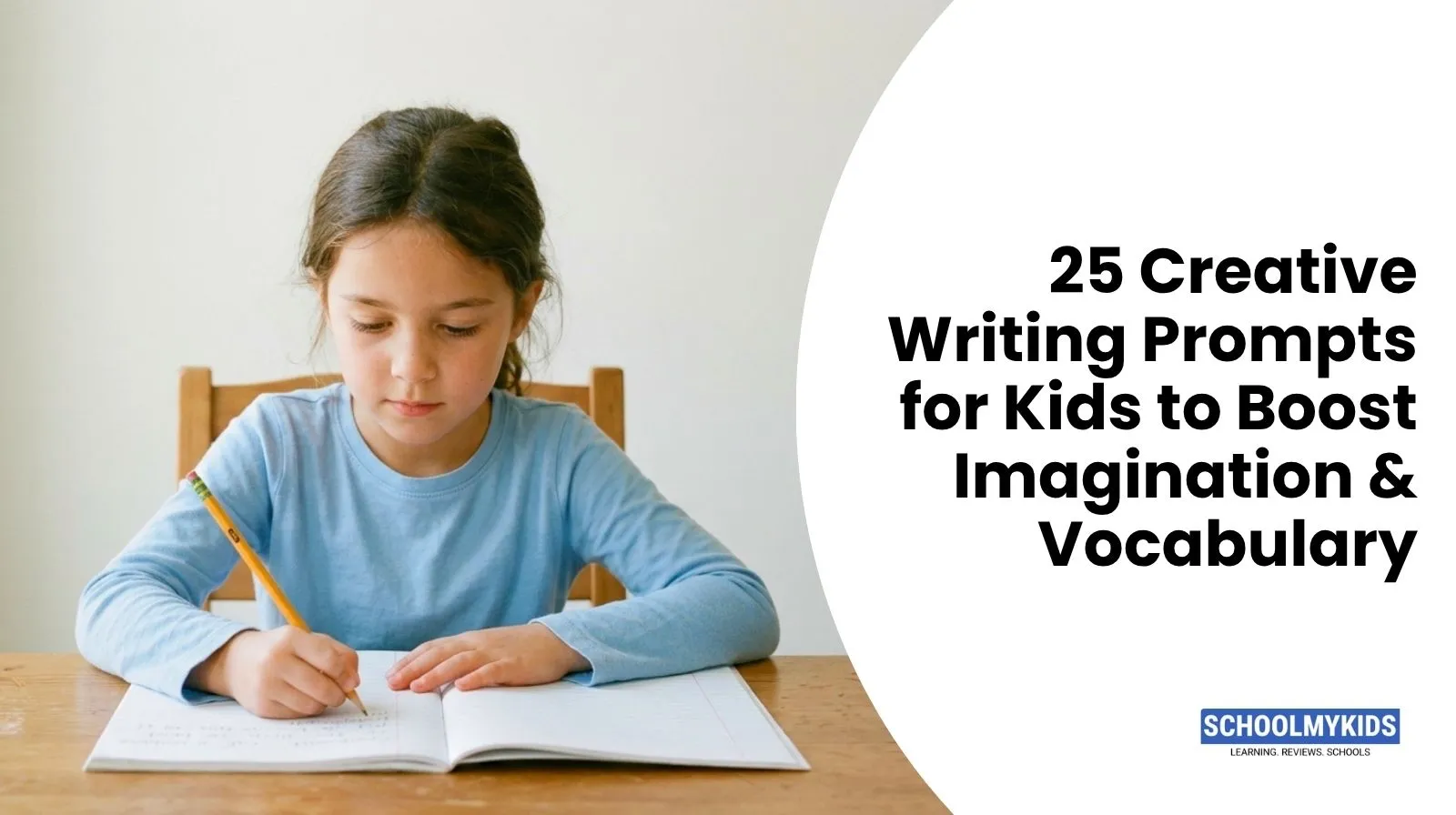
Writing prompts for kids serve as fantastic tools to ignite young minds, helping children aged 6-12 explore storytelling while expanding their vocabulary. These simple yet engaging story starters make creative writing exercises both fun and educational, especially for busy Indian parents and teachers seeking activities aligned with CBSE and ICSE curricula.
Why Writing Prompts for Kids Matter in 2026
In today's fast-paced digital world, creative writing remains a cornerstone of child development. With India's education landscape evolving under the ongoing implementation of the National Education Policy 2020 in 2026, emphasizing holistic learning, writing prompts for kids encourage critical thinking and language skills. Parents in Delhi, Mumbai, and beyond often struggle to find time for enriching home activities. These prompts offer quick, no-prep solutions that fit into daily routines.
Story starters for children not only boost imagination but also build confidence in expression. Research from recent Indian education studies highlights how regular creative writing exercises improve vocabulary retention and expression in primary students. By incorporating cultural elements like festivals and local folklore, these prompts resonate deeply with Indian families
Benefits for Indian Schoolchildren
Enhances vocabulary through descriptive language practice (Skill Tag: Word Choice).
Fosters empathy by exploring diverse characters and scenarios (Skill Tag: Emotional Intelligence).
Aligns with school syllabi, supporting CBSE creative writing assessments (Skill Tag: Descriptive Writing).
Reduces screen time with offline, printable activities (Skill Tag: Focus & Creativity).
How to Use These Story Starters for Children Effectively
Parents and teachers can integrate writing prompts for kids into daily journals, classroom warm-ups, or weekend family challenges. Start with 10 minutes of brainstorming, followed by 20 minutes of writing. Encourage kids to illustrate their stories for a multisensory boost.
Track progress by revisiting stories monthly, and children love seeing their growth. Tailor difficulty: younger kids (grades 1-3) focus on short sentences, while older ones (grades 4-8) add dialogues and twists.
Tips for Teachers in CBSE Schools
Adapt these creative writing exercises for group activities. Pair prompts with vocabulary builders like synonyms for "happy" (joyful, ecstatic). In the 2026 English Board exams, Section B now emphasizes 'Analytical writing.' Practice Prompt #7 (Robot Best Friend) to help your child master 'Character Motivation,' a key metric in the new marking scheme. In 2026, with hybrid learning used in select cities (e.g., during high pollution under GRAP), share digital versions via school portals.
25 Best Writing Prompts for Kids: Categorized for Fun
Here are 25 original short story starters for kids, grouped by theme. Each includes a vocabulary nudge to expand word power. These writing prompts for kids are designed to spark endless creativity without overwhelming young writers. Try the Word of the Day Challenge for the top 3 prompts: Pick one target word and use it 3 times in your story!
Adventure and Fantasy Story Starters for Children (Prompts 1-8)
Magical Marketplace: You discover a hidden market in your neighborhood where animals sell enchanted fruits. How do you negotiate with a tiger merchant? (Vocabulary: enchanted, bargain, whisper) (Skill Tag: Negotiation, Imagination)
Time-Traveling Toy: Your old toy bicycle starts glowing and takes you to ancient India during Diwali celebrations. Describe the lights and your adventure. (Vocabulary: festival, lantern, journey)
Cloud Kingdom: Climb a rainbow ladder to a city in the clouds ruled by talking birds. What law do you suggest as the new visitor? (Vocabulary: fluffy, decree, soar)
Underground Garden: Digging in your backyard, you find a garden where plants sing songs. Join their chorus, what tune do you teach them? (Vocabulary: melody, sprout, harmony)
Superhero Squirrel: A squirrel in your park gains super speed from a magic nut. Team up for a city rescue mission. (Vocabulary: dash, acorn, heroic)
Lost Island Map: A crumpled map washes up on the beach, leading to a island of floating books. What story do you read first? (Vocabulary: parchment, drift, chapter)
Robot Best Friend: Build a robot from kitchen scraps that loves telling jokes. Where does it take you for laughs? (Vocabulary: circuit, giggle, invent)
Whispering Winds: Winds carry messages from faraway friends. Deliver one to your family. What secret does it hold? (Vocabulary: breeze, echo, deliver)
Everyday Magic Creative Writing Exercises (Prompts 9-16)
Talking School Bag: Your school bag starts chatting about its daily adventures. What wild tale does it share from class? (Vocabulary: zipper, rumble, confess)
Color-Changing Lunchbox: Open your lunch to find food that changes flavors mid-bite. Invent your dream meal combo. (Vocabulary: tangy, swirl, savor)
Pencil Portal: Your pencil draws a door to a world of doodles come alive. Step in. Which drawing greets you? (Vocabulary: sketch, portal, wiggle)
Dancing Shadows: At sunset, shadows on your wall start a dance party. Choreograph their next move. (Vocabulary: silhouette, twirl, rhythm)
Magic Mango Tree: In your grandmother's garden, a mango tree grants one wish per fruit. What do you wish for? (Vocabulary: juicy, branch, grant)
Sneaky Pet Dreams: Your pet dreams aloud about ruling the neighborhood. Help plan its funny kingdom. (Vocabulary: paw, throne, loyal)
Raindrop Stories: Catch a raindrop that replays a memory from its cloud travels. Retell its journey. (Vocabulary: puddle, plop, vapor)
Bookworm Buddy: A worm crawls from your storybook and asks for a sequel idea. Co-author the plot. (Vocabulary: burrow, plot, nibble)
Family and Festival Short Story Starters for Kids (Prompts 17-25)
Holi Color Quest: During Holi, colors form a treasure map on your hands. Follow it to the prize. (Vocabulary: splash, vibrant, quest)
Grandpa's Secret Recipe: Grandpa's old cookbook whispers ingredients for a flying cake. Bake and fly! (Vocabulary: batter, whisk, soar)
Sibling Superpowers: You and your sibling swap powers for a day, like invisibility and speed. Plan the fun. (Vocabulary: vanish, zoom, swap)
Monsoon Adventure: Heavy rains create a river in your street. Build a raft from recyclables. (Vocabulary: torrent, raft, paddle)
Eid Moon Wish: Spot the Eid moon and make a wish that comes partly true. Shape the rest. (Vocabulary: crescent, lantern, feast)
Diwali Lamp Race: Lamps in your home compete in a glowing race. Pick a winner and its story. (Vocabulary: flicker, diya, victory)
Neighborhood Picnic: Everyone brings a dish that tastes like their dreams. Sample yours—what flavor? (Vocabulary: picnic, dreamscape, relish)
Rakshabandhan Heroes: Tie a rakhi that gives super strength. Protect your sibling from a silly villain. (Vocabulary: thread, bond, defend)
Future Family Robot: In 2036, a family robot helps with homework but learns emotions. Teach it joy. (Vocabulary: beep, emotion, hug)
These story starters for children blend Indian cultural touches, like festivals and family bonds, with universal fun, making them ideal for diverse classrooms.
Boosting Vocabulary with Creative Writing Exercises
Each prompt embeds 3-5 target words to weave into stories naturally. For example, in Prompt 1, use "enchanted" to describe the fruits vividly. Parents can create word walls post-writing to reinforce learning.
Digital language apps offer vocabulary drills, but hands-on prompts outperform them for creative retention. Track vocabulary growth by noting new words weekly.
Age-Specific Adaptations
Grades 1-2: Draw pictures first, add 3 sentences.
Grades 3-5: Aim for 200 words with dialogue.
Grades 6-8: Include plot twists and character arcs.
Success Checklist for Parents
Creativity: Did the story have a beginning, middle, and end?
Vocabulary: Were at least 2 "Target Words" used correctly?
Structure: Are the sentences varied (short and long)?
FAQ: Common Questions on Writing Prompts for Kids
What are the best writing prompts for kids starting out?
Begin with simple story starters for children like everyday magic themes. They build confidence without pressure.
How often should kids use creative writing exercises?
Daily 15-minute sessions yield the best results, aligning with NEP 2020's play-based learning.
Can these short story starters for kids help with exams?
Yes, they enhance descriptive writing skills crucial for CBSE English papers.
Are there writing prompts for kids focused on Indian culture?
Prompts 17-25 incorporate Holi, Diwali, Eid, and Rakshabandhan for relevance.
Where to find more story starters for children?
Explore SchoolMyKids Activities section for books, games, and free printables.
Parental Tips for Long-Term Success
Encourage revision: Kids rewrite stories after a week for polish. Share in family story circles to build public speaking. In 2026's competitive landscape, these habits set Indian students ahead.


Be the first one to comment on this story.