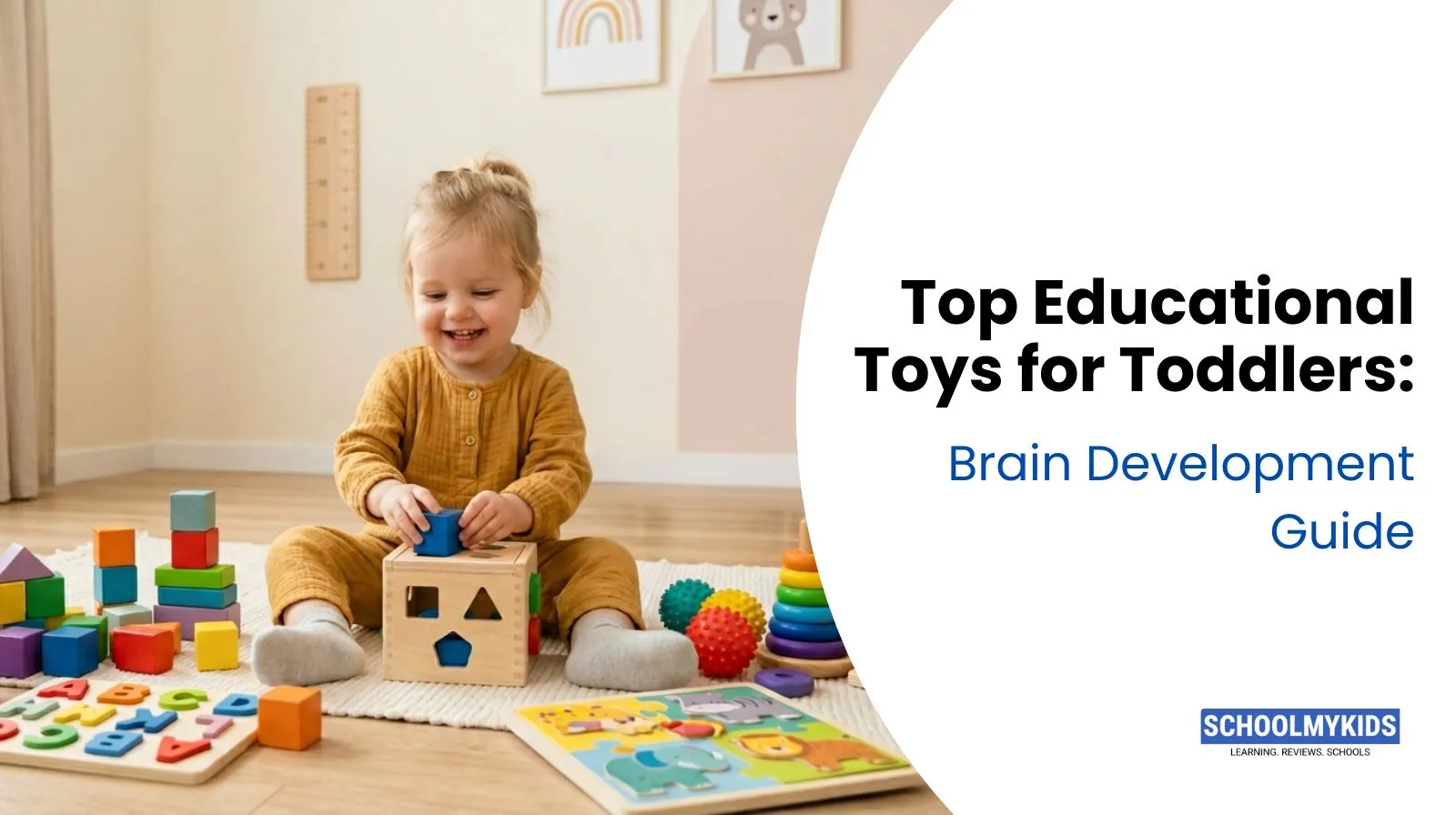
Early childhood is a period of extraordinary brain growth. During the first five years of life, a child’s brain forms up to one million neural connections every second. These early experiences act as the “architect” for how children will learn, think, and interact with the world for the rest of their lives.
One of the most powerful ways to support this development is through purposeful, screen-free play. Choosing the right educational toys for toddlers can transform everyday playtime into a laboratory for cognitive milestones, curiosity, and emotional resilience.
In this guide, we explore the top 10 toys for brain growth, the science behind Montessori-inspired learning, and expert tips for choosing toys that provide meaningful developmental benefits. Parents looking for effective learning toys for toddlers will find practical recommendations grounded in child development research and modern parenting practices.
Why Educational Toys Are Vital for Brain Architecture
Play is not simply entertainment for toddlers. It is their primary method of learning. Developmental research consistently shows that active, hands-on play strengthens neural pathways in the prefrontal cortex, the part of the brain responsible for attention, planning, and decision-making.
When parents choose thoughtful educational toys for kids, they support multiple developmental areas at once.
These toys encourage:
Problem-Solving: Children experiment with trial and error rather than receiving instant answers from screens.
Language Development: Vocabulary grows naturally when parents narrate play activities.
Fine Motor Precision: Manipulating toys strengthens hand muscles needed for writing and daily self-care tasks.
Many child development experts also recommend Montessori-inspired toys, which encourage independent exploration and self-guided learning. These toys are typically sensory-rich, screen-free, and open-ended, allowing children to experiment and develop creativity without strict instructions.
How Learning Toys Fuel Growth
Cognitive Development & Executive Function
The best learning toys for toddlers stimulate the brain’s executive function, which helps children manage attention, memory, and problem-solving.
Toys like puzzles and shape sorters help toddlers develop:
Logical reasoning
Pattern recognition
Visual-spatial intelligence
These early thinking skills form the foundation for mathematics, reading, and scientific curiosity later in life.
Motor Skill Mastery
Manipulating physical objects such as stacking rings, blocks, or pegboards strengthens the muscles in a toddler’s hands and fingers.
This development of the pincer grasp, the ability to pick up small objects using the thumb and forefinger, is essential for tasks such as writing, drawing, and buttoning clothes.
Toys that encourage grasping, stacking, and sorting are some of the most effective learning toys for toddlers because they combine physical and cognitive development.
Emotional Intelligence and Social Skills
Pretend play helps toddlers process emotions and understand social interactions.
For example, caring for a toy animal or pretending to cook in a play kitchen encourages children to practice empathy, cooperation, and communication.
These experiences build emotional intelligence (EQ) and support healthy social development.
The Top 10 Toys for Toddler Brain Development
Toy Category | Primary Skill Developed | Parent-Child Play Prompt |
|---|---|---|
1. Wooden Blocks | Visual-Spatial Intelligence | “Can you build a house for your toy car?” |
2. Shape Sorters | Logical Problem Solving | “Which shape fits this hole?” |
3. Beginner Puzzles | Persistence and Focus | Start with 2 pieces and gradually increase difficulty. |
4. Musical Instruments | Auditory Processing | Tap a rhythm and ask your child to copy it. |
5. Stacking or Nesting Toys | Size and Order Concepts | “Which one is the biggest?” |
6. Pretend Play Kits | Symbolic thinking and social-emotional skills | Use a toy doctor kit to prepare for real check-ups. |
7. Sensory Play Dough | Fine Motor Strength | Roll, squeeze, and shape the dough together. |
8. Screen-Free Interactive Audio Toys | Listening comprehension | Listen to a short story together and discuss it. |
9. Magnetic Building Tiles | Spatial reasoning and early construction skills | Explore how magnets attract and connect pieces. |
10. Interactive Storybooks | Early Literacy Interest | Ask your child what they think will happen next. |
11. Cause-and-Effect Toys | Logical thinking, curiosity, and prediction skills | “What do you think will happen if we push this?” |
Note: Ensure magnetic toys are well-sealed and age-appropriate to prevent choking hazards.
These toys consistently appear in expert recommendations because they promote active engagement, exploration, and creativity, the key ingredients for brain development.
Some building toys also function as STEM toys, but simplified versions, such as magnetic tiles or basic construction blocks, can be introduced safely to toddlers aged 2–3 years.
The Rise of Screen-Free Interactive Audio
In recent years, parents have searched for screen-free alternatives that still provide engaging storytelling and educational content.
Screen-free audio players are emerging as a popular solution. These devices allow children to listen to stories, songs, and educational content without exposure to digital screens.
This type of “phygital” learning, a blend of physical toys and digital audio, helps strengthen listening skills and language comprehension while preserving the benefits of traditional play.
How to Choose: The “10/90 Rule” of Play
Not all toys labeled as “educational” actually promote learning.
Child development experts often recommend the 10/90 Rule when selecting toys.
The toy should do 10% of the work, and the child should do 90%.
Toys that rely heavily on flashing lights, loud sounds, or automated interactions reduce opportunities for creativity and exploration.
When a toy performs most of the actions, children become passive observers rather than active learners.
The best educational toys for kids allow children to experiment, imagine, and solve problems independently.
Safety Standards Parents Should Check
Toy safety is just as important as educational value.
Before buying toys, parents should check for the following standards:
Non-toxic materials: BPA-free, lead-free, and phthalate-free
Art safety certification: ASTM D-4236 for art supplies
Toy safety marks: EN71, CE, or BIS certification
Eco-friendly toys made from sustainable wood or food-grade silicone are also safer choices for toddlers who frequently put objects in their mouths.
Common Myths and Parent Mistakes
“More Toys Means More Learning”
Research suggests the opposite. When children have too many toys available, their attention becomes fragmented. Experts recommend keeping 4–12 toys accessible at one time and rotating the rest every few weeks.
“Expensive Toys Are More Educational”
Price does not determine the learning value. Simple toys such as blocks, clay, and puzzles often support deeper learning than complex electronic devices.
“Trending Toys Are Always the Best”
Instead of following trends, parents should focus on open-ended toys that can grow with the child from toddlerhood through preschool.
Examples include:
Blocks
Magnetic building toys
Art materials
Pretend play sets
These toys encourage creativity and problem-solving for many years.
FAQ
What toys improve toddler brain development?
Open-ended toys such as building blocks, puzzles, sensory kits, and art materials are among the best toys for brain growth because they encourage creativity, exploration, and hands-on learning.
Are STEM toys good for toddlers?
Yes, but they should be simple. For toddlers, STEM play often involves building structures, stacking objects, or experimenting with water. More complex STEM toys are better suited for preschool-aged children.
How many toys should a toddler have?
Experts recommend keeping 8–10 toys available at one time. Rotating toys periodically encourages deeper engagement and more creative play.
What are the best learning toys for toddlers?
Some of the most effective learning toys for toddlers include building blocks, puzzles, pretend play sets, sensory toys, and creative art supplies.
Conclusion
The right educational toys for toddlers are far more than simple playthings; they are tools that shape a child’s curiosity, creativity, and confidence.
By choosing thoughtful learning toys for toddlers that encourage exploration, imagination, and hands-on interaction, parents can support important developmental milestones during the most formative years of life.
From sensory materials and pretend play sets to simple construction toys and STEM toys, the most powerful toys are those that allow children to experiment and discover the world around them.
In the end, the most valuable ingredient in playtime is not the toy itself; it is the time parents spend playing alongside their child.



Be the first one to comment on this story.