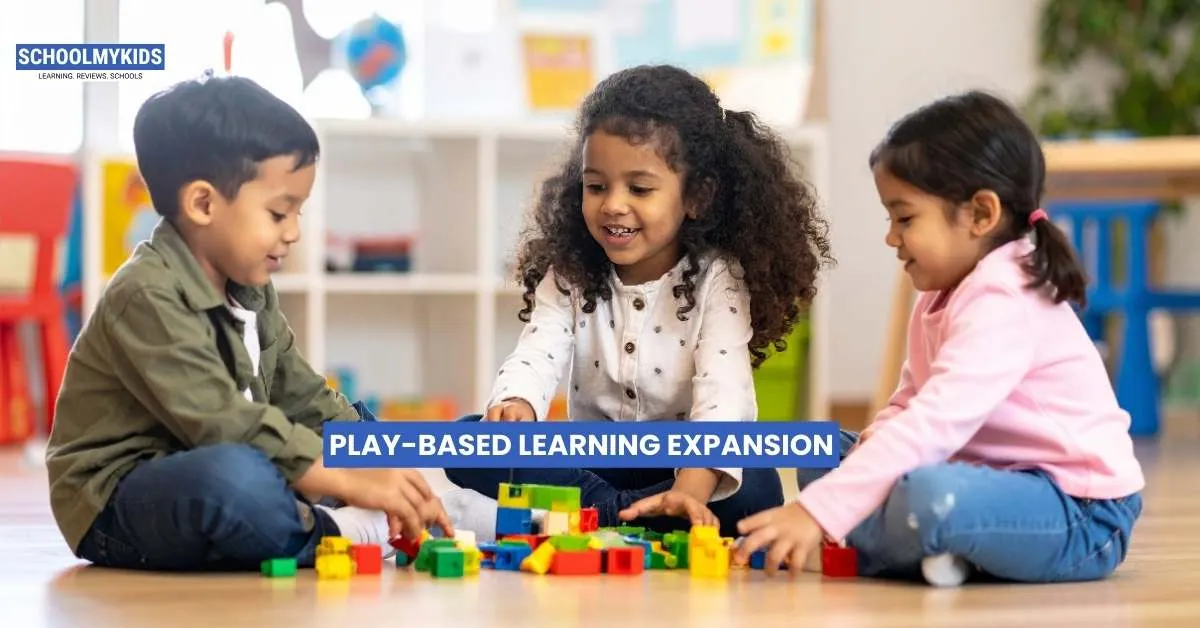
Why “Play” Is Still Treated as a Distraction
In many schools, play is seen as something to be controlled, scheduled, or slowly removed as children grow older. It is tolerated in early years, reduced in primary school, and almost completely eliminated by middle school.
The assumption is simple and flawed:learning becomes serious only when play disappears.
This belief creates rigid classrooms where compliance is rewarded more than curiosity. Students learn how to sit, listen, and repeat, but slowly forget how to explore, test, and question.
Play-based learning challenges this assumption, and that is why it makes adults uncomfortable.
What Play-Based Learning Actually Means
Not Free Time, Not Entertainment
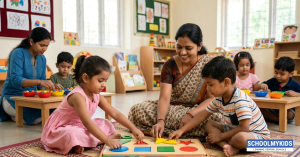
Play-based learning is not unstructured fun or a break from “real” learning. It is learning designed around exploration, choice, experimentation, and feedback.
In play-based environments, students still work toward learning goals. The difference is how they reach them.
Instead of being told answers, students discover patterns. Instead of memorizing steps, they test possibilities. Instead of fearing mistakes, they learn through them.
Play Is a Learning Strategy, Not a Reward
When play is treated as a reward after work, it loses its educational value. In play-based learning, play is the work.
Games, simulations, role-play, building, storytelling, and problem-solving tasks are used deliberately to develop thinking skills.
This is structured freedom, not chaos.
Why Play-Based Learning Works Better Than Rigid Instruction
The Brain Learns Best Under Low Threat
Fear shuts down curiosity. Pressure narrows attention. Play lowers emotional threat.
When students feel safe to try, fail, and retry, learning deepens naturally. Concepts stick because they are experienced, not memorized.
This is especially important for younger students, but it remains true even for adolescents.
Play Encourages Deep Engagement
In play-based tasks, students lose track of time. They stay engaged longer without external pressure.
This state of engagement, often called flow, is where learning accelerates. It cannot be forced through discipline. It emerges through interest.
What Play-Based Learning Builds Long-Term
Thinking, Not Just Knowing
Traditional instruction often answers questions before students learn how to ask them. Play reverses this.
Students learn:
- How to test ideas
- How to adapt strategies
- How to collaborate
- How to reflect on outcomes
These skills transfer across subjects and real-life situations.
Emotional and Social Growth
Play-based learning builds communication, negotiation, empathy, and resilience. Students learn how to lose, revise plans, and work with others.
These skills are rarely assessed but deeply valuable.
Why Schools Resist Expanding Play-Based Learning
It Looks Uncontrolled From the Outside
Quiet classrooms look productive. Active classrooms look messy.
Play-based learning can involve movement, discussion, disagreement, and noise. To an observer trained in traditional discipline models, this feels like a loss of control.
In reality, control has shifted from behavior to learning.
Assessment Systems Lag Behind
Standardized testing favors recall and speed, not exploration. Schools fear that play-based methods will not “cover the syllabus.”
The irony is that students who understand deeply often perform better anyway, even in traditional exams.
Expanding Play-Based Learning Beyond Early Years
Play Does Not End at Primary School
Play-based learning is often restricted to early childhood, as if curiosity expires with age.
Older students benefit from simulations, debates, case studies, experiments, design challenges, and project-based work. These are forms of play, even if they look more serious.
Play evolves. It does not disappear.
Aligning Play With Curriculum Goals
Expansion works when play is linked to learning outcomes. Clear goals, reflection sessions, and guided questioning keep learning focused.
Play without reflection is activity. Play with reflection is education.
What Parents Often Misunderstand
Play Is Not Wasting Time
Parents worry that play means less academic rigor. In reality, it often means more thinking per minute.
Students who learn through play understand faster and forget slower.
Structure Still Exists
Play-based learning is not the absence of structure. It is flexible structure.
Boundaries guide learning, but students have room to explore within them.
A Practical Way Forward for Schools
Play-based learning does not require tearing down the system overnight. It can expand gradually:
- One play-based activity per topic
- Project weeks instead of revision weeks
- Choice-based assignments
- Simulation-based assessments
Small shifts create large cultural changes.
A Clear Conclusion
Play-based learning works because it aligns with how students naturally think and explore. It treats learners as active participants rather than passive receivers of information. By reducing fear and increasing curiosity, it creates conditions where understanding develops more deeply and retention improves.
Expanding play-based learning is not about lowering academic standards. It is about reaching those standards through engagement rather than pressure. When curiosity leads and reflection follows, learning becomes durable instead of fragile.



Be the first one to comment on this story.