It's Saturday morning. Your child is already glued to a tablet, watching their fourth YouTube video in a row. You've said "enough" at least twice. They ignored you both times. And somewhere between the chai getting cold and the homework not done, you've given up for the moment.
This blog isn't a lecture about screen time. Today, we are going to talk about taking your child outside this weekend and letting them dig in the mud. That's it. Just dig.
Why Digging?
We are raising a generation of kids who are growing up mostly indoors. Tuition classes, swimming lessons, dance practice, or coding camps. Their schedules are packed, but their hands rarely touch the earth. And that's costing them more than we realise.
Research consistently shows that children who engage with nature, even just soil, sticks, and open air, show stronger immunity, better emotional regulation, and sharper problem-solving skills. Contact with soil exposes kids to harmless microbes that actually help build a healthier immune system. The same kids who seem restless and reactive indoors often calm down significantly within minutes of being outside.
That's not a parenting myth. That's science.
What a 'Backyard Dig' Actually Looks Like
No need for a garden or special equipment. This isn't a craft project from Pinterest.
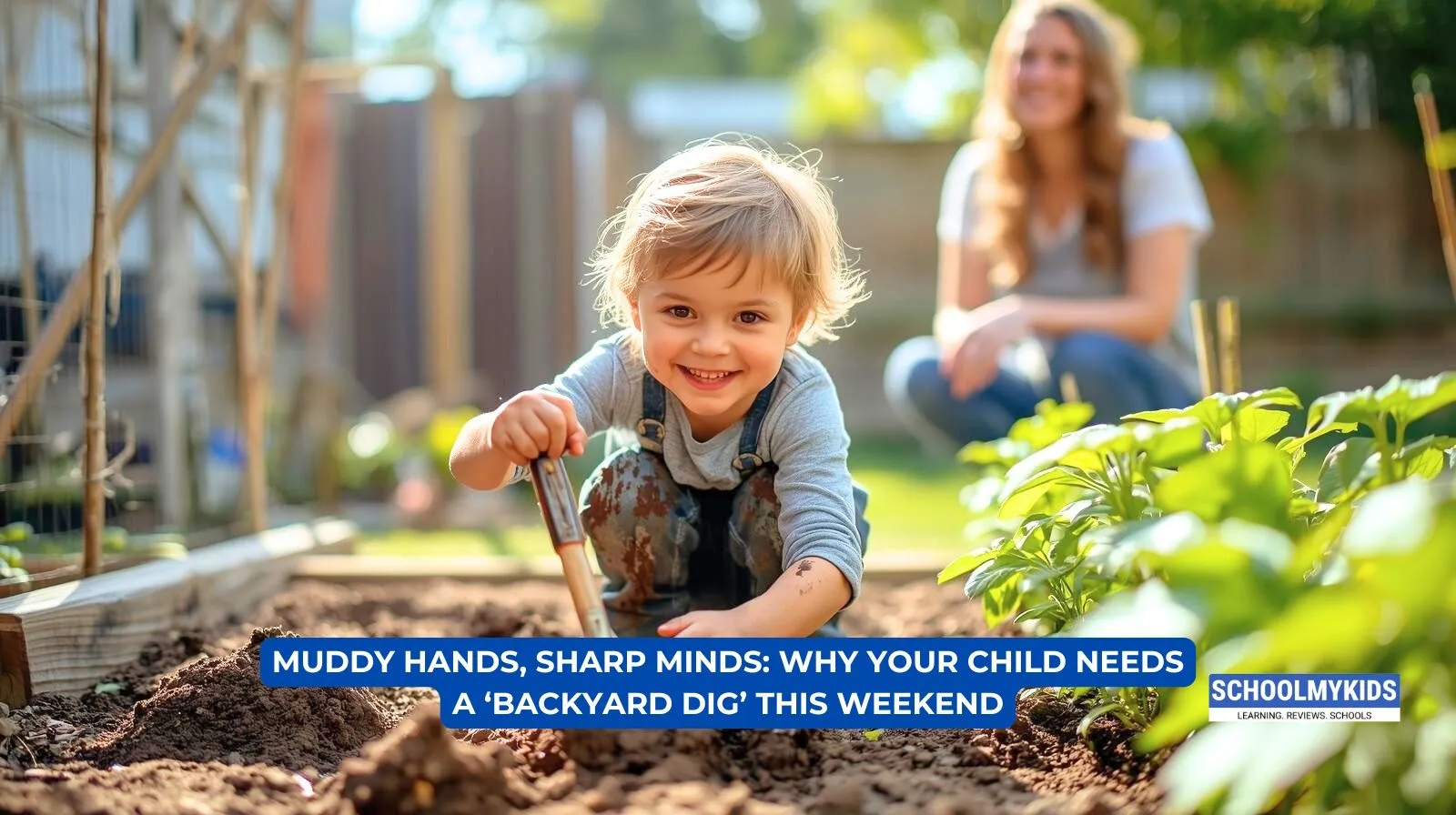
All you need is a corner of your building compound, a terrace pot, a patch of soil near your society park, or even a big plastic tub filled with mud. Give your child a spoon, an old bowl, maybe a cup of water, and step back.
Let them figure out what to do.
They'll start digging. Then they'll find a worm (cue the screaming, then the fascination). They'll make "food" out of mud and leaves. They'll build a wall, knock it down, and build it again. They'll ask you why the soil changes colour when it's wet. They'll get completely dirty.
And every single bit of that is doing something for their brain.
What's Really Going On Inside That Muddy Little Brain
- Their hands are learning: Scooping, pressing, pouring, and shaping. All of this builds fine motor skills. The same muscles and coordination that help with writing and drawing are being strengthened, except it doesn't feel like work to them at all.
- Their brain is problem-solving: How do you make the mud stick? Why does the water disappear? How do you build without it collapsing? These aren't questions from a worksheet; they're real, immediate problems that your child is solving on their own. That's critical thinking in its most natural form.
- Their stress is dropping: Children today are under huge academic pressure. Even kids as young as six are anxious about exams and "performance." Time in nature, especially unstructured outdoor play, has been shown to lower cortisol levels and improve mood. A muddy afternoon can do more for your child's mental reset than any screen break.
- Their imagination is running wild: Without a script, a level, or a storyline given to them, they have to create everything themselves. That mud isn't just mud; it's a kitchen, a city, a science lab. That kind of free, open-ended play is where creativity actually lives.
- Their gut is getting stronger: Exposure to soil and outdoor environments is linked to better gut health and immunity. In our effort to keep kids clean and safe, we've sometimes kept them too protected from the very microbes their bodies need to build defence.
How to Make It Work Without Adding to Your Sunday Stress
- Keep clothes expectations low. Set aside one outfit. Old clothes, old shoes. No stress about the mess.
- Don't hover. Sit nearby with your chai. Let them lead. The moment you start directing ("put this here, dig like this"), the charm breaks. Their job is to explore. Your job is to be present but not in charge.
- Let it be boring first. Many kids raised on screens will stand there blankly for a few minutes, not knowing what to do without a prompt. Wait. They'll figure it out. Boredom is the beginning of creativity.
- Start small. 30 minutes this weekend. That's it. No grand plans needed.
- Join in if they invite you. There is nothing that builds connection faster than a parent who actually sits down in the mud with their child without worrying about their clothes. Try it once. You'll see.
Conclusion
We spend so much time and money trying to make our children smarter, calmer, more confident, and more creative. We enroll them in classes and buy them educational toys. And all of that has its place.
But sometimes the most powerful thing is also the oldest thing: dirt, sunlight, and time to just be a kid.
A backyard dig won't fix everything. But it might be the first step toward a child who is a little less anxious, a little more curious, and a lot more comfortable in their own skin.
That's worth some muddy clothes on a Sunday.






Be the first one to comment on this story.