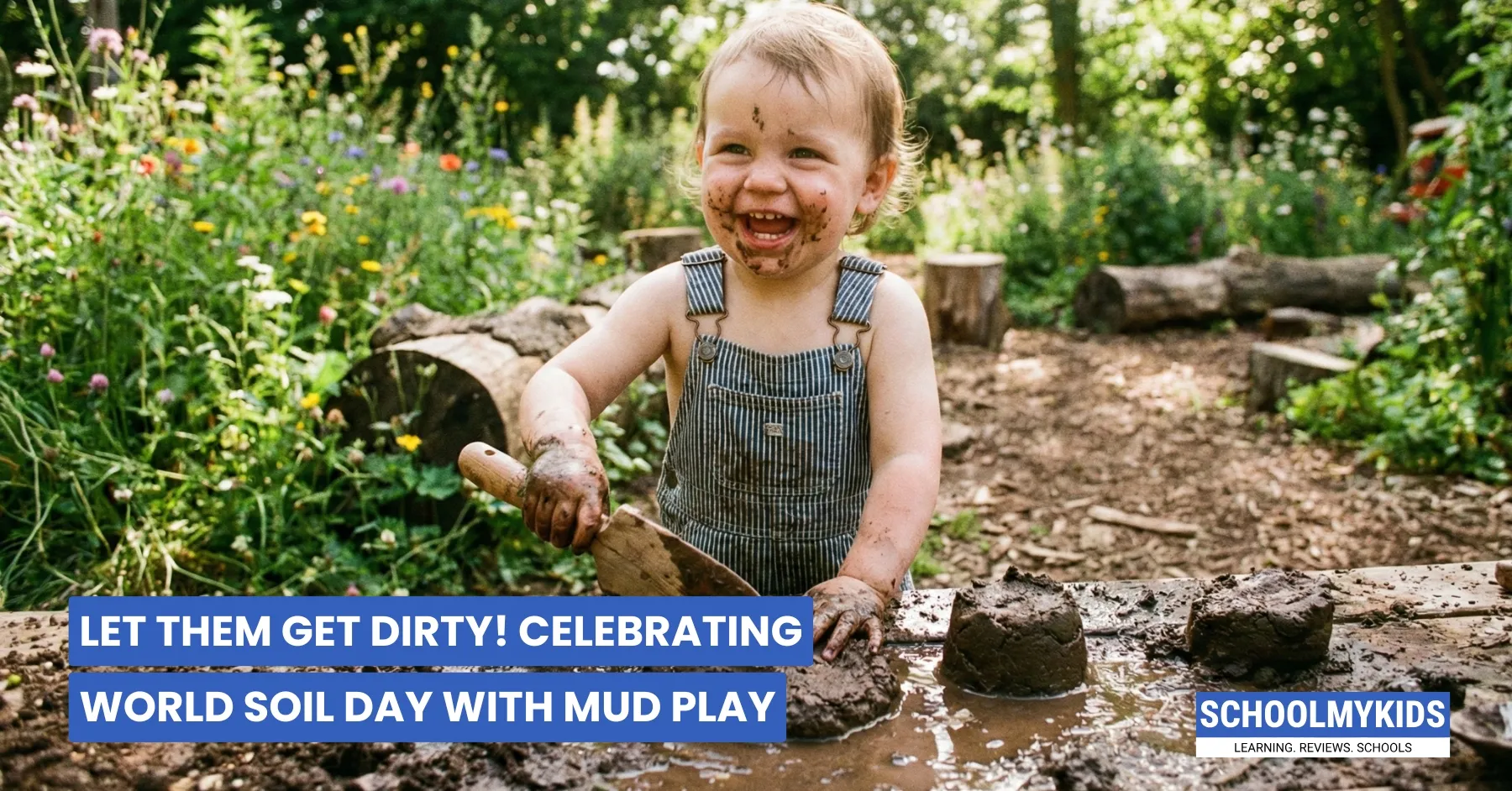
Your child comes running inside, covered head to toe in mud. Your first thought? Probably the laundry you'll need to tackle. But what if that muddy moment is actually a valuable learning experience about our planet?
December 5th marks World Soil Day, and this year's theme is "Healthy Soils for Healthy Cities."
Why World Soil Day Should Matter to Parents?
The soil beneath our feet is more precious than most of us realize. It takes up to 1,000 years to produce just 2-3 cm of soil, yet we're losing it faster than it can regenerate due to pollution, construction, and climate change.
Soil in cities plays a critical role in absorbing rainfall, preventing floods, regulating temperatures, and filtering air pollutants. When we keep covering soil with concrete and asphalt, we're not just losing green spaces. We're making our cities hotter, more vulnerable to flooding, and more polluted.
Teaching children to respect and understand soil isn't just environmental education. It's preparing them to be informed citizens who understand where their food comes from and how cities can be healthier places to live.
Working with December Weather
It's December, and mornings in India are genuinely cold. Most parents aren't eager to send their kids outside to play in freezing mud, and that's completely understandable.
The good news is that you can celebrate World Soil Day in ways that work with winter weather rather than against it. We are going to explore some approaches that acknowledge both the educational value and the temperature outside.
Practical Ideas That Actually Work
1. The Afternoon Mud Kitchen
Take advantage of the warmest part of the day, typically between noon and 3 PM, when the sun provides decent warmth. Set up a simple mud play area in a sunny spot, like your yard, a corner of the garden, or even a balcony.
Provide old pots, wooden spoons, water, and access to soil. Children can create "mud cakes" or "nature soup" while learning about soil texture, consistency, and mixing. Dress them in old clothes and a light jacket, which they can remove if needed.
The learning happens naturally as they experiment with ratios of water to soil, observe how different soil types behave, and engage in imaginative play.
2. Indoor Soil Exploration
When outdoor temperatures aren't cooperating, bring the learning inside. Set up a simple soil investigation station with trays containing different types of soil, like garden soil, sand, and clay, if available.
Provide magnifying glasses and let children examine textures, colors, and properties. Add small amounts of water to observe how each soil type absorbs moisture. Ask questions: Which soil holds water best? Which dries fastest? Why might that matter for growing plants?
This controlled indoor activity teaches observation skills and scientific thinking without weather concerns.
3. Container Gardening Project
Not every family has yard space, and that's perfectly fine. Winter is actually a good time for certain crops. Get some containers, potting soil, and cold-season seeds like coriander, spinach, or fenugreek, all of which grow well in Indian winters.
Let children fill containers with soil, plant seeds, water them, and track growth over weeks. They'll witness firsthand how soil sustains life and where food actually comes from. The mess stays contained, and balconies typically get adequate afternoon sun even in winter.
4. Starting a Compost System
Begin a small-scale composting project with your children. It doesn't require elaborate setup; even a large container works. Add fruit peels, vegetable scraps, dried leaves, and garden soil.
Let children help mix it weekly and observe how organic waste gradually transforms into nutrient-rich compost. It's a longer-term project that teaches patience and natural cycles while simultaneously reducing household waste.
The Broader Value
Children who understand where their food originates, who have physically interacted with soil and planted seeds, and who have observed decomposition and growth develop a different relationship with food and nature. They're less likely to take resources for granted.
Beyond the environmental lessons, sensory play with natural materials supports child development. It encourages tactile exploration, scientific observation, and imaginative thinking. It also provides a welcome break from screen time.
Managing the Practical Concerns
Set boundaries that suit your household. Perhaps mud play happens only on weekends, or only in a designated area, or you keep cleanup supplies ready by the door. The key is finding an arrangement that works for your family rather than avoiding the activity entirely because of the mess involved.
Children learn through hands-on experience. The mud under their fingernails and the dirt on their clothes are simply evidence of that learning taking place.
Conclusion
World Soil Day on December 5th offers an opportunity to connect children with an essential natural resource. Even in December's cooler weather, you can create age-appropriate learning experiences.
Your children might not retain every fact you share about environmental conservation. But they'll likely remember the afternoon they created mud pies in December sunshine, or discovered how worms improve soil, or tasted herbs they grew themselves from seeds.
These hands-on memories create lasting understanding far more effectively than any lecture ever could.





Be the first one to comment on this story.