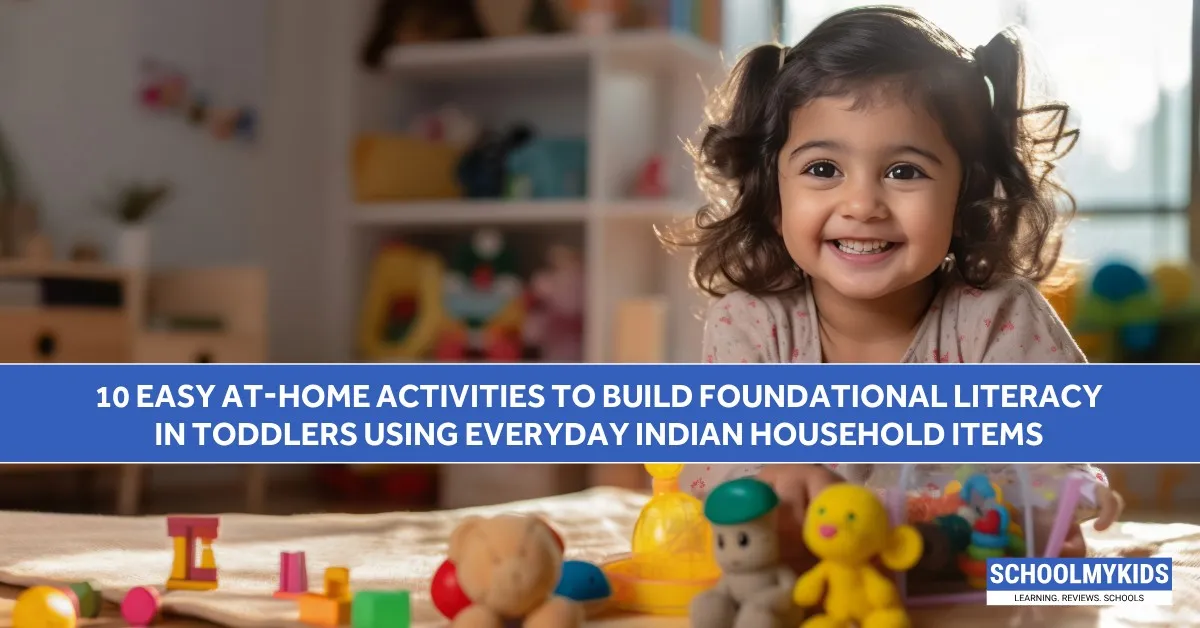
Your two-year-old is running around the house while you’re trying to figure out how to introduce letters and sounds without expensive flashcards or fancy educational toys. You’ve got rice in the kitchen, old newspapers, kitchen containers. Surely that’s enough to start building reading readiness?
It absolutely is. Honestly, the best literacy activities happen with stuff already lying around your home. Toddlers don’t need expensive materials. They need engagement, repetition, and actual interaction with you. That’s it.
We’ve watched parents stress about buying literacy kits when their kids learn more from playing with grandmother’s old mixing bowls and lentils than from any purchase. The key is understanding what builds foundational literacy and then getting creative with what you already have at home.
Let’s talk about ten activities that actually work. Nothing fancy, nothing expensive, nothing requiring special trips to stores. Just using what most Indian homes have.
Why Foundational Literacy Starts Young
Toddlers' brains develop rapidly between ages two and four. They form key connections for language patterns, sound recognition, and understanding that symbols carry meaning. Early literacy here is not about forcing reading. It is about laying groundwork so school reading feels natural later.
Kids who get playful exposure to letters and sounds as toddlers often find it easier to learn reading in school. Not because they are inherently smarter but because familiar pathways make the process less new.
The activities aren’t about perfect pronunciation or memorisation. They’re about exposure, play, repetition without pressure. Your child seeing you write their name on paper repeatedly does something. Your child hearing rhyming words does something. Nothing magical happens overnight, but the foundation builds.
Many Indian families notice the difference these simple home efforts make. ASER reports highlight that strong early exposure helps bridge gaps before formal schooling, where learning outcomes still vary widely across rural and urban homes.
Activity 1: Rice Letter Writing on a Tray
Take an old tin tray or baking pan. Pour rice about two inches deep. Show your child how to draw letters in the rice using their finger. Start with simple shapes. Circle. Line. Then actual letters like A, M, O.
The activity sounds silly, but it’s brilliant. Your child gets tactile experience. They feel what letters look like. Rice moves easily so mistakes don’t matter. They can erase and try again. No pressure.
You sit next to them and draw letters too. Say the letter name and sound out loud. “This is A. It makes the ‘ah’ sound.” Repeat casually. Don’t force memorisation.
Most toddlers enjoy this for ten to fifteen minutes. That’s enough. Repeat a few times weekly, and you’re building letter recognition without it feeling like learning.
Activity 2: Newspaper Letter Hunting
Get old newspapers or magazines. Show your child how to find specific letters you point out. “Can you find the letter M?” They point and you circle it with a pen.
Start with letters from their name. Their brain registers these faster than random letters because they’re personally relevant.
Then expand to other letters. Make it a game. “How many A’s can you find on this page?” They hunt, you count together. That’s vocabulary building plus letter recognition plus fine motor practice.
Keep hunted pages in a folder. Your child sees they’re collecting something. That builds motivation.
Activity 3: Labelling Household Items With Your Child
Write labels for things around the house. Cup. Door. Chair. Spoon. Put labels on actual items using tape or sticky notes.
Your child sees repeatedly that the object has a name written down. They start connecting the written word to the actual thing. That’s a foundational reading concept.
Make it interactive. Point to the label. Say the word. Let them point to it later, and you say the word. No drilling. Just natural repetition.
Change labels occasionally. Keep it fresh. Your child noticing familiar labels got replaced motivates them to pay attention.
Activity 4: Rhyming Games Using Kitchen Items
Take kitchen items. Pan. Can. Spoon. June. Sit with your child and play rhyming games. “Pan rhymes with can. Can you say pan-can together?”
Rhyming supports reading readiness by helping children tune into sound patterns. This is an early step in decoding. Research shows rhyming ability predicts later reading success, though it is one piece among skills like letter knowledge.
Make silly rhymes. Pot-hot. Dish-wish. Your child finds them funny, and that motivates them to play longer.
Use actual items, not just words. Your child seeing the pan while saying the rhyme helps the connection stick better.
Activity 5: Storytelling With Objects From Around House
Gather random household items. Spoon, cloth, stone, stick. Arrange them and tell a simple story using these items. “The spoon went for a walk and found a big stone.”
Then let your child arrange items and you help them tell the story. This builds narrative thinking, which is essential for reading comprehension later.
Your child learns that sequences matter. Stories have a beginning, middle, and an end. They’re getting exposure to story structure without sitting with a book feeling pressured.
Activity 6: Name Writing Practice
Write your child’s name on paper repeatedly. Make it big. Make it small. Let them trace over it with their finger or a crayon.
Their name is the word they recognise fastest. Start there. Once they’re comfortable, write other family member names and repeat.
This seems basic but it is powerful. Recognising and writing their own name is a strong early literacy milestone and one of the best predictors for later skills.
Activity 7: Sound Hunt Around House
Walk around your house making different sounds. “Can you find something that goes ‘tick-tock’?” (clock) “Can you find something that goes ‘splash’?” (water tap)
Your child learns to associate sounds with objects. That is phonetic awareness. It is essential for sounding out words later.
Make animal sounds. “What sound does a dog make? Can you imitate it?” Goofing around with sounds is how literacy foundations get built.
Activity 8: Doodling and Drawing Letters
Give your child paper and crayons. Let them doodle freely. While they doodle, occasionally draw a letter and say its name. “I’m drawing the letter S.”
Don’t tell them what they’re drawing is wrong. Scribbles are fine. Random lines are fine. You’re just introducing letters casually in their creative space.
Some days they’ll ignore letters completely. Other days they’ll copy your letters. It’s variable. That’s normal. You’re building exposure, not demanding performance.
Activity 9: Colour and Sound Matching Game
Take coloured items from your house. Red dupatta. Blue cup. Yellow lemon. As you show each item, say a sound. “Red rhymes with ‘red-dead-bed.’ Can you say them?”
Matching colours with sounds builds multiple associations. Your child’s brain is making connections between visual and auditory information. That’s how reading comprehension develops.
Simple matching gets them thinking about language at multiple levels.
Activity 10: Creating Your Own Simple Picture Book
Cut pictures from magazines. Stick them on paper. Write one simple word under each picture. “Cat. Dog. Tree. House.”
Let your child flip through it repeatedly. They learn to associate pictures with words. They’re basically pre-reading.
Then tell a simple story using the book. “The cat sat under the tree.” Your child follows along, learning narrative with visual support.
Simple Comparison: Activity Characteristics
Activity | Materials Needed | Time Required | Best Age Range | Skills Developed |
|---|---|---|---|---|
Rice letter writing | Tray, rice (supervise closely to prevent ingestion in very young toddlers) | 10-15 mins | 2-4 years | Letter recognition, fine motor |
Newspaper hunting | Old newspaper, pen | 10-20 mins | 2-4 years | Letter identification, focus |
Item labelling | Paper, tape, pen | 20 mins setup | 2-4 years | Word recognition, vocabulary |
Rhyming games | Kitchen items | 10 mins | 2-3 years | Phonetic awareness, listening |
Story with objects | Household items | 15-20 mins | 2-4 years | Narrative thinking |
Name writing | Paper, crayon | 10-15 mins | 2-3 years | Name recognition, tracing |
Sound hunt | None needed | 15 mins | 2-4 years | Sound association, listening |
Doodling | Paper, crayons | 20-30 mins | 2-4 years | Fine motor, letter exposure |
Colour-sound matching | Coloured items | 10-15 mins | 2-3 years | Multiple associations |
Picture book | Magazines, paper, paste | 30 mins creation | 2-4 years | Word recognition, narrative |
Real Things That Happen When You Do These Activities
Your child will get bored sometimes. That’s fine. Stop the activity. Try again later. Forcing a toddler makes them resent literacy. That backfires.
They’ll mix up letters. They’ll call ‘B’ by the wrong sound. That’s completely normal. Correction happens naturally through repetition, not through scolding.
Some activities will work better than others with your child. That’s okay. Different kids engage differently. Try everything once and continue with what they enjoy.
They’ll want to do favourite activities repeatedly. Let them. Repetition is how learning happens. Your child doing rice letters five times a week is perfect.
Things Parents Worry About Unnecessarily
Will my child fall behind if they do not know the full alphabet by three? No. Many three-year-olds recognise just a few letters, often starting with those in their name, and that is typical. Most build full knowledge gradually in preschool.
Should I push if my child doesn’t seem interested in letters? No. Pushing creates resistance. Interest follows exposure. Keep doing activities casually, and interest develops naturally.
Is doing these activities enough or should I also do formal classes? These playful home activities provide excellent foundational support. They complement but do not replace structured opportunities where available. Balance feels right for most families.
Questions Parents Actually Ask
How often should I do these activities?
Three to four times weekly is good. Not daily. Kids get burned out. They also need time playing without any learning agenda. Balance matters.
What if my child keeps wanting to eat the rice?
That is normal for young toddlers. Either supervise very closely or wait a few months and try again. Safety always comes first.
Can I do multiple activities in one day?
Sure. But keep each one short. Fifteen minutes of combined activity fine. More than that and you’re asking too much attention span from a toddler.
My child will only do one activity repeatedly. Is that okay?
Absolutely. They’re getting deep engagement with that one activity. That’s valuable. They’ll expand naturally later. Force variety and you might kill their interest.
Should I correct my child when they get letters wrong?
Gently, not aggressively. Model the correct version casually. This is A. See how it looks? Avoid saying you are wrong. That can create unnecessary worry around learning.
What Actually Happens Long-Term
Kids doing these activities start recognising letters and words they see around them. “I see M at McDonald’s!” They’re making real-world connections. That’s literacy foundation working.
Reading readiness develops gradually. Then suddenly they click. They start sounding out simple words. This moment often builds gradually with consistent playful exposure and commonly shows stronger readiness around ages three to five, varying by child.
Then actual reading instruction in school becomes easier. Their brain already knows letters and sounds exist. School is just formalising what they’ve been absorbing.
Key Takeaways
Foundational literacy builds through exposure to letters, sounds, and words in casual, playful ways.
Expensive materials unnecessary. Rice, newspapers, household items sufficient.
Consistency matters more than perfection. Regular informal engagement beats occasional formal lessons.
Your presence and participation crucial. Child learning happens through doing with you, not doing alone.
Different kids engage differently. Try activities and continue with what works for your child.
Pressure kills motivation. Keep activities fun and pressure-free.
Repetition builds familiarity. A child wanting to repeat a favourite activity is perfect.
These activities build a foundation, making formal reading instruction easier later.
Play-based learning most effective for toddlers. Learning should feel like fun, not an obligation.
Literacy development is individual. Timelines vary. Comparing with other children counterproductive.
Play-based home activities using everyday items effectively support early language and literacy foundations as seen in diverse family settings.



Be the first one to comment on this story.