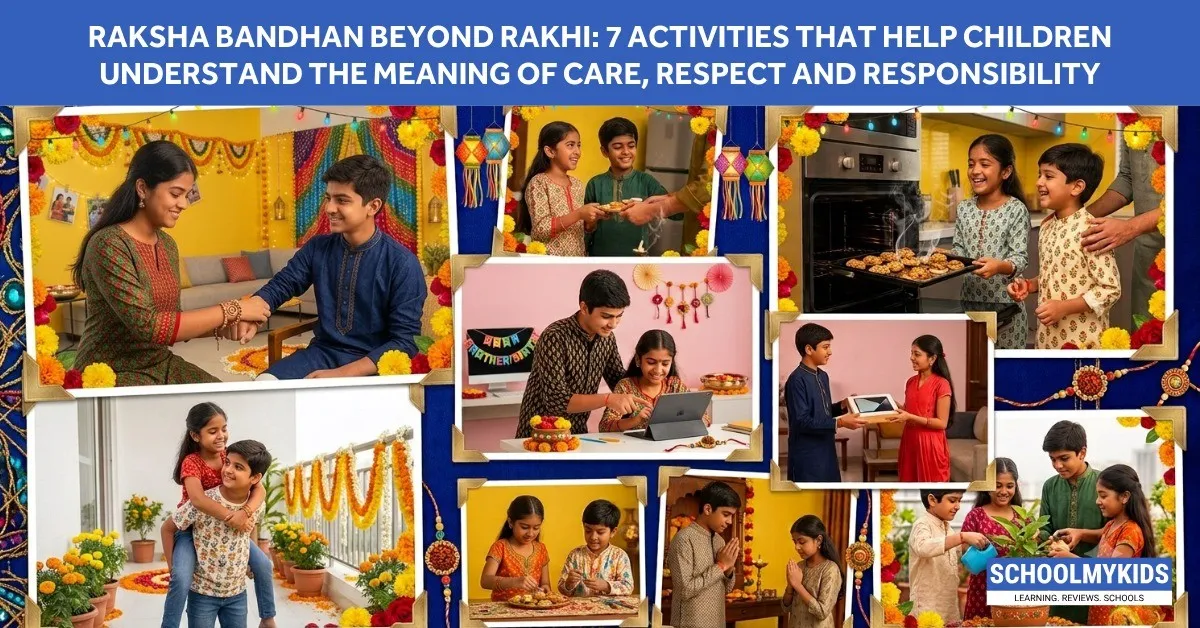
Your kid ties a rakhi. Gets some money. Eats sweets. Then life goes back to normal.
That’s what Raksha Bandhan has become for most families. A ritual. Pretty on social media. Meaningless underneath.
The festival was supposed to teach something. It was supposed to be about protection. Care. The responsibility of looking out for someone. Of honoring that relationship. The name itself means the bond of protection. Somewhere along the way, that part got lost in the ceremony.
Your child probably doesn’t understand why they’re tying a thread on their sibling’s wrist. They just know it happens once a year around August. The deeper message? Completely bypassed.
This year, change that. Not by lecturing. By doing activities that make them actually experience what care and responsibility feel like.
Activity 1: The “Responsibility Swap” Day
What It Teaches: Real Accountability
Pick one day close to Raksha Bandhan. Your child becomes responsible for their sibling’s safety and well-being for a few hours. Not as a punishment. As an experience.
Your younger child needs breakfast? Your older child makes it. Not perfectly. But they have to think about what the younger one likes. Whether they’re eating enough. If the timing works for their schedule.
Your younger child wants to go outside? Your older child checks the weather. Gets appropriate clothes ready. Brings water. Watches them closely. Not hovering. But actually present.
What they’re learning: Care requires work. It’s not automatic. You have to think about another person’s needs before your own sometimes. You have to stay alert. You have to make decisions that affect someone else.
The sibling will likely get frustrated during this. Maybe they’ll want something you can’t provide. That frustration teaches that taking care of someone means handling their disappointment sometimes.
Activity 2: The “Strength Exchange” Conversation
What It Teaches: Mutual Respect
Raksha Bandhan traditionally emphasizes the brother protecting the sister. That one-way framing is outdated for most families today. Real protection in modern life looks different.
Sit with your children. Ask each one: “What’s something you’re good at? What strength do you have that protects our family?”
One sibling might say, “I’m good at listening when people are sad.” Another says, “I’m good at fixing things.” Another says, “I notice when someone’s lying and call them out.”
Write these down. Create a family “strength map.” Now reframe Raksha Bandhan. This year, each child ties a rakhi and says: “I’m protecting you with my [listening / fixing / honesty / humor / creativity].”
Suddenly the festival makes sense. Protection isn’t just physical. It’s emotional. It’s practical. It’s noticing when someone needs help.
Your daughter protecting her brother with her ability to spot lies? That’s real. That’s modern. That teaches actual responsibility.
Activity 3: The “Care Package” Project
What It Teaches: Thoughtfulness and Effort
Instead of buying a gift, your child creates something for their sibling. Not crafty. Practical.
They think about what their sibling actually needs. Then they build a package addressing that.
Maybe their sibling struggles with organization. The package contains labels, a small organizer, and a note saying “I’m protecting your peace of mind with this.”
Maybe their sibling gets stressed before exams. The package has calming tea, a favorite snack, and a note listing three times the giver will be available to help them study.
Maybe their sibling gets lonely. The package has tickets to a movie they want to see together, plus a note saying “I’m protecting you from feeling alone.”
The activity teaches planning. Observation. Effort. Your child has to think beyond themselves. They have to notice what someone else actually needs. Then act on it.
This takes way more work than buying a rakhi. Which is exactly the point. Care requires effort.
Activity 4: The “Protection Circle” Discussion
What It Teaches: Vulnerability and Support
This one’s emotional. That’s important.
Sit with your children. Ask: “What are you afraid of? What makes you feel unsafe or worried?”
They might say school stress. Social anxiety. Feeling left out. Family conflict. Academic pressure. Whatever it is, they say it aloud.
Now the other sibling responds: “How can I protect you from this? What can I do?”
Maybe it’s just listening when they’re stressed. Maybe it’s helping with homework. Maybe it’s inviting them to hang out with friends. Maybe it’s just checking in periodically.
Write down specific commitments. Not vague promises. Concrete actions.
This teaches something most kids don’t learn: asking for help. Accepting support. Recognizing vulnerability isn’t weakness. It’s wisdom.
Also, it teaches the giver that protection sometimes means just showing up. You can’t fix someone’s anxiety. But you can sit with them while they’re anxious. That counts.
Activity 5: The “Tradition Reimagine” Project
What It Teaches: Critical Thinking and Adaptation
Ask your child: “What’s one part of Raksha Bandhan that doesn’t make sense to you? What would you change?”
Maybe they think the gender roles are outdated. Maybe they think only siblings should celebrate it. Maybe they think it should happen more than once a year.
Let them redesign the festival. How would they do Raksha Bandhan? What would be the same? What would change?
They create their version. New ritual. New meaning. New practices.
Then they present it to the family. Why these changes? What do they understand about care and responsibility that made them change things?
This teaches respect for tradition while also respecting their own thinking. They’re learning that traditions can evolve. That honoring something doesn’t mean freezing it in time. That your voice matters in shaping family culture.
Activity 6: The “Random Act of Care” Challenge
What It Teaches: Responsibility Isn’t Transactional
For a week after Raksha Bandhan, each child does one act of care for their sibling. Without being asked. Without expecting something in return.
The catch: it has to be inconvenient. It has to cost them something. Time. Energy. Comfort.
Maybe they wake up early to make breakfast. Maybe they sacrifice their screen time to help with homework. Maybe they give up going out with friends to spend time with their sibling.
They write down what they did. How it felt. What they noticed about their sibling’s reaction.
This teaches the real meaning of care. It’s not convenient. It’s not always appreciated immediately. Sometimes you do it, and nobody notices. You do it anyway because that person matters.
It’s not transactional. You’re not doing it for rakhi money or gifts. You’re doing it because that’s what caring actually looks like.
Activity 7: The “Letter to Your Sibling” Ritual
What It Teaches: Expression and Gratitude
Each child writes a letter to their sibling. Not about rakhi. Not about the tradition. About them.
What do they respect about their sibling? What do they appreciate? When did their sibling protect them or help them, even in small ways?
Keep the letters sealed. Give them to each other on Raksha Bandhan. Read them privately. Keep them.
This teaches something often missing from family relationships: saying what you actually feel. Kids rarely tell each other “I respect you” or “I’m grateful for you.” This forces that conversation.
Also, it creates a record. Years from now, when they’re adults living in different cities, they have this letter. Proof that they mattered to each other. That there was real care.
Why These Activities Actually Matter
Raksha Bandhan gets reduced to a ritual. But rituals can be windows. If you use them right.
Your child tying a rakhi means nothing if they don’t understand why. They’re going through the motions. But make them actually experience what care looks like? What responsibility feels like? Suddenly the rakhi means something.
They’re learning that care is work. That respect isn’t automatic. That protection takes different forms. That vulnerability is normal. That gratitude matters.
These aren’t lessons you teach through lectures. They sink in through experience. Through doing. Through feeling.
These activities work for same-gender siblings and for only children who want to include cousins or close friends. The core is the practice of care, not the exact family tree.
Frequently Asked Questions
Q1: What if my children don’t get along? Will these activities make things worse?
These activities work better with conflict actually. Not intense conflict requiring therapy. But normal sibling friction. The activities create opportunities for connection. Your kids might discover they respect each other more than they thought. Or they’ll at least understand each other better.
If there’s serious conflict, start small. The letter-writing activity might be enough. Don’t force them into extended time together if there’s genuine tension. Let these activities happen at their own pace.
Q2: Isn’t this a lot of work for just a festival?
It is. That’s intentional. The point is these activities aren’t about the festival. They’re about building actual relationships. Raksha Bandhan is just the occasion. The work you’re doing has value year-round.
Pick one or two activities if seven feels like too much. Quality matters more than quantity.
Q3: My siblings and I never did this growing up. Is it too late?
Not at all. Do these activities now. With your own kids. With your siblings if you want. You’re creating a new tradition. That’s allowed.
Q4: What if one sibling doesn’t want to participate?
Don’t force it. Some kids need space. Some are resistant to emotions. Let them opt in when ready. Maybe start with the care package project since it’s less emotionally heavy than other activities.
The goal isn’t participation. It’s meaning. Forced participation has the opposite effect.

Be the first one to comment on this story.