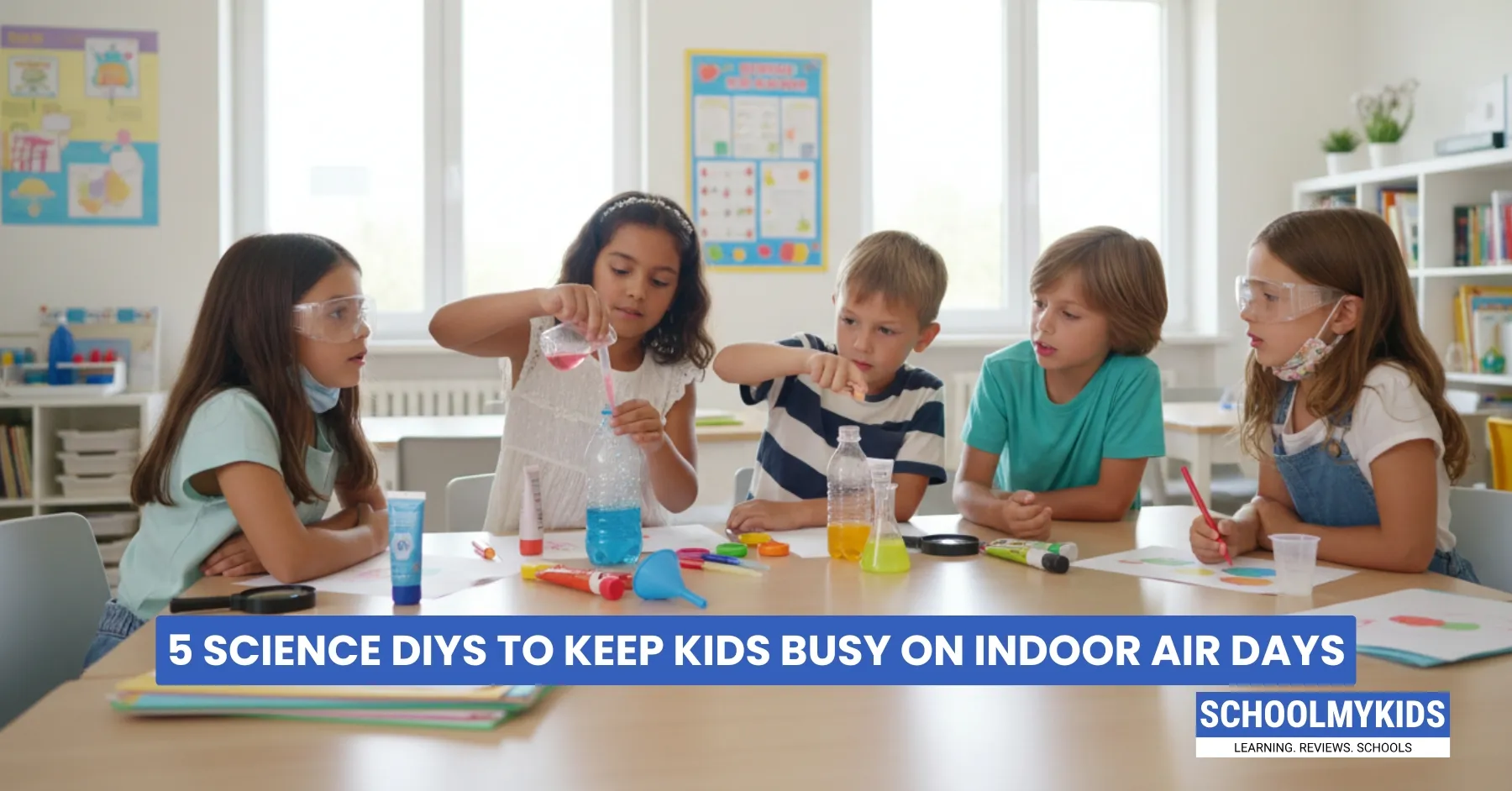
It's December, and if you're in Delhi or other North Indian cities right now, you know the drill. You wake up, check your phone, and the AQI is 300+. Schools are closed or shifted online in places like Delhi, parents are panicking about your lungs, and outdoor play? Forget it. The air outside looks like someone threw a gray blanket over the whole city.
So here you are, stuck indoors. And while scrolling Instagram or binge-watching shows for 12 hours straight sounds tempting, even that gets boring eventually. Plus, your parents are definitely giving you "the look" that says you need to do something productive.
So, let's do some science experiments that are genuinely cool, mess-free (mostly), and won't drive your parents up the wall.
1. The Invisible Air Pressure Bottle Crush
What You Need: Empty plastic bottle, hot water (handled by an adult), cold water, bowl
Time Required: 15-20 minutes
Watch a bottle crush itself without you touching it. It's basically magic, except it's science.
How It Works: Pour a small amount of hot water into the empty bottle, swirl it around for 30 seconds, then pour it out. Quickly seal the bottle tightly. Place it in a bowl of cold water and watch as the bottle starts collapsing on itself like it's being squeezed by an invisible hand.
What's Actually Happening: The hot water creates steam inside the bottle, pushing out most of the air. When you seal it and cool it down, that steam condenses back into water, creating lower pressure inside the bottle. The normal air pressure outside is now stronger than the pressure inside, so it crushes the bottle.
Why It's Perfect for Indoor Days: Zero mess, super visual, and genuinely impressive. You can show your parents, and they'll actually be interested.
2. DIY Lava Lamp (Chemistry Meets Art)
What You Need: Clear bottle or glass, water, vegetable oil, food coloring, effervescent tablets (like Alka-Seltzer or Pudin Hara's fizzy version)
Time Required: 30 minutes (can be extended)
Create your own hypnotic lava lamp that actually works.
How It Works: Fill your bottle 3/4 with water. Pour oil on top until it's almost full. Add 10-12 drops of food coloring (it'll sink through the oil to the water). Break an effervescent tablet into pieces and drop one in. Watch the colorful bubbles dance up and down like a lava lamp.
What's Actually Happening: Oil and water don't mix because of their different densities and molecular structures. The food coloring is water-based, so it sinks through the oil. When you add the tablet, it releases carbon dioxide gas, which attaches to the colored water droplets and carries them up. When the gas escapes at the top, the droplets sink again. Repeat!
Why It's Perfect for Indoor Days: It's calming to watch, reusable (keep adding tablets), and doubles as room decor. Plus, it's Instagram-worthy if you're into that.
Safety: Tablets are for the experiment only and should not be consumed afterward.
3. The Smartphone Microscope Challenge
What You Need: Smartphone, small water droplet, clear plastic (from a plastic bag or wrap), tape
Time Required: 20-30 minutes
Turn your phone into a microscope using just a water droplet.
How It Works: Cut a small square of clear plastic. Place a tiny water droplet in the center (use a toothpick or straw). Tape the plastic over your phone's camera lens with the water droplet centered over the lens. Point your camera at small objects, like text from a book, fabric, your skin, salt crystals, leaves, and see them magnified like never before.
What's Actually Happening: The water droplet acts as a convex lens, bending light rays and magnifying whatever you're looking at. It's the same principle that magnifying glasses and actual microscopes use, just way simpler and cheaper.
Why It's Perfect for Indoor Days: Uses tech you already have, encourages exploration, and you can spend hours discovering tiny details in everyday objects. It's like finding hidden worlds in your own home.
4. The Static Electricity Light Show
What You Need: Balloon, wool cloth (or your hair), aluminum foil, dark room
Time Required: 15-25 minutes
Create tiny static discharges with your bare hands.
How It Works: Blow up the balloon. Rub it against wool or your hair for about 30 seconds. Turn off the lights and rub the balloon against aluminum foil in the dark. You'll see tiny blue sparks and even hear little crackles. For an extra effect, bring the charged balloon near a wall and watch it stick or make small pieces of paper "dance" toward it.
What's Actually Happening: When you rub the balloon, electrons transfer from the wool (or your hair) to the balloon's surface, giving it a negative charge. When the charged balloon gets close to a conductor like aluminum foil or even another person, the electrons jump across the gap, creating those visible sparks!
Why It's Perfect for Indoor Days: It's literally playing with lightning (safely). Works best at night, so it's perfect for those long winter evenings when it gets dark early.
5. Kitchen Chemistry: Invisible Ink Messages
What You Need: Lemon juice (or milk), Q-tip or small brush, white paper, lamp or light bulb
Time Required: 20-30 minutes (plus drying time)
Write secret messages that only appear when heated. Spy-level stuff.
How It Works: Squeeze some lemon juice into a small bowl. Dip your Q-tip into the juice and write a message or draw something on white paper. Let it dry completely (about 15-20 minutes). Hold the paper close to a warm lamp bulb (not touching) or ask an adult to help you iron it on low heat. Watch your invisible message appear in brown.
What's Actually Happening: Lemon juice contains carbon compounds that are nearly colorless when dried. When heated, these compounds oxidize and decompose, turning brown.
Why It's Perfect for Indoor Days: Low-key, safe, and has that cool spy/detective vibe. You can create entire secret message systems with friends or siblings. Plus, you probably have everything you need already.
Conclusion
These experiments aren't about becoming a scientist or padding your resume or proving anything to anyone. They're just about making indoor days more manageable. They're about curiosity, creativity, and finding moments of "whoa, that's actually cool" in an otherwise frustrating situation.
Stay safe, and breathe clean air. Until then, make some lava lamps, crush some bottles with air pressure, and maybe discover that being stuck indoors occasionally has its own kind of potential.







Be the first one to comment on this story.