Introduction
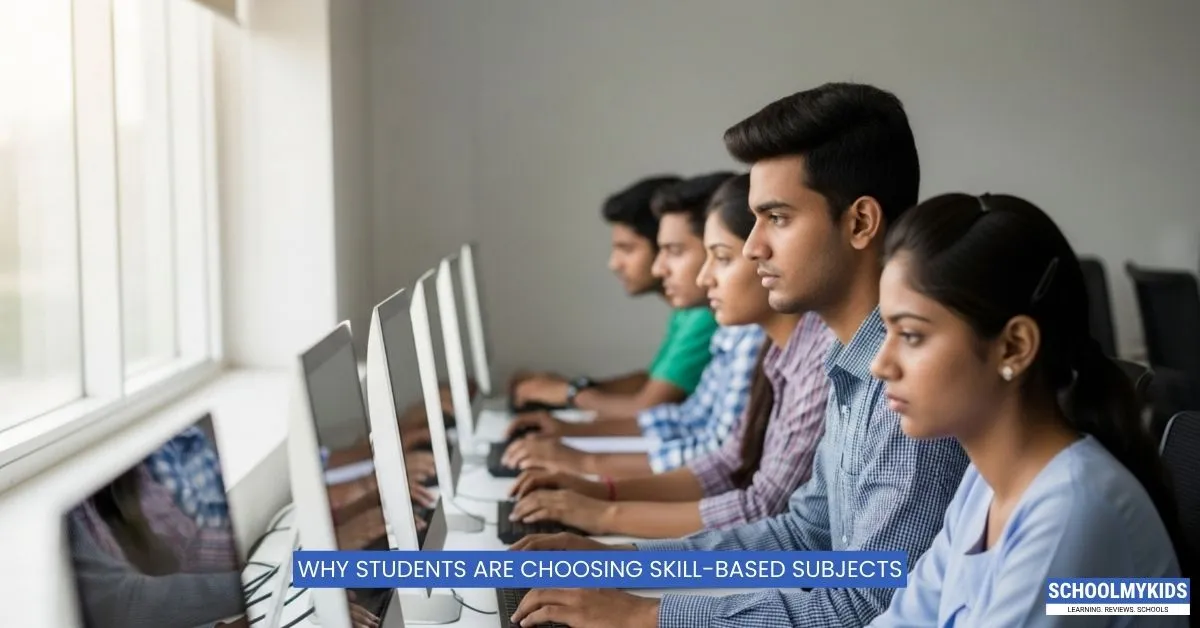
In recent years, there has been a significant shift in student preferences towards skill-based subjects. Unlike traditional theory-heavy courses, skill-based education emphasizes practical knowledge, hands-on experience, and real-world application. This trend is gaining momentum in 2025 as students recognize the direct benefits of skills that prepare them for evolving career landscapes and lifelong learning.
Reasons Students Prefer Skill-Based Subjects
1. Enhanced Employability
Skill-based subjects impart industry-relevant competencies such as digital literacy, communication, problem-solving, and technical expertise. The India Skills Report 2025 highlights that vocationally trained students are 35-50% more employable than those with conventional degrees. Students choose skill-based education to improve their career prospects and secure better job placements.
2. Practical Learning and Real-World Application
Students appreciate learning that goes beyond textbooks to involve practical exercises, projects, internships, and workshops. This hands-on experience helps them understand how theoretical concepts translate into real-world solutions. It builds confidence and competence in handling challenges they will encounter professionally.
3. Engagement and Motivation
Skill-based education is more interactive and engaging. Students become active learners who experiment, collaborate, and innovate, which boosts their motivation and interest in studies. It shifts the focus from memorization to meaningful understanding and creativity.
4. Alignment with Industry Needs
With rapid advancements in technology and changing job market demands, students seek courses that prepare them for fields like data analytics, AI, digital marketing, EV repair, and more. Skill-based programs closely align with these demands, equipping learners with up-to-date expertise.
5. Lifelong Learning and Adaptability
Skill-based education promotes continuous self-improvement. It fosters an entrepreneurial and innovative mindset, encouraging students to adapt and grow with changing environments, which is critical for surviving and thriving in the future workforce.
6. Personal Growth and Confidence
The tangible outcomes of skill learning — such as completing projects or mastering tools — lead to higher self-esteem. Students find purpose-driven education rewarding as they can see the direct impact and relevance of their efforts.
Examples of Popular Skill-Based Subjects
- Coding and Programming
- Financial Literacy
- Communication and Soft Skills
- Entrepreneurship and Innovation
- Digital Marketing and Data Analytics
- Artificial Intelligence and Machine Learning
- Creative Arts and Design Thinking
Conclusion
The growing preference for skill-based subjects reflects a paradigm shift in education where practical competence outweighs rote memorization. Students choose these subjects to enhance employability, gain real-world experience, stay motivated, and prepare for dynamic future career paths. Skill-based education fosters adaptability and lifelong growth, essential attributes for success in the 21st century workplace.







Be the first one to comment on this story.