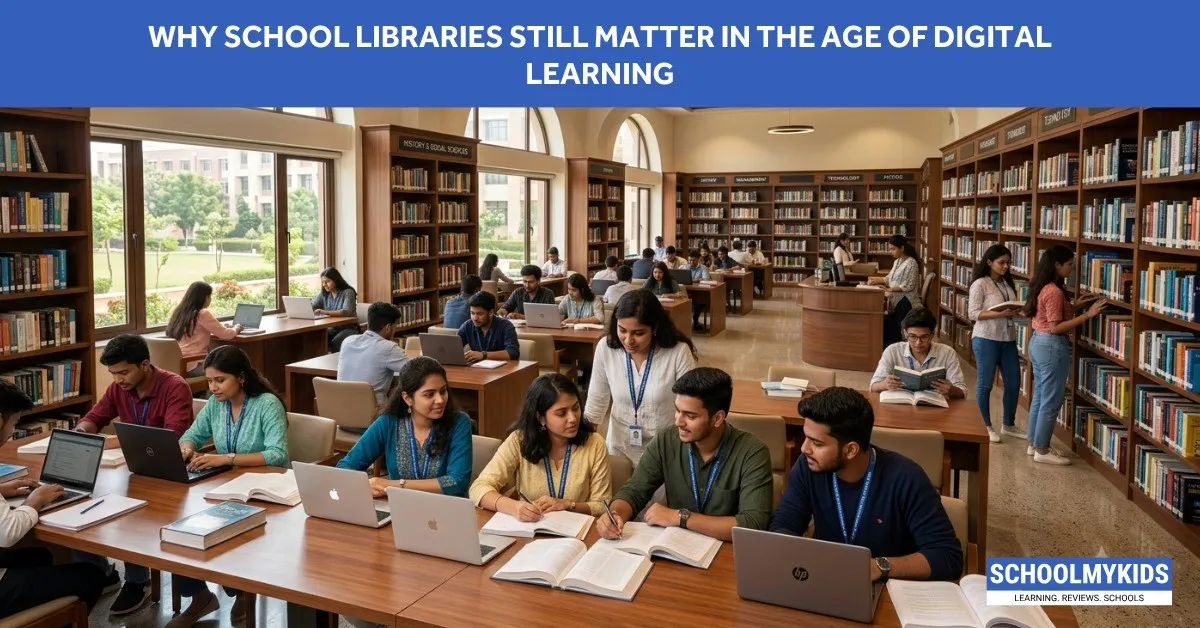
Your school library is nearly empty. Kids are all on laptops. Everyone has smartphones. Google answers any question in seconds. Why would anyone need a physical library anymore?
That’s the assumption. It’s also wrong. The digital age didn’t kill libraries. It made them more necessary.
What Changed and What Didn’t
What Changed:
Kids don’t need libraries to find information. Google does that.
You can get any book delivered to your phone instantly.
Research doesn’t require going anywhere.
Studying happens on devices.
What Didn’t Change:
The human brain still needs physical space to think deeply.
Distraction increased exponentially. Libraries are quiet spaces.
Not all information online is reliable. Librarians teach discernment.
Real books trigger different cognitive processing than screens.
Belonging matters. Libraries create community.
The Real Problem: Digital Distraction Is Destroying Focus
When a student opens a laptop to research, they’re fighting their own brain. The device is designed to pull attention away. Social media notifications. Email pings. YouTube suggestions. The device itself is engineered to distract.
A student researching in a physical library? Different experience entirely. No notifications. No algorithm suggesting videos. No infinite scroll rabbit holes. Just books. Quiet. Focus.
Students who work in physical library spaces for research often show deeper engagement with sources, stronger evaluation of information, and higher-quality citations than those relying only on open web searches. This is not nostalgia. It shows up as measurable differences in research quality and information literacy.
What School Libraries Actually Do (Beyond Lending Books)
Physical Space For Thinking
Your home has your family. Your room has your stuff. The library is neutral. It’s a space where you can think without distractions. Without judgment. Without your younger sibling asking for things.
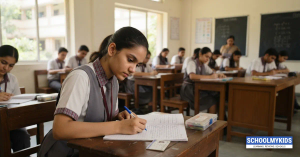
A quiet corner of a library is where students actually work. Not pretend to work. Not study while scrolling. Actually focus.
Librarians Aren’t Extinct
The librarian in 2026 is nothing like the stereotype. They’re not shelving books. They’re:
Teaching information literacy (how to evaluate sources, spot misinformation, verify facts)
Helping students navigate research projects with intent, not just Google searches
Recommending books based on what a student actually cares about, not algorithms
Connecting students with resources they didn’t know existed
A student trying to write about climate change can ask a teacher or Google or ChatGPT. Each gives basic information. A librarian digs deeper. Finds primary sources. Points out bias in certain sources. Teaches the student how to actually research something complex.
Community Hub
Libraries are where study groups happen. Where friends meet. Where awkward kids find other kids interested in the same weird things. Where introverts feel safe.
Your school library’s book club might be the only place a student feels like they belong. Your library’s quiet corner might be where a student finds peace when everything else is chaos.
School libraries with certified staff and current collections deliver larger gains for students from lower-income households and students of color, the groups least likely to have well-resourced home libraries or quiet study space. Cutting library positions hits these students hardest.
Why Physical Books Still Matter Even With Screens Everywhere
The current generation thinks they prefer screens. They don’t.
Multiple studies and meta-analyses comparing the same text on paper versus screens find consistent advantages for print on detail retention, deeper processing, and comprehension, especially for informational or complex material. Students reading on screens tend to skim more, get distracted more easily, and show shallower engagement. Their brains process the material differently depending on the medium.
The Physical Book Advantage
Tactile engagement changes learning:
You remember where something was on the page (visual memory)
Writing notes on the margins creates deeper processing
No infinite scroll temptation. You can only move forward
The physical weight and texture trigger different memory systems
Screens create an illusion of learning:
You feel like you’re studying because you’re reading
But your brain is partially focused on not getting distracted
You’re not actually absorbing as much
And you know you can just search again later, so you don’t try to retain
What’s Happening In Modern School Libraries
The hybrid space:
Libraries aren’t choosing between books and technology. They’re doing both intelligently.
Physical book collections curated by actual humans (not algorithms)
Digital resources for when you need them
Computers available but separated from casual browsing areas
Quiet zones where phones are off limits
Collaborative spaces where group work happens
Media labs for creating, not just consuming
Why Your Child’s School Library Matters Specifically
College preparation:
Universities still expect research skills. The ability to find reliable sources. To distinguish between credible and unreliable information. To synthesize complex material. Students who learned these skills in their school library have a massive advantage.
Information literacy survival:
The internet is full of misinformation. Deepfakes. AI-generated content. Biased sources. Scams. Kids who never learned to evaluate sources believe false things constantly.
Librarians teach this. Schools with strong libraries produce students who can identify manipulation. Who question sources. Who verify before sharing.
Actual thinking vs algorithm-fed thinking:
When your brain only consumes what algorithms suggest, your thinking gets narrower. Your perspective becomes what the algorithm decided you’d like.
A librarian says “you might also be interested in…” and suggests something totally outside your filter bubble. This expands thinking. Challenges assumptions. Creates intellectual growth.
The Loneliness Crisis And Libraries
Recent data show Gen Z and current teens reporting markedly higher loneliness than earlier cohorts (Cigna 2025 Loneliness in America; Monitoring the Future trends; PISA international data), despite (or because of) constant digital connection.
School libraries create actual connection:
Study partners you meet in person
Book club conversations that happen face-to-face
Librarian who knows your actual interests
Other students doing their own thing (everyone belongs here)
No performance anxiety as nobody’s watching your social media presence
A student who doesn’t fit in socially often finds refuge in libraries. Not because it’s sad. But because it’s safe. And in that safe space, they often meet people who share their interests.
What Happens When Schools Abandon Libraries
Schools that went fully digital are noticing problems:
Students don’t know how to research properly
Information literacy skills are weak
Independent source evaluation becomes harder
Quiet spaces for focus and decompression disappear
Sustained engagement with text can decline
Community feeling diminishes
These aren’t minor issues. They’re foundational to education.
The Digital Distraction Reality
Your school issued tablets. Teachers assign work on devices. Everything’s digital now.
But the issue is that every device has access to everything. The work tool is the distraction tool. It’s like trying to focus while someone’s constantly offering you entertainment.
A physical library removes that temptation. You can’t doom-scroll books. Can’t get notifications from books. Can’t access Instagram from a novel.
This constraint is actually freedom. The constraint creates focus.
Real Numbers: What Research Actually Shows
Students in schools with full-time certified librarians score significantly higher on reading and math tests than matched peers without them (Wine et al., 2023).
Meta-analyses show a reliable advantage for print over screens on reading comprehension (Delgado et al., 2018).
Library use and librarian instruction are linked to better research skills, higher-quality source evaluation, and improved academic outcomes (Lance & Kachel summaries; ACRL reports).
Strong school library programs correlate with higher graduation rates and better performance for students from lower-income backgrounds (multiple state studies).
These are meaningful differences.
What A Modern Library Looks Like
Flexibility:
Quiet zones for focus
Collaborative areas for group projects
Media creation space (podcasting, filming, graphic design)
Comfortable seating (not just desks)
Food allowed (yes, really)
Collections:
Still books, but curated specifically for your school’s interests
Graphic novels (yes, literature)
Magazines and newspapers (actual current affairs)
DVDs and documentaries
Audiobooks
Digital databases students might not find on their own
Services:
Research help from actual humans
Book recommendations based on what you like
Database tutorials
Citation help
Peer tutoring
Sometimes book clubs, author visits, events
Why This Matters For Your Generation Specifically
You’re drowning in information. Not short of it. The problem isn’t finding answers. It’s filtering signal from noise.
Libraries teach filtering. Evaluation. Critical thinking about sources. Information literacy isn’t just an academic skill. It’s a survival skill in 2026.
A generation that can’t distinguish reliable from unreliable information is a generation vulnerable to manipulation. Misinformation. Scams. Conspiracy thinking.
Your school library teaches you to be smarter about information. That’s not outdated. That’s essential.
Key Takeaways
Digital age increased distraction, making physical focus spaces more necessary, not less
Librarians teach information literacy skills that are increasingly critical
Physical books trigger different (better) cognitive processing than screens
Libraries provide community and belonging that digital spaces don’t
Research quality improves with library use and librarian guidance
Current students’ information literacy skills are weaker without library support
Modern libraries blend physical books and digital resources intelligently
Conclusion
Your school library won’t disappear because of digital learning. It evolved. It became more specialized. More essential in specific ways.
The students who use libraries do better research. Write better papers. Think more critically. Belong to communities. Focus better. Learn information literacy that shapes their entire relationship with knowledge.
That’s not nostalgia. That’s necessity in an age of information overload and digital distraction.
Key Sources
Wine et al. (2023) propensity-score study on school librarians and achievement.
Delgado et al. (2018) meta-analysis on print versus digital reading.
Lance & Kachel multi-state school library impact summaries.
Cigna Loneliness in America (2025).
Recent PISA and Monitoring the Future loneliness trends.




Be the first one to comment on this story.