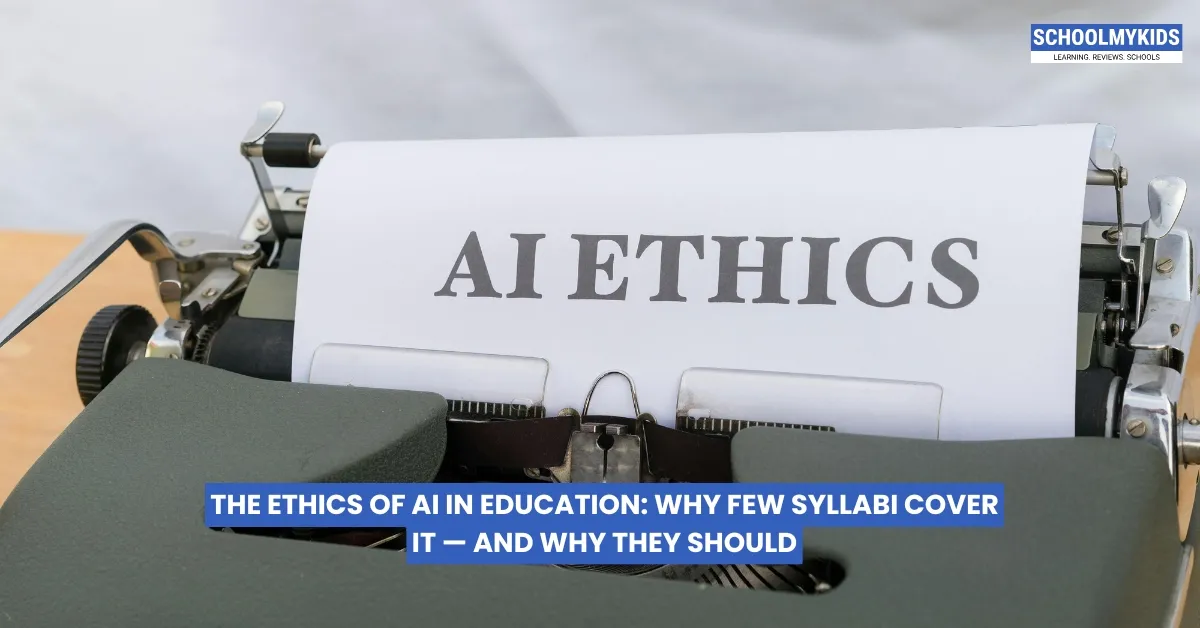
Artificial Intelligence (AI) is transforming education by providing personalized learning, automating administrative tasks, and enhancing access to knowledge. Yet, as AI tools become integral in classrooms worldwide, surprisingly few syllabi include comprehensive coverage of AI ethics. This omission raises important questions about preparing students not only to use but also to critically understand and responsibly shape AI technology.
Why AI Ethics Is Often Overlooked
AI ethics is a multidisciplinary field addressing fairness, accountability, transparency, privacy, and societal impacts of AI. Educational curricula frequently emphasize technical AI skills but neglect ethical dimensions due to several factors:
- Curriculum Rigidity: Traditional syllabi are crowded and updating them to include rapidly evolving fields is challenging.
- Lack of Expertise: Many educators lack training in ethical issues related to AI, limiting their ability to teach this nuanced topic confidently.
- Perceived Complexity: Ethical debates often involve philosophical, legal, and social considerations that can be seen as abstract or subjective compared to coding or data analysis.
- Underestimation of Importance: There is sometimes a belief that ethics can be addressed later in a student’s career or in specialized courses rather than in foundational education.
Why AI Ethics Should Be Integrated Into Syllabi
- Empowering Responsible Innovators: Teaching AI ethics equips students to build and deploy technologies that prioritize human well-being and social justice.
- Addressing Bias and Fairness: Awareness of bias, discrimination, and unequal impact is essential as AI shapes decisions in education, employment, healthcare, and beyond.
- Protecting Privacy and Security: Students need to understand data rights and security to navigate a world increasingly mediated by AI systems.
- Fostering Critical Thinking: Ethical education encourages reflective thinking about technology’s role in society and helps students become informed citizens.
- Complying with Global Standards: With governments and organizations mandating ethical AI use, early education aligns learners with evolving legal and regulatory frameworks.
How to Effectively Teach AI Ethics
- Interdisciplinary Curriculum Design: Incorporate ethics alongside computer science, social studies, and philosophy.
- Real-World Case Studies: Use examples of AI failures and successes to discuss ethical dilemmas.
- Student-Centered Dialogue: Encourage debates, role-plays, and projects focusing on societal impacts.
- Teacher Training Programs: Equip educators with the resources and confidence to facilitate ethical discussions.
Conclusion
AI is not merely a technological tool but a profound societal force. Integrating AI ethics into educational syllabi is critical both for cultivating responsible creators and for empowering students as conscientious users and decision-makers. As AI continues to shape every facet of human life, ethical literacy must become as foundational as technical competence in preparing future generations.








Be the first one to comment on this story.