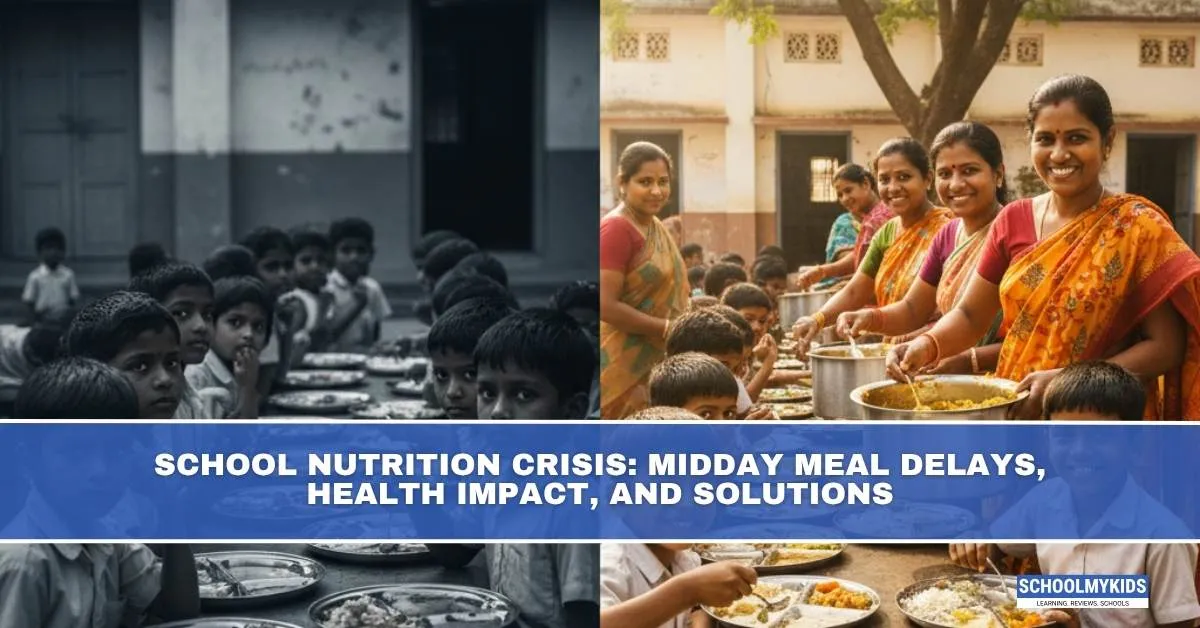
School meal delays are deepening India’s learning and health crisis by disrupting a programme that is often a child’s only reliable source of nutritious food and a key incentive to attend school. When meals arrive late, irregularly, or in poor quality, children face immediate hunger, long‑term malnutrition, and declining classroom performance.
Why School Nutrition Matters
India’s Mid Day Meal/PM POSHAN scheme is one of the world’s largest school feeding programmes, intended to combat classroom hunger, improve nutrition, and boost enrolment and attendance for over 100 million children. Studies link regular school meals to better growth indicators (such as weight and mid‑upper arm circumference) and improved academic outcomes, including higher attendance, retention, and test performance.
Nutrition and learning are tightly connected: children receiving adequate calories, protein, and micronutrients perform significantly better in early grade reading and numeracy than poorly nourished peers, and these advantages persist into higher classes. Even brief periods of hunger during the school day reduce attention span, working memory, and participation, undermining foundational literacy and numeracy efforts.
The Crisis of Delays and Gaps
Despite its scale, the school nutrition system is failing many children due to chronic implementation delays and exclusions. Recent analyses using UDISE+ data show that only around 41–42% of enrolled students actually receive midday meals in a given year, leaving nearly one‑third of India’s school‑going children outside the programme, especially those in unaided private schools attended by low‑income families.
In rural areas, supply chain problems mean food grains often arrive two to three months late in a large share of schools, while half lack proper kitchens and many lack safe water, making timely and hygienic meal preparation difficult. Teachers and headmasters are frequently burdened with procurement, supervision of cooks, and distribution, diverting up to hours daily from teaching and contributing to irregular serving times or skipped meals.
Health and Learning Impacts
Delayed or missed meals translate directly into dietary gaps: one study found that roughly one in 3–4 schoolchildren routinely face protein deficiency, and about one in eight faces combined calorie and protein deficiency, even with existing schemes. When the only substantial meal of the day is delayed or of poor quality, children are more likely to experience stunting, underweight, and micronutrient deficiencies, which in turn impair immunity and cognitive development.
Irregular nutrition also weakens the effect of other school health interventions; for example, adding new micronutrient mixes without strengthening monitoring has, in some cases, crowded out iron–folic acid programmes, limiting overall health gains. In extreme cases, contaminated or poorly stored food has led to food poisoning and hospitalisations, eroding community trust and pushing parents to withdraw children from school meals altogether.
Key Challenges Behind Delays
Several systemic issues drive the school nutrition crisis:
- Underfunding: Per‑child allocations are often too low to provide diverse, high‑quality meals, forcing cost‑cutting on ingredients and portions.
- Infrastructure gaps: Many schools lack functional kitchens, clean water, or safe storage, causing cooking delays, food wastage, and hygiene risks.
- Human resource strain: Teachers, rather than dedicated staff, manage meal logistics, reducing teaching time and compromising both education and meal quality.
- Social barriers: Caste‑based discrimination in some regions affects who eats and who cooks, discouraging some children from partaking in meals.
- Weak monitoring and accountability: Irregular inspections and poor grievance systems allow delays, leakages, and corruption to persist.
Health and Learning: Effects at a Glance
Policy and School‑Level Solutions
Addressing the crisis requires both systemic reforms and local innovations:
- Strengthen financing and menu standards: Increase per‑child allocations to realistically cover diverse, locally acceptable, and nutritionally balanced meals, aligned with food safety and balanced diet regulations.
- Build infrastructure: Prioritise funds for kitchens, safe cooking fuel, rodent‑proof storage, and clean drinking water in all schools, particularly in rural and tribal areas.
- Professionalise meal delivery: Shift from teacher‑managed cooking to trained cooks or centralised/community kitchens where feasible, freeing teachers to focus on teaching and improving timeliness.
- Expand coverage: Gradually extend nutrition support to vulnerable children in low‑fee private schools and pre‑primary grades, where malnutrition and learning gaps emerge early.
- Integrate health services: Combine meals with iron–folic acid supplementation, deworming, and regular growth monitoring, supported by robust monitoring systems that avoid crowding out existing programmes.
- Improve governance and accountability: Use transparent digital tracking of deliveries, community oversight committees, social audits, and responsive grievance channels to reduce leakages and prevent corruption.
A resilient, well‑funded, and inclusive school nutrition system can simultaneously fight child malnutrition, safeguard health, and unlock better learning outcomes for millions of children, making meal delays and quality failures a critical public policy emergency rather than a routine administrative lapse.







Be the first one to comment on this story.