Introduction
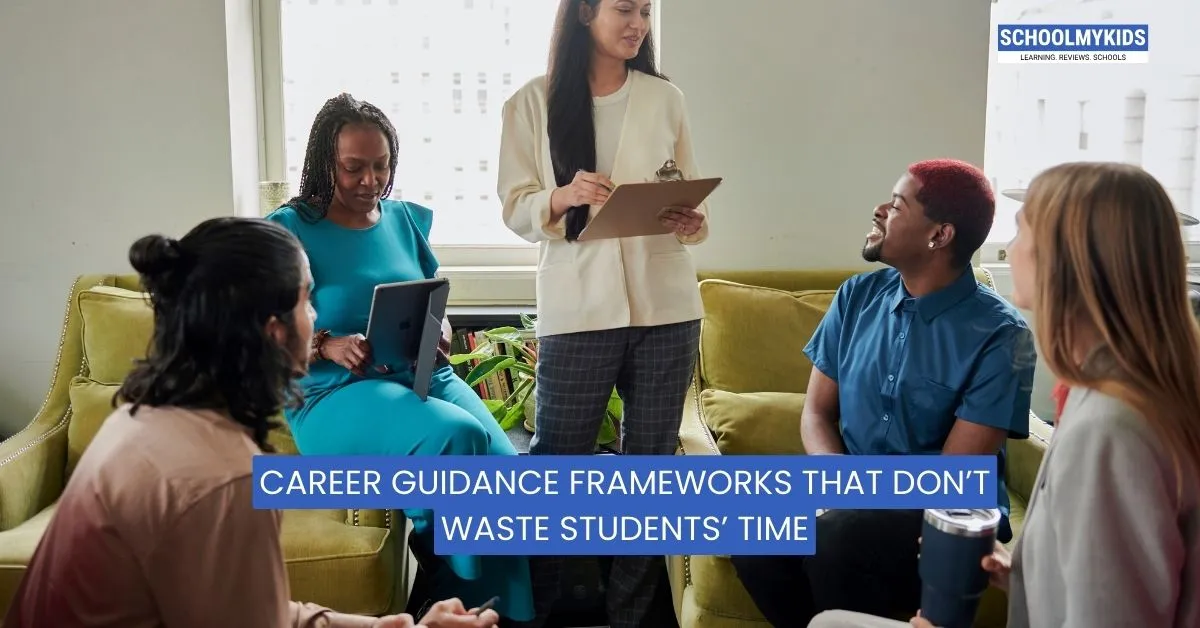
Effective career guidance frameworks are critical in helping students make informed decisions about their future, aligning their skills, interests, and aspirations with viable career pathways. Traditional approaches often waste students’ time with generic advice and lengthy processes. Modern frameworks prioritize personalized, efficient, and impactful guidance to ensure students’ time is well spent on meaningful exploration and skill development.
Key Features of Efficient Career Guidance Frameworks
Personalized Assessment and Profiling
Using psychometric tests, skill assessments, and interest inventories, these frameworks quickly identify students’ strengths, preferences, and values. Advanced tools leverage AI to generate tailored career suggestions rather than offering broad recommendations, helping students focus on the most relevant options.
Career Exploration and Exposure
Effective systems provide immersive experiences such as virtual internships, job shadowing, and mentorship programs. Exposure to real-world work environments and expert interactions helps students gain clarity fast, saving time otherwise lost to trial-and-error or vague exploration.
Goal-Oriented Counseling
Sessions are structured with clear objectives, timelines, and action plans. Counselors guide students in setting achievable short-term and long-term goals, monitoring progress regularly while offering resources that directly support their career pathways.
Integration with Academic and Skill Development
Career guidance is closely linked with curriculum choices, vocational courses, and skill-building opportunities, allowing students to develop competencies aligned with their goals. This connection makes guidance actionable and practical rather than theoretical.
Digital Platforms for Accessibility
Technology-enabled frameworks provide on-demand resources, chatbots for quick queries, and personalized dashboards to track progress, ensuring students get timely support and can manage their career planning effectively around their schedules.
Benefits of Time-Smart Career Guidance
- Reduces confusion and indecision among students.
- Prevents costly mistakes such as choosing unsuitable courses or careers.
- Enhances motivation by showing clear progress towards goals.
- Supports diverse learners by adapting to individual needs and contexts.
Examples of Successful Models
- Platforms that combine AI with human counselors for hybrid guidance.
- Schools embedding career education into regular teaching through project-based learning and career weeks.
- Public-private partnerships offering large-scale mentorship and apprenticeship programs.
Conclusion
Career guidance frameworks that respect students' time and individuality are essential in today’s fast-paced, competitive world. By delivering personalized, goal-focused, and experiential support, these frameworks empower students to navigate their futures confidently and efficiently, maximizing their potential without wasting precious time.






Be the first one to comment on this story.