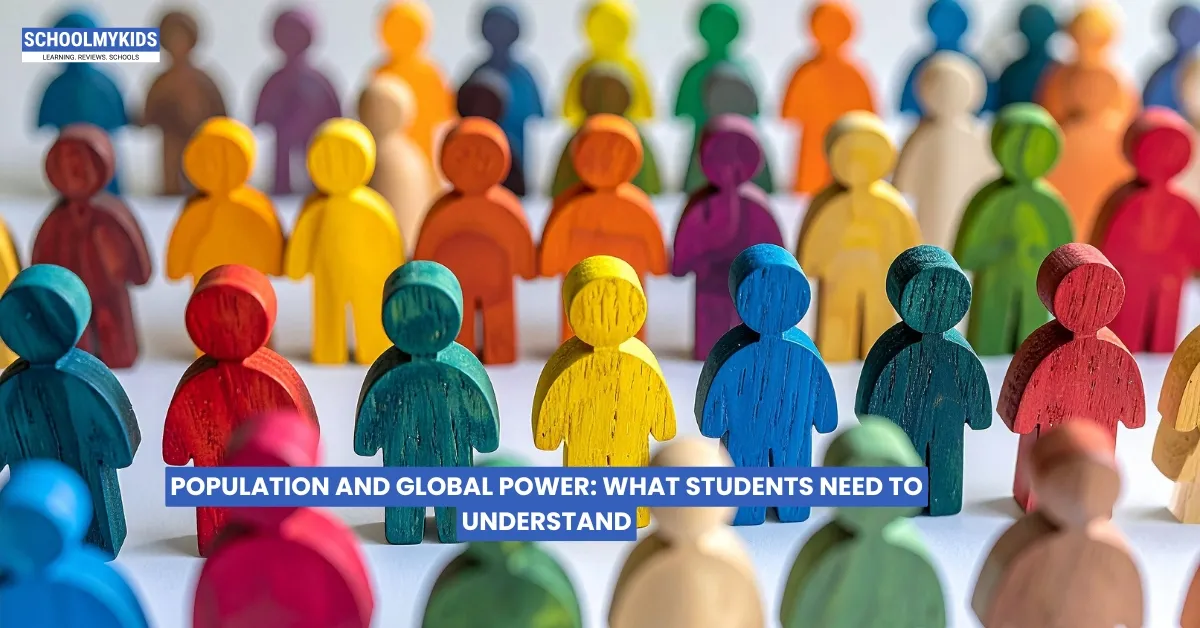
When we talk about powerful countries, students usually think of big armies, strong economies, or advanced technology. Population rarely comes to mind. It sounds like a statistics chapter, not power politics.
That’s a mistake.
Population plays a quiet but massive role in deciding how influential a country can become on the global stage. Not automatically, not magically, but very realistically.
Let’s break it down in a way that actually makes sense.
Population Is Potential Power, Not Guaranteed Power
A large population does not make a country powerful by default. If that were true, every crowded place would rule the world. Clearly not happening.
Population is potential energy. What matters is how that population is used.
- Educated population → skilled workforce
- Healthy population → higher productivity
- Young population → long-term economic growth
If these things are missing, a big population turns into a burden instead of a strength.
Why Population Matters in the Economy
A country with a large population usually has:
- A bigger workforce
- A larger consumer market
- More people to produce, buy, sell, and innovate
This is why companies and investors care so much about population trends. More people means:
- More demand
- More jobs
- More economic activity
For students, this explains why countries with large populations often attract global businesses and investments.
Population and Military Strength
Military power is not just about weapons. It’s also about people.
- Soldiers
- Engineers
- Medical staff
- Logistics teams
A country with a large population can:
- Maintain a bigger military
- Replace losses more easily
- Sustain long-term defense efforts
This doesn’t mean wars are good. It simply explains why population size is always considered in global power calculations.
Young Population vs Aging Population
This is one of the most important points students should understand.
- Young population → future workers, innovators, taxpayers
- Aging population → higher healthcare costs, fewer workers
Countries with a younger population often have:
- Faster economic growth
- Greater long-term influence
Countries with aging populations may be rich today but struggle tomorrow.
Population structure matters more than just population size.
Education Turns Population Into Power
Here’s the uncomfortable truth.
An uneducated population is not power. It’s pressure.
Education determines whether population becomes:
- Scientists or unemployed youth
- Entrepreneurs or dependents
- Contributors or liabilities
For students, this is the key takeaway: Your education is part of your country’s global strength.
Yes, that’s heavy. It’s also true.
Population and Global Influence
Countries with large, skilled populations often have:
- Cultural influence
- Diplomatic weight
- Strong voices in global decisions
More people means more ideas, more representation, and more leverage in international systems.
Global power is not only about domination. It’s about being impossible to ignore.
Population helps with that.
What Students Should Remember
Population alone doesn’t create global power. But population + education + health + opportunity does.
For students, this topic is not abstract geopolitics. It connects directly to:
- Education systems
- Employment opportunities
- National growth
- Future global standing
Conclusion
Population is not just a statistic used in textbooks or exams. It is a long-term national resource that shapes a country’s economy, security, and global influence. When supported by strong education, healthcare, and opportunities, population becomes strength. When ignored, it becomes pressure.
For students, this topic is not distant or theoretical. Education, skills, and awareness directly decide whether population turns into power or a burden. Global power is not built overnight by governments alone. It is built slowly, through people.






Be the first one to comment on this story.