Why This Difference Decides Everything
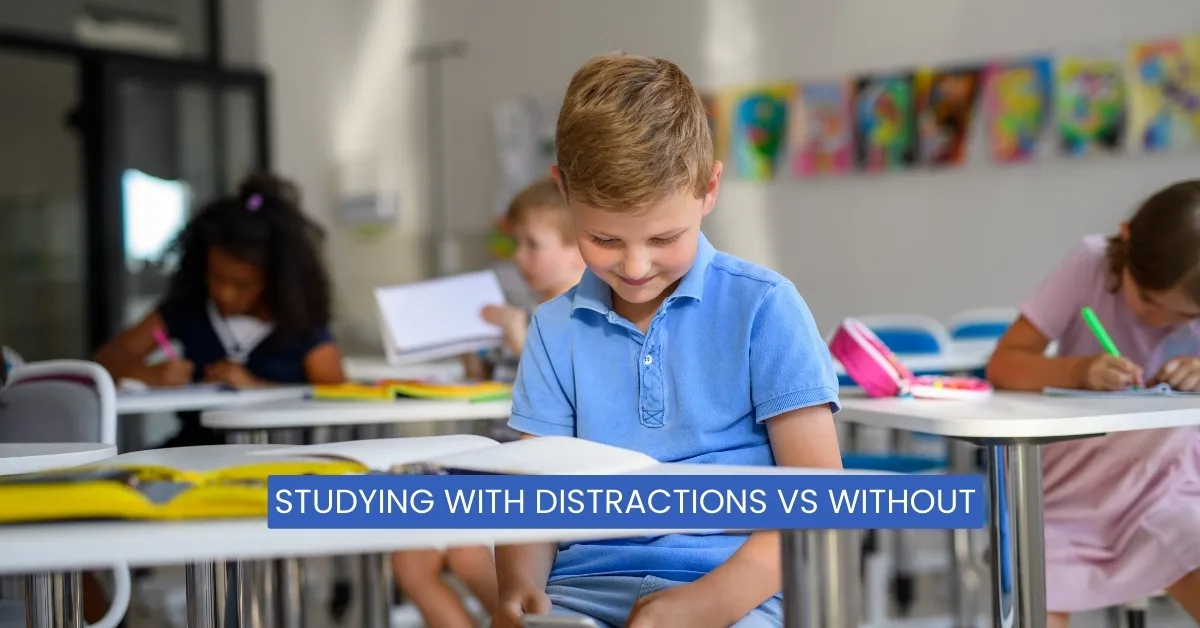
Two students sit down for three hours. Same syllabus. Same exam. Same effort.
One studies with notifications, music, tabs, and “quick checks.”The other studies with nothing competing for attention.
On paper, both studied for three hours. In reality, they didn’t even come close to doing the same thing.
This difference quietly explains why some students progress fast while others feel stuck despite “working hard.”
What Studying With Distractions Really Looks Like
Fragmented Attention Feels Like Productivity
Studying with distractions usually includes:
- Phone nearby
- Music with lyrics
- Frequent tab switching
- Message replies during breaks
- “Just checking” notifications
The brain never fully commits to the task. Attention is split into fragments.
It feels busy. It’s mentally exhausting. And it produces very little durable learning.
The Hidden Cost: Constant Context Switching
Every time attention shifts, the brain pays a switching cost. You lose momentum, depth, and clarity.
Students don’t notice this cost in the moment. They notice it later when:
- Recall is weak
- Concepts feel fuzzy
- Revision takes longer than expected
Effort was spent managing distractions, not understanding material.
What Studying Without Distractions Actually Does
Attention Has Time to Stabilize
When distractions are removed, the first 10–15 minutes feel uncomfortable. The brain searches for stimulation.
Then something changes.
Focus settles. Thoughts slow down. Connections start forming. Confusion becomes workable instead of overwhelming.
This state is where real learning happens.
Depth Replaces Speed
Without distractions:
- Fewer pages are covered
- Fewer topics are touched
- But understanding goes deeper
Students stop rushing and start reasoning. That depth reduces future revision time dramatically.
The Memory Difference Is Not Small
Distracted Study Creates Fragile Memory
Information learned with divided attention is encoded weakly. It fades fast and interferes easily with new material.
That’s why distracted studying demands constant rereading.
Focused Study Builds Transferable Knowledge
When attention is undivided, the brain:
- Builds stronger memory traces
- Connects new ideas to old ones
- Recognizes patterns instead of memorizing steps
This kind of learning survives stress and exam pressure.
Why Students Choose Distractions Anyway
Distractions Reduce Discomfort
Real learning feels slow and confusing at first. Distractions numb that discomfort.
Phones aren’t the enemy. They’re painkillers for cognitive effort.
Silence Feels Threatening
Silence exposes gaps in understanding. Distractions protect ego by keeping thinking shallow.
Many students aren’t avoiding work. They’re avoiding feeling inadequate.
The Illusion of “I Study Better With Music”
What’s Actually Happening
Music with lyrics competes for language-processing resources. It doesn’t help focus. It masks distraction.
Instrumental or ambient noise can sometimes help by blocking background sounds. That’s not the same as multitasking.
If you can sing along, you’re not deeply studying.
Time vs Quality: The Brutal Math
Three hours with distractions can equal:
- 45–60 minutes of real learning
One hour without distractions can equal:
- Multiple hours of shallow study
This is why focused students seem “naturally fast.”They’re not faster. They’re less interrupted.
How Distraction-Free Studying Changes Confidence
You Trust Your Preparation More
Focused study gives clear feedback. You know what you understand and what you don’t.
That clarity reduces exam anxiety more than extra hours ever could.
You Stop Needing Constant Revision
Deep learning sticks. Revision becomes lighter and more strategic.
Distraction-heavy studying creates dependency on last-minute cramming.
How to Actually Study Without Distractions (Realistically)
Remove, Don’t Resist
Willpower fails. Environment works.
- Phone out of reach
- One tab only
- Clear desk
If distraction is available, the brain will use it.
Short, Protected Blocks
Start with 25–40 minutes. Stop before collapse.
Long distraction-free sessions are built gradually, not forced.
Make Breaks Less Stimulating Than Study
If breaks are more exciting than studying, your brain will rush toward them.
Boring breaks retrain focus.
A Comparison That Matters
Studying with distractions:
- Feels easier
- Feels longer
- Produces weaker results
Studying without distractions:
- Feels harder
- Feels slower
- Produces durable understanding
One protects comfort. The other builds competence.
A Clear Conclusion
Distraction-free studying isn’t about discipline or superiority. It’s about giving your brain the conditions it needs to work properly.
Students don’t fail because they can’t focus. They fail because they never practice real focus.
Once you experience the difference even once, distracted studying stops feeling acceptable.
Not because someone told you to stop. But because you finally see what learning actually feels like.







Be the first one to comment on this story.