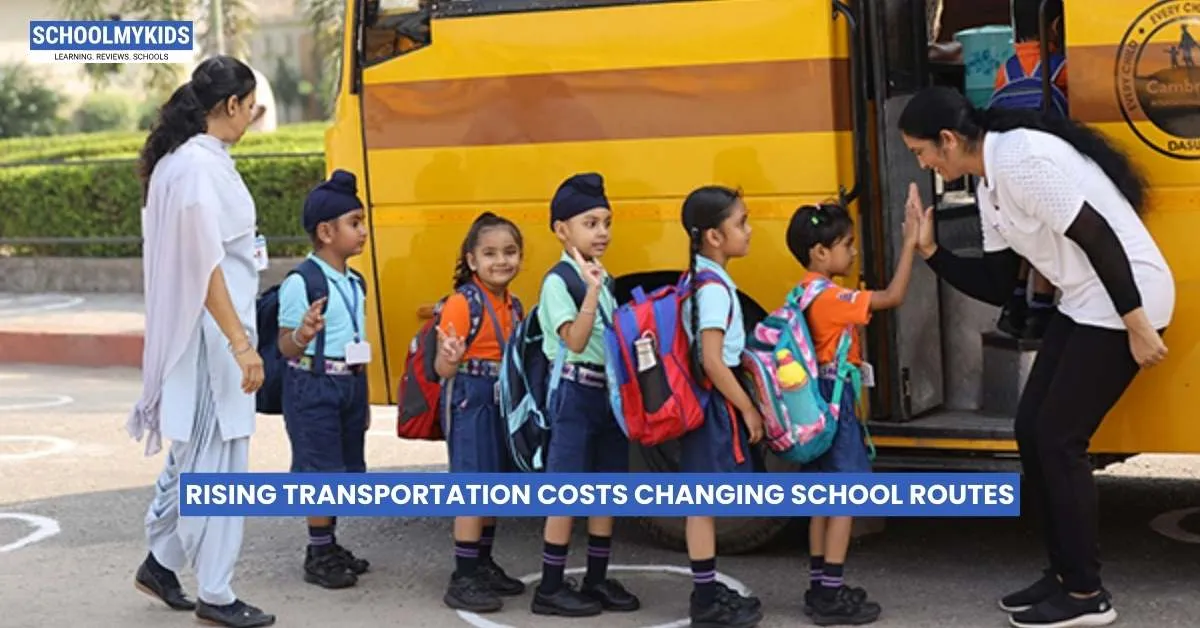
School education is usually discussed in terms of curriculum, teachers, and fees. Transportation rarely gets the spotlight. Yet rising transportation costs are quietly reshaping how students travel to school, how far families are willing to send their children, and even which schools survive.
This is not a minor logistics issue. It is an economic pressure that directly affects access to education.
Why School Transportation Costs Are Rising
The increase is not random. Several factors are converging at once.
1. Fuel Price Volatility
Fuel prices fluctuate frequently, and transport operators pass this instability directly to parents. Even small monthly hikes accumulate into a serious annual burden.
2. Maintenance and Compliance Costs
School buses and vans now face:
- Higher maintenance expenses
- Safety compliance requirements
- Insurance premiums
- Driver shortages
All of this pushes per-student transport costs upward.
3. Longer, Inefficient Routes
Urban sprawl has increased travel distances. Schools serve students spread across wide areas, making routes longer, slower, and more expensive.
How School Routes Are Changing
As costs rise, schools and families are adjusting in visible ways.
Shorter Catchment Areas
Parents increasingly prefer schools closer to home, even if the academic reputation is slightly lower. Distance is becoming a deciding factor, not just quality.
Route Consolidation
Schools are merging bus routes, increasing:
- Pickup times
- Drop-off delays
- Travel fatigue for students
Efficiency improves on paper, comfort declines in reality.
Shift to Shared or Private Vans
Families are opting for local private vans or shared auto-routes instead of official school buses. This reduces cost but often raises safety concerns.
Impact on Parents
Transportation fees are now a recurring stress point.
Parents face:
- Transport costs rivaling tuition fees in some cities
- Annual hikes with little transparency
- Difficult choices between convenience and affordability
For middle- and lower-income families, transport can become the hidden reason for switching schools.
Impact on Students
Children absorb the consequences directly.
Longer Commute Times
Early pickups and late drop-offs reduce:
- Sleep
- Study time
- Extracurricular participation
You cannot talk about holistic development when a child spends hours commuting daily.
Safety Trade-Offs
Cheaper transport options often mean:
- Overcrowded vehicles
- Poor supervision
- Inconsistent drivers
Cost-cutting quietly shifts risk onto families.
Schools Are Feeling the Pressure Too
Schools are not insulated from this shift.
- Enrollment declines in distant neighborhoods
- Higher operational complexity
- Complaints from parents over routes and timing
- Increased liability concerns
Some schools are even redesigning their admissions strategy to prioritize nearby students.
Rural vs Urban Reality
Urban Areas
Traffic congestion, fuel costs, and long distances dominate the problem. Transport becomes expensive but available.
Rural Areas
The issue is availability itself. Fewer vehicles, poor roads, and scattered populations make transportation unreliable or nonexistent. Students often walk long distances or drop out entirely.
Rising costs widen the rural-urban education gap further.
The Quiet Effect on School Choice
Transportation costs are reshaping school choice in subtle ways:
- Prestige is losing ground to proximity
- Neighborhood schools are regaining importance
- Daily logistics matter more than brochure promises
This shift challenges the idea that students will travel any distance for a “better” school. Economic reality sets limits.
Can Technology or Policy Help?
Partial solutions exist:
- Route optimization software
- GPS-based tracking to improve efficiency
- Cluster school transport models
- Subsidies for low-income families
But none work without acknowledging transportation as a core education issue, not an afterthought.
The Bigger Picture
Rising transportation costs reveal a hard truth:
Access to education is not just about schools existing. It is about reaching them daily, safely, and affordably.
When transport becomes unaffordable, choice disappears. And when choice disappears, inequality deepens quietly.
Conclusion
School routes are changing because economics is forcing them to. Rising transportation costs are redefining how far students can travel, how schools plan operations, and how families make education decisions.
Ignore this trend, and education planning stays disconnected from reality. Address it seriously, and you protect access, safety, and time. Three things students cannot afford to lose.
Transportation may not be part of the syllabus, but it is now shaping the classroom more than most policies ever will.







Be the first one to comment on this story.