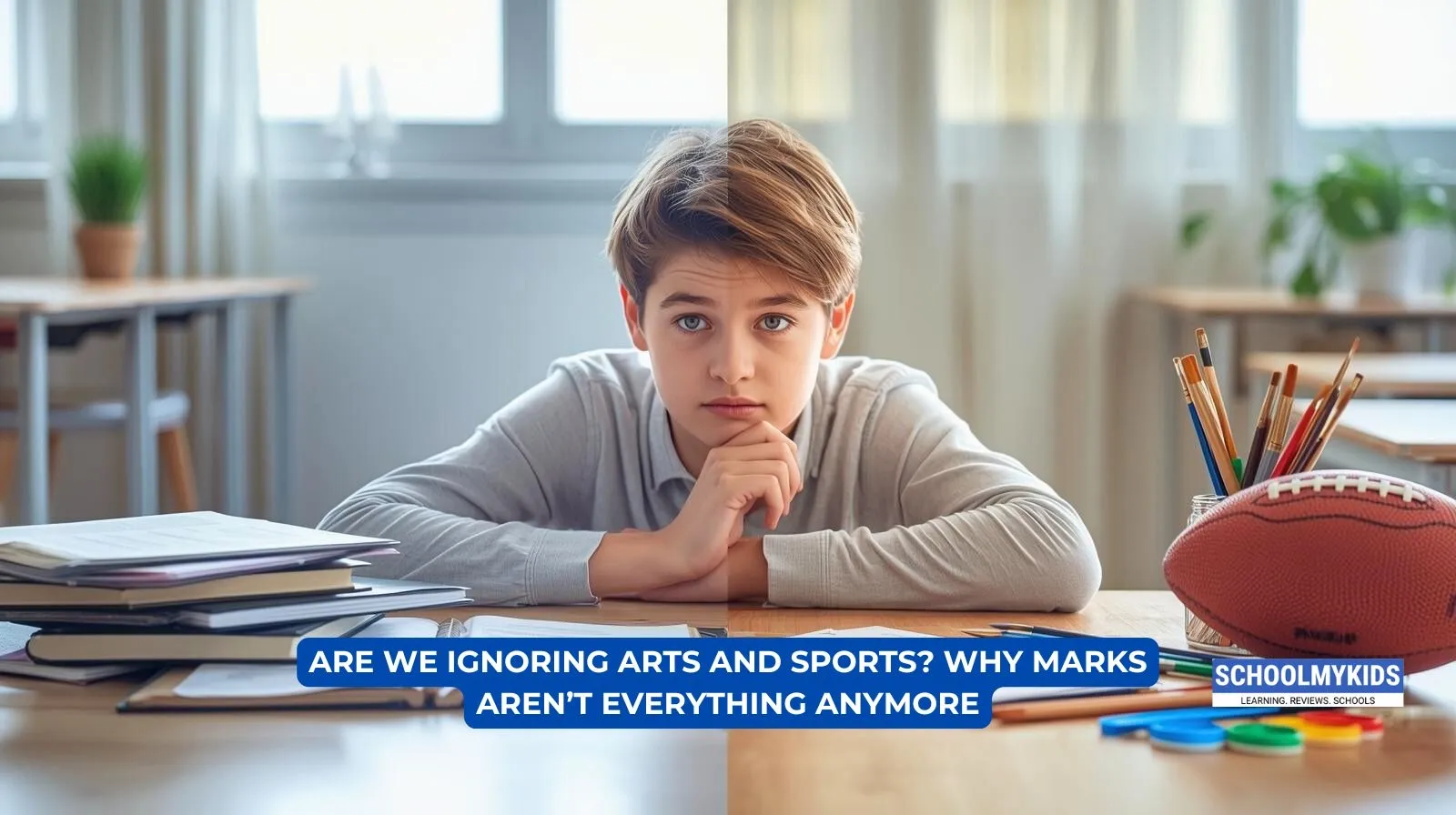
How many times have you heard someone say, "Beta, drawing-painting se kya hoga? (Beta, what will happen with drawing and painting?)" or "Sports mein future nahi hai. (There is no future in sports)." If you're a student who loves painting, dancing, football, or music, you've probably heard this more than you'd like.
And if you're a parent, maybe you've even said it yourself. It is often not because you want to hurt your child, but because you were genuinely worried.
That worry makes sense. India has always been a marks-first country. Scoring 95% in boards meant you were on the right track. Anything else felt like a gamble. But in 2026, that picture is starting to look very different, and it's important that both students and parents understand what's actually changing and why.
Why Were Marks "Everything" in the First Place?
Let's not pretend the system was built badly on purpose. For decades, a high score in Science or Maths was one of the only reliable doors into a stable job. Engineering. Medicine. Civil services. These were the paths that families trusted, and for good reason. Jobs were fewer, competition was higher, and creative fields didn't have clear structures or income guarantees.
So parents pushed for marks. Schools pushed for marks. And somewhere along the way, a child who loved to paint or play cricket was quietly told to "do it as a hobby."
The problem is that thinking hasn't kept up with how the world, and India's economy, has actually evolved.
What Is Actually Changing in India's Education System?
The National Education Policy (NEP) 2020, which is now being actively implemented across schools and colleges these days, has made some big shifts. One of the most important ones? Report cards will no longer only focus on marks. They'll reflect skills, growth, and overall development. Subjects like physical education, arts and crafts, and vocational skills are now being given proper space in the curriculum, especially from Class 6 onwards.
The rigid separation of Arts, Science, and Commerce streams is being dissolved. Students can now mix subjects. Think studying Physics alongside Music, or Computer Science with Fine Arts. The idea is to stop putting students in boxes and let them build a path that actually suits them.
Board exams are also shifting. Instead of one high-stakes exam at the end of the year, there's a move toward semester-based assessments that include projects and practicals, and not just written tests. This is a direct attempt to reduce the kind of exam pressure that's been affecting students' mental health for years.
Where Do Arts and Sports Actually Stand?
This is the question students and parents really want answered. Both fields now have far more structured career paths than they did even five years ago.
In Sports: India's sports ecosystem has grown significantly. Beyond "becoming a cricketer," there are career paths in sports management, sports psychology, fitness and nutrition coaching, sports journalism, performance analysis, and event management, all of which are hiring. Universities across India offer sports quota admissions, and degree programs like Bachelor of Sports Management (BSM) have become mainstream. The Sports Authority of India (SAI) itself regularly recruits across multiple disciplines.
In Arts and Creative Fields: Digital India has created a massive demand for creative professionals. Graphic designers, UI/UX designers, content creators, animators, filmmakers, and illustrators. These are not "backup plans." They're among the most in-demand roles in the country's growing digital economy. If you have an arts background, fields like law, media, advertising, public policy, and even entrepreneurship are wide open.
Marks Still Matter
Marks aren't irrelevant. In fact, even under NEP, students who focus on understanding their subjects, applying concepts, and staying consistent will still do better than those who don't. What's changing is that marks are no longer the only measure of a student's potential, and that's a genuinely good thing.
If you're a student who loves sports or arts, you still need to do well enough academically to keep your options open. But you don't need a 95% to build a meaningful, well-paying career in these fields. What you do need is seriousness, practice, and a clear sense of direction.
What Should Parents Take Away From This?
If your child is passionate about dance, football, sketching, or music, please don't dismiss it as a distraction. Ask questions. Understand where that interest can go. Help them explore structured pathways rather than just hoping it goes away.
The fear of "no stable future" in creative or sports fields is understandable, but it's increasingly outdated. India's creative economy and sports industry are growing, and the education system is, slowly but surely, catching up.
Your job as a parent isn't to eliminate risk. It's to help your child move forward with awareness and preparation.
What Should Students Do?
Don't abandon your passion, but don't ignore your academics either. Both can coexist.
Research the career path. Know the actual jobs, salaries, and growth opportunities in your field of interest.
Use the flexibility NEP is creating. Mix subjects. Explore. Don't lock yourself into a stream just because "everyone does it."
Talk to professionals in those fields. Reach out to people working in sports management, animation studios, or performing arts organizations. Their journeys will teach you more than any brochure.
Conclusion
India's education landscape is genuinely shifting, and in the right direction. But change takes time to reach every school, every parent, and every student. Until then, the best thing you can do is stay informed, stay curious, and not let old fears make decisions for you.
Marks built one version of success. Skills, creativity, and passion are building the next one.
Want to explore more about career paths, school choices, and what's changing in Indian education? Head over to SchoolMyKids, your go-to resource for everything education-related in India. Whether you're a parent researching the best school or a student figuring out your next step, we've got you covered.




Be the first one to comment on this story.