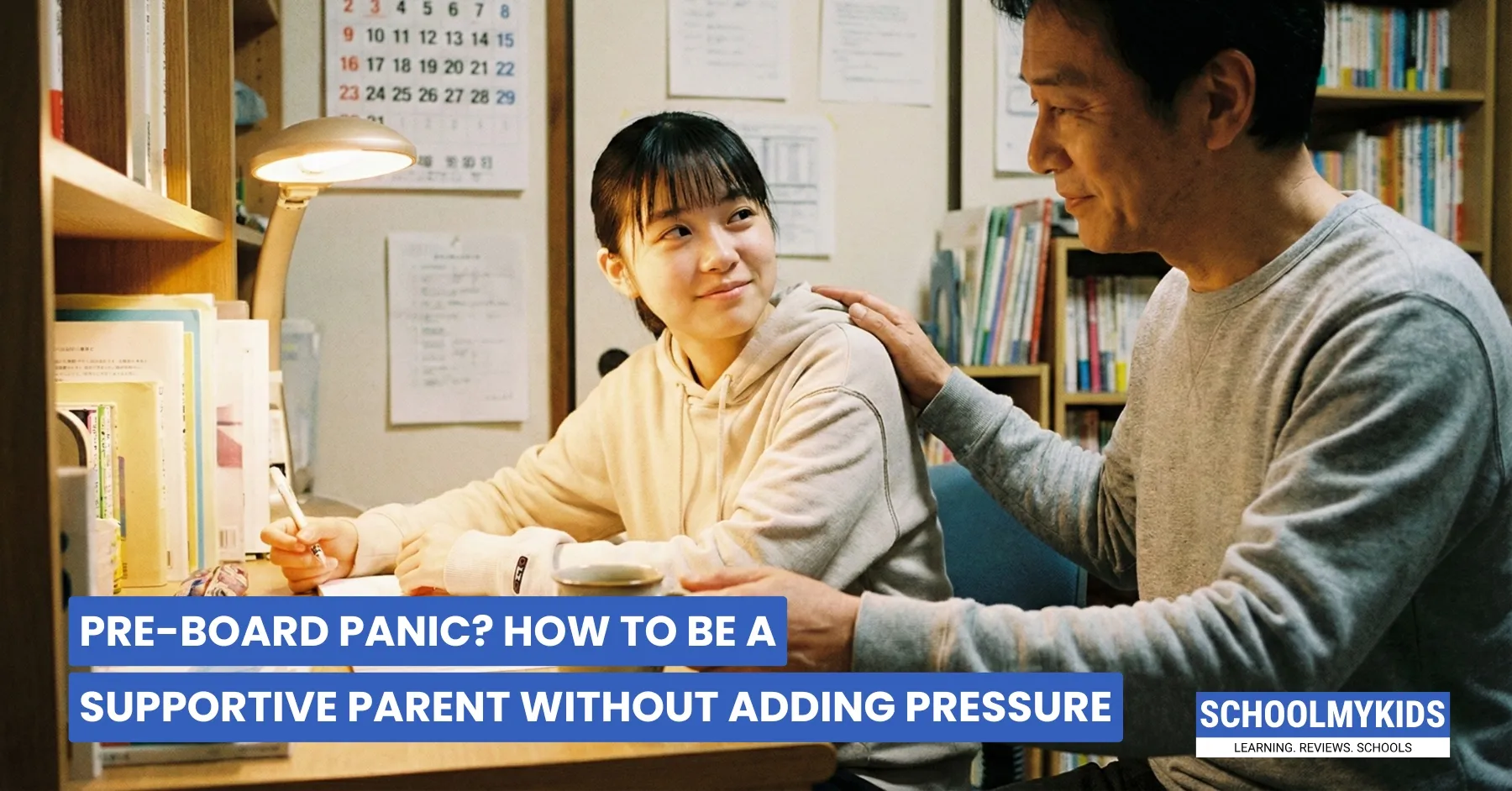
Your child is sitting with their books, staring at the same page for twenty minutes. Pre-boards are around the corner. You want to help, but everything you say seems to make things worse.
Let's talk about what's really going on in your child's head right now, and how you can actually help without accidentally making the pressure worse.
What's Actually Happening in Their Mind
Your child already knows the exams are important. They don't need reminding. What's happening inside their head is more complicated than just "not studying enough."
Most students during pre-boards are dealing with three things at once. One, they're worried they haven't covered enough. Two, they're comparing themselves to friends who seem more prepared. Three, they're scared of disappointing you. That's a lot of weight to carry.
Many kids also have this thing where they feel paralyzed. They know they should study, but the pile of work feels so huge that they don't know where to start. So they end up scrolling on their phone or doing nothing, which makes them feel even more guilty.
It's not laziness. It's overwhelming.
Things We Do That Backfire
We love our kids, but sometimes our anxiety comes out in ways that add pressure instead of support.
- Asking "Have you studied?" every two hours: This question, asked repeatedly, doesn't motivate. It irritates. Your child hears it as "I don't trust you" or "You're not doing enough." Even if you're just concerned, constant checking creates tension.
- Comparing them to other students: "Sharma ji's son is already done with revision" might seem like motivation, but it's actually crushing. Your child isn't Sharma ji's son. They have their own pace, their own strengths, and right now, they need to focus on their own journey.
- Bringing up future consequences: "If you don't do well in pre-boards, boards will be a disaster," or "Your whole career depends on this." We think we're creating urgency, but we're actually creating panic. A panicked mind can't study effectively.
- Hovering around them: Sitting near them while they study, peeking at their books, asking what chapter they're on. This makes studying feel like performing for an audience. They can't concentrate when they feel watched.
- Solving their problems immediately: Jumping in with solutions before they've even finished explaining their worry. Sometimes they just need to vent. Sometimes they need to figure it out themselves.
What Actually Helps
Now let's move on to the stuff that works.
- Create a judgment-free zone: Let them know they can tell you honestly where they're struggling without getting a lecture. "I'm stuck on this chapter" should be met with "Okay, what do you think would help?", not "Why didn't you finish it earlier?"
- Help them break it down: If they're overwhelmed, sit with them once and help create a simple schedule. Not an hour-by-hour timetable that's impossible to follow. Just a basic plan: which subjects on which days. Let them decide the details.
- Normalize mistakes: Pre-boards are practice. That's literally the point. Tell them it's okay to mess up now. Share stories of your own failures and what you learned. It reduces the fear.
- Take care of the basics: Good food, proper sleep, and some fresh air. These sound boring, but they matter more than an extra hour of panicked studying at midnight. A tired brain retains nothing.
- Be their calm in the storm: When they're stressed, your staying calm is everything. Don't match their panic. Your steady presence tells them, "This is manageable. We'll get through it."
- Respect their study style: Some kids study better with music. Some need silence. Some prefer morning, some prefer night. Don't force your style on them. If it's working for them, let it be.
- Ask better questions: Instead of "Did you study?" try "How are you feeling about tomorrow's exam?" or "Is there anything you need from me?" These open up conversation instead of shutting it down.
Conclusion
Pre-boards are not the final word on your child's intelligence or future. They're a checkpoint, a practice run. Some kids don't perform well under pressure but excel in boards. Some need this wake-up call to get serious. Both are normal.
Your job isn't to be their additional teacher, time manager, or stress monitor. Your job is to be their safe space. The person they can come to when things feel too much. The one who believes in them even when they don't believe in themselves.
So take a breath. Trust them a little more. Step back a little more. And watch how much better they do when they're not carrying your anxiety along with their own.








Be the first one to comment on this story.