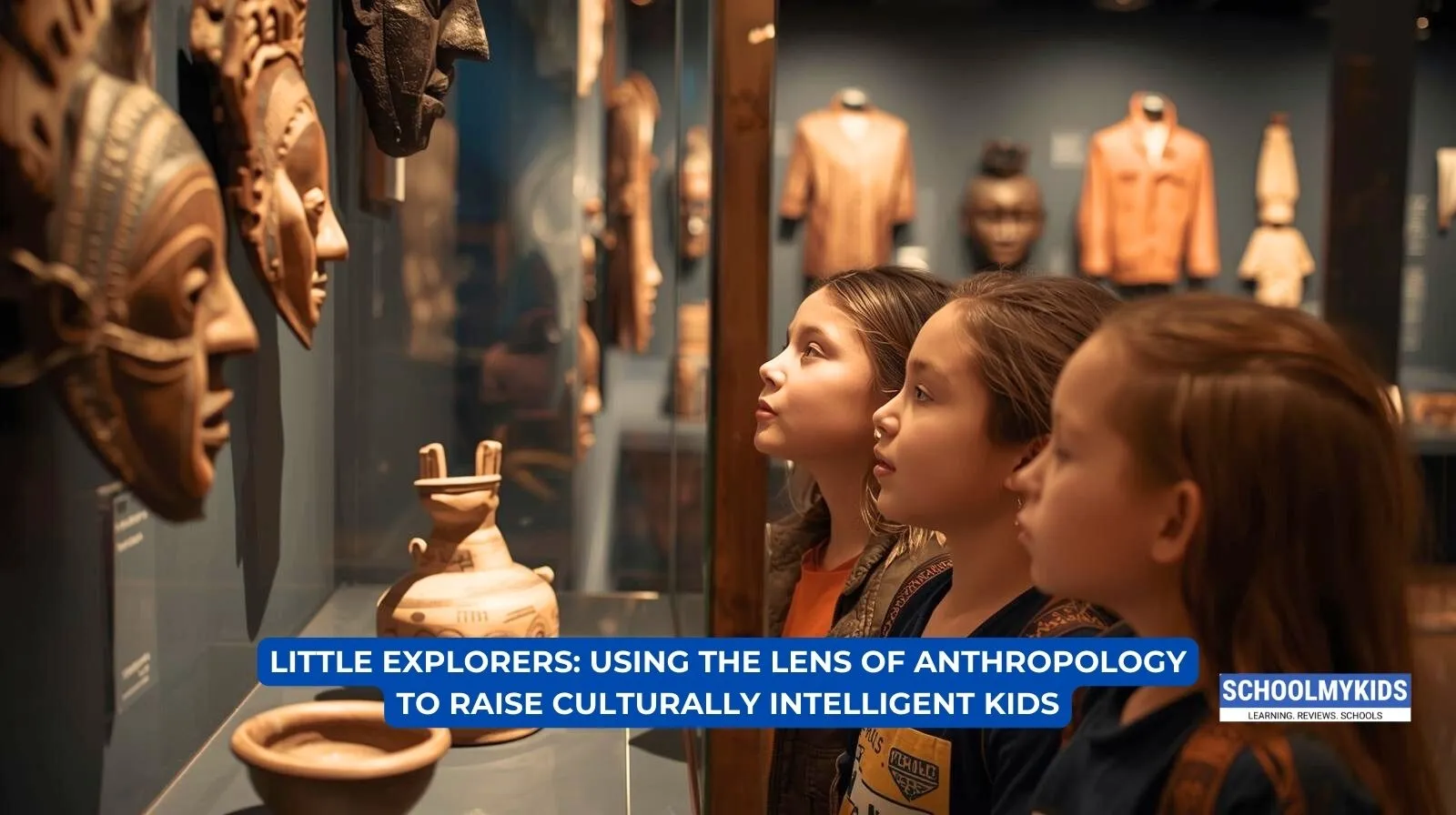
Think about the last time your child came home from school and said, "Why does my friend eat such weird food?" or "Why do they celebrate that?" That moment, that little wrinkle of confusion, is actually gold. It's the starting point for something anthropologists have been doing for centuries: trying to understand people who are different from us.
And you don't need a PhD or a plane ticket to raise a culturally intelligent kid. You just need to shift how you see the everyday stuff.
So What Even Is Cultural Intelligence?
Cultural intelligence (often called CQ) is basically a person's ability to understand, respect, and work well with people from different backgrounds. Think of it like emotional intelligence, except instead of reading feelings, your kid is learning to read people and cultures.
Research shows that kids with high CQ make friends more easily, adapt to new situations better, and grow up to become the kind of adults who can lead teams, handle tricky conversations, and build real relationships across differences. In a world where your child's future classmate, teammate, or colleague could be from anywhere on earth, this isn't a "nice to have." It's actually kind of essential.
This is NOT about adding a workbook to your Sunday. Nobody needs that. This is about small shifts in how you talk, watch, eat, and wonder.
What Anthropologists Actually Do
Anthropologists study human cultures, such as their rituals, stories, food, language, and the ways they make sense of the world. The most important skill they bring? Curiosity without judgment.
They don't walk into a new culture and say, "That's strange." They ask, "I wonder why they do that?" That one mindset shift changes everything.
Your child can do the same thing. And it starts with really small moments.
5 Actually Doable Things to Raise Culturally Intelligent Kids
1. Make Mealtime a Mini Field Trip
Food is one of the most powerful windows into culture. Once a week or even once a month, try cooking or ordering food from a different part of the world. While you eat, look up one interesting fact about that place together.
Pro Tip: Let your kid pick a country, look up what a typical family there eats for dinner, and try making one dish from it. Even if it turns into a kitchen disaster, that's a memory and a conversation.
2. Watch Stuff Differently
Your kid is probably already watching YouTube, Netflix, anime, or football highlights. So, after watching something with characters from a different culture, ask, "What did you notice about how they greeted each other?" or "Did anything seem different from how we do it?"
This isn't a quiz. It's just wondering out loud. Anthropologists call this "participant observation". It means watching with intention. Kids can learn this without ever knowing the fancy term.
3. Ask "I Wonder Why" Instead of "That's Weird"
This is the simplest shift and one of the most powerful ones. When your child points out something unfamiliar, like a classmate's lunch, a neighbour's festival, a different way of dressing, instead of "yeah, that's different," try saying, "Hm, I wonder why they do that. Should we find out?"
It takes five seconds. But it rewires how curiosity works.
4. Explore Your Own Culture First
Anthropology also teaches us to look at ourselves as subjects of study. Ask your kids, "Why do WE do what we do?" Why do we take off our shoes at the door? Why do we celebrate the way we do? Why do we eat what we eat?
When kids understand that they also have a culture, and not just "others," they stop seeing difference as weird and start seeing it as just variety. This is huge for building empathy.
Pro Tip: Draw a simple map together of foods, words, celebrations, and habits in your family. Where did they come from? What do they mean?
5. Read Books and Stories Written By People From Those Places
There's a big difference between reading about a culture and reading from it. Look for children's books and stories written by authors who actually belong to the culture being described. Libraries are free. This matters more than people realize.
A Note for Parents
None of this is meant to become a curriculum or a scheduled activity block. If it starts to feel like homework, drop it and come back later. The goal is to build a habit of noticing and not a checklist.
Children who grow up in families where curiosity is welcome, differences are discussed without fear, and questions are treated as interesting rather than awkward tend to develop CQ naturally. You're not teaching a subject. You're showing them a way of being in the world.
Conclusion
The world your child is growing up in is genuinely diverse, fast-moving, and deeply connected. The kids who'll do well in it aren't just the ones with the highest grades; they're the ones who can walk into a room full of different people and feel curious instead of uncomfortable.
That starts at the dinner table. In the car. During a movie. At the grocery store.
Little explorers don't need a map. They just need someone to say, "I wonder why,” and “Let's find out."




Be the first one to comment on this story.