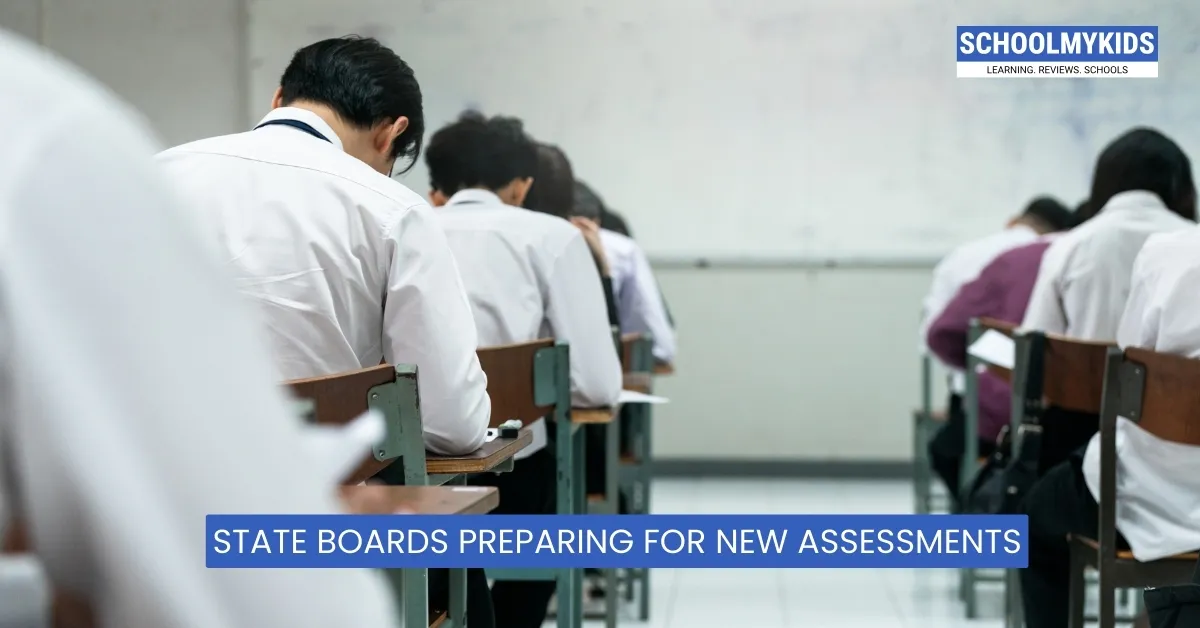
Across India, state education boards are quietly reworking how students are evaluated. This is not a cosmetic syllabus tweak or another circular no one reads. State boards preparing for new assessments signals a deeper shift in how learning is measured, rewarded, and judged.
For systems long dependent on rote-heavy, predictable exams, this transition is uncomfortable. Which is exactly why it matters.
Why State Boards Are Rethinking Assessments
The Old Exam Model Is Breaking
Traditional state board exams relied heavily on:
- Memorisation
- Repeated question patterns
- Guidebook-based preparation
This model produced marks, not understanding. Over time, the gap between high scores and low competence became impossible to ignore.
Alignment With National Education Goals
New assessment approaches aim to align with:
- Competency-based learning
- Conceptual clarity
- Application of knowledge
State boards are under pressure to ensure students are not academically stranded when they move across boards or compete nationally.
What “New Assessments” Actually Mean
Shift From Recall to Application
The most visible change is in question design.
Students are increasingly expected to:
- Apply concepts to real situations
- Interpret data, graphs, or passages
- Explain reasoning instead of listing points
Memory alone no longer guarantees success.
Introduction of Competency-Based Questions
Many state boards are introducing:
- Case-based questions
- Assertion–reason formats
- Higher-order thinking questions
These questions test understanding, not speed or handwriting endurance.
Structural Changes in Assessment Design
More Weightage to Internal Assessment
Schools are being given greater responsibility through:
- Periodic tests
- Projects and assignments
- Practical and activity-based evaluation
This reduces the “one exam decides everything” pressure but increases accountability at the school level.
Reduced Predictability
Exams are being designed to avoid:
- Direct textbook repetition
- Guessable patterns
- Overdependence on solved papers
This directly impacts coaching-centric preparation models.
Impact on Students
Preparation Becomes Continuous
Students can no longer rely on last-minute memorisation. New assessments reward:
- Consistent study habits
- Conceptual understanding
- Classroom engagement
This benefits steady learners more than short-term crammers.
Anxiety Shifts, Not Disappears
Stress does not vanish. It changes form.
Students worry less about remembering answers and more about:
- Understanding concepts deeply
- Explaining answers clearly
- Handling unfamiliar questions
This is a healthier pressure, but pressure nonetheless.
Impact on Teachers
Teaching Methods Must Change
New assessments force teachers to move beyond:
- Dictated notes
- Question-answer drilling
They must now:
- Encourage discussion
- Focus on why, not just what
- Design classroom assessments thoughtfully
Without training, this transition risks confusion and inconsistency.
Increased Responsibility and Scrutiny
With more internal assessment weightage, teachers face:
- Greater evaluation responsibility
- Parent scrutiny
- Administrative oversight
Assessment design becomes as important as syllabus completion.
Challenges State Boards Are Facing
Uneven Teacher Preparedness
Not all schools are equally equipped. Rural and under-resourced schools may struggle with:
- Training gaps
- Infrastructure limitations
- Assessment standardization
This risks widening disparities if not addressed carefully.
Risk of Superficial Reform
There is a real danger of:
- New formats with old thinking
- Application questions that still reward memorization
- Internal assessments becoming inflated or symbolic
Assessment reform works only when mindset changes, not just question papers.
What This Means for Coaching Culture
New assessments quietly weaken:
- Guesswork-based preparation
- Template answers
- One-size-fits-all guides
Coaching will not disappear, but it will need to shift toward:
- Concept clarity
- Practice with unfamiliar problems
- Reasoning-based training
This is a structural disruption, not a cosmetic one.
The Bigger Picture
State boards preparing for new assessments reflects a long-overdue realisation:
Exams should measure learning, not endurance or recall capacity.
If implemented sincerely, these changes can:
- Improve learning quality
- Reduce blind memorization
- Make state board students more competitive nationally
If implemented poorly, they become another layer of confusion.
Conclusion
New assessments are not automatically better assessments. Their success depends entirely on execution, teacher support, and clarity of intent.
State boards stand at a critical junction. They can either modernise evaluation in a meaningful way or rebrand old habits with new terminology.
This shift is not about tougher exams.It is about fairer, smarter measurement of learning.
And that is a test the system itself now has to pass.








Be the first one to comment on this story.