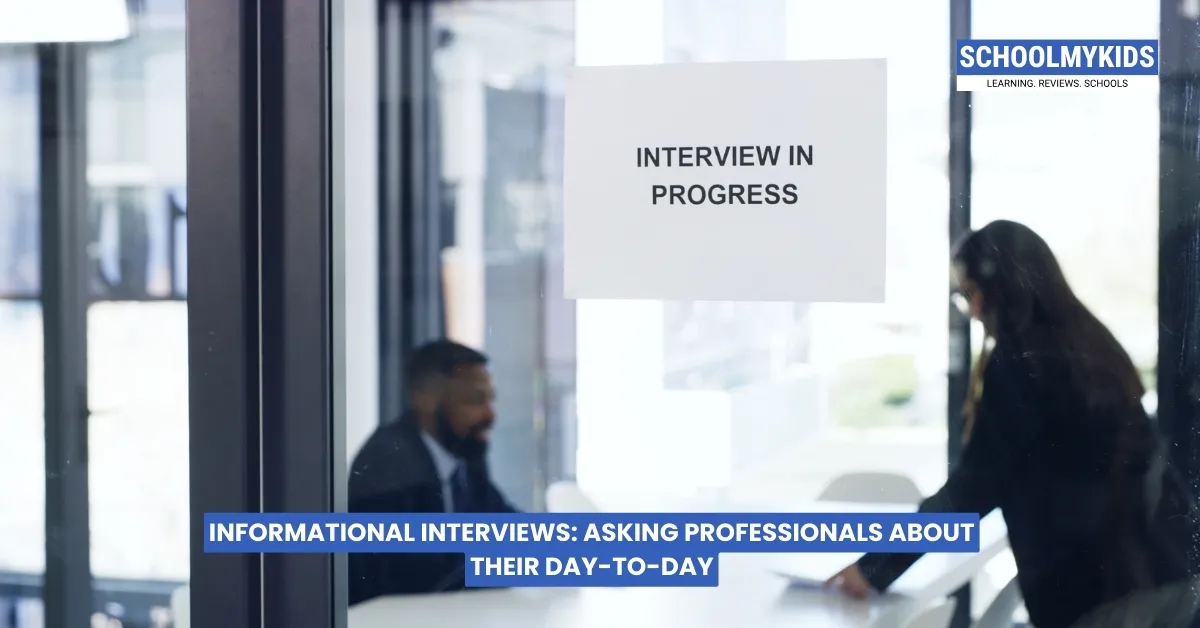
Why Informational Interviews Matter More Than Career Advice
Students often ask, “Which career should I choose?” Professionals usually answer with titles, salaries, and vague encouragement. None of that helps much.
What actually helps is understanding daily reality.
Informational interviews are short, informal conversations where students ask professionals about what their workday really looks like. Not the brochure version. The routine, the pressure, the boring parts, the trade-offs.
Career clarity comes from realism, not inspiration.
What an Informational Interview Is (and Isn’t)
Not a Job Interview
An informational interview is not a request for a job or internship. Treating it like one makes people defensive.
The goal is learning, not impressing.
When professionals feel safe from obligation, they speak more honestly.
Not Casual Chat Either
This is not random small talk. It is a focused conversation with purpose.
Good informational interviews respect time, ask thoughtful questions, and leave both sides feeling the discussion was meaningful.
Why Students Avoid Them (And Why That’s a Mistake)
Fear of Looking Inexperienced
Students worry they’ll sound naive. Ironically, asking no questions keeps them uninformed longer.
Professionals expect curiosity from students. What they dislike is entitlement, not ignorance.
Over-Reliance on Internet Research
Videos and blogs show highlights. Informational interviews reveal patterns, stress points, and daily constraints.
No article can replace lived experience.
How to Ask for an Informational Interview
Keep the Request Simple and Honest
A good request includes:
- Who you are
- Why you’re curious about their field
- A clear time limit (15–20 minutes)
No long backstory. No flattery paragraphs. Respect signals maturity.
Choose People Strategically
Early-career professionals often give the most practical answers. Senior professionals offer perspective.
Both are valuable. Random outreach is less effective than targeted curiosity.
What to Ask (And What to Avoid)
Questions That Actually Reveal Reality
Good questions focus on daily work:
- What does a typical day look like?
- Which tasks take most of your time?
- What surprised you most when you started?
- What skills matter more than students expect?
- What parts of the job drain energy?
These questions uncover fit, not fantasy.
Questions That Waste Time
Avoid:
- “How do I become successful like you?”
- “Is this a good career?”
- Salary-first questions in early conversations
These signal shallow thinking.
Listening Is the Skill That Matters Most
Don’t Argue With Their Experience
If a professional describes challenges, don’t counter with optimism or exceptions. Listen.
Discomfort often contains the most useful information.
Notice What They Emphasize Repeatedly
Repeated complaints or joys reveal what actually defines the role.
Patterns matter more than isolated comments.
Turning the Conversation Into Clarity
Reflect Immediately After
After the interview, students should write:
- What sounded energizing?
- What sounded exhausting?
- What skills kept appearing?
Without reflection, insights fade.
Compare Across Multiple Interviews
One conversation can mislead. Three or four reveal trends.
Career decisions should be pattern-based, not anecdote-based.
How Informational Interviews Shape Better Decisions
They Reduce Regret
Students who understand daily realities are less likely to feel trapped later. Expectations align earlier.
Clarity upfront prevents expensive course corrections.
They Build Confidence Without Pressure
There is no evaluation. No rejection. Just information.
That makes learning safer and more honest.
Etiquette That Leaves a Good Impression
- Be punctual
- Keep within agreed time
- Thank them sincerely
- Do not immediately ask for favors
Respect builds long-term goodwill.
A Smarter Way to Think About Informational Interviews
Informational interviews are not about getting ahead. They are about seeing clearly.
Students don’t need more motivation. They need fewer illusions.
Asking professionals about their day-to-day work turns careers from abstract ideas into concrete choices. That clarity is powerful.
You’re not supposed to decide everything now. You’re supposed to understand enough to take the next honest step.






Be the first one to comment on this story.