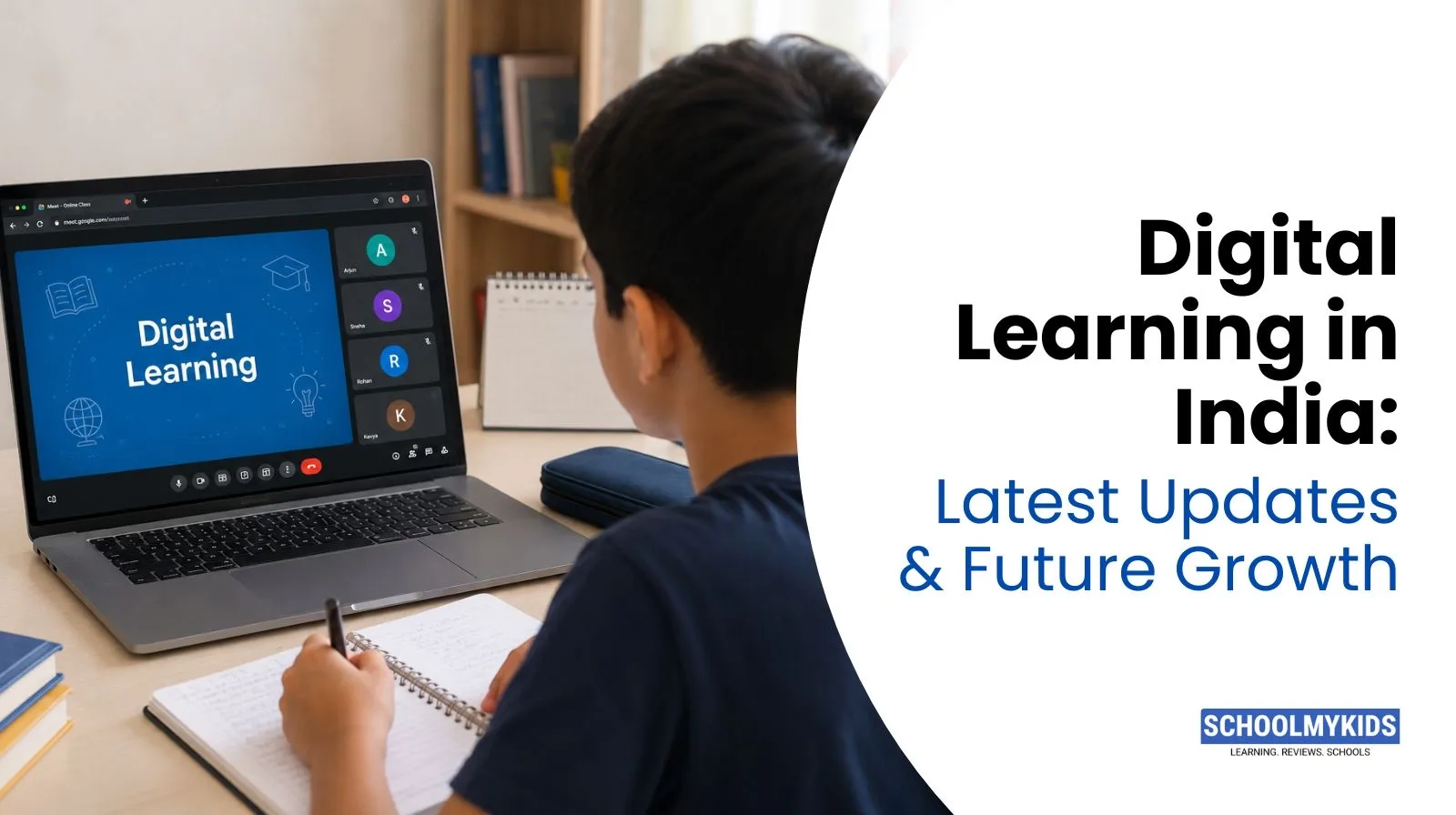
The landscape of education in India continues to evolve rapidly as we move through 2026. Digital learning has moved from a pandemic-era necessity to a core part of the system, offering flexible, personalized pathways for students, practical tools for teachers, and reliable options for parents seeking quality support.
This guide dives into the latest digital learning trends in India, e-learning growth projections, phygital models, AI advancements, and practical insights for 2026. Whether preparing for competitive exams, upskilling, or supporting children’s education, these developments are reshaping opportunities across the country.
The Explosive Growth of Digital Learning in India
The Current State of E-Learning Growth in India
Recent analyses value the Indian EdTech/online education market at approximately USD 3.64–7.5 billion in 2025, with projections reaching USD 23.9–33.31 billion by 2034. Expected CAGRs range from 23–28%, driven by expanding internet access, smartphone adoption, and policy support.
India has approximately 958 million active internet users (early 2026), with some reports indicating over 1 billion by mid-2026 and penetration around 70%. Rural areas account for about 57% of these users, highlighting the shift toward inclusive digital access. Mobile learning dominates thanks to widespread affordable smartphones and data. Government platforms like DIKSHA and SWAYAM have recorded massive adoption through millions of learners, course enrolments, teacher training sessions, and digital resource accesses across India.
Why This Growth Matters
Several key developments are contributing to the rapid expansion of digital learning across India:
Internet Penetration: With nearly 1 billion active users and strong rural growth, digital accessibility has improved dramatically across the country
Government Initiatives: Programs aligned with NEP 2020, SWAYAM, DIKSHA, and Skill India Digital Hub are expanding reach across millions of learners
Smartphone Adoption: Mobile-first learning dominates due to affordable devices and data
Demand for Upskilling: Rising competition in sectors like AI, data science, cloud computing, digital marketing, and Generative AI (GenAI) and Large Language Models (LLMs) has created urgent demand for skill-based learning
Digital Education 2026: The Phygital Revolution
One of the most significant developments in the Indian e-learning market is the emergence of the “phygital” (physical + digital) learning model. This hybrid approach combines offline learning centers with digital content delivery, fundamentally reshaping how educational services are delivered.
The pure online education model, which dominated investor narratives from 2020–2022, is increasingly being complemented by hybrid and phygital approaches that combine digital convenience with offline mentoring and accountability. Companies like PhysicsWallah have demonstrated the growing appeal of phygital models that combine online learning platforms with offline centers and mentoring support.
Why Phygital Learning is Gaining Traction in India
Parents and students value the blend of digital convenience with real accountability. Successful players like PhysicsWallah have shown that combining online content with offline centers leads to better retention, higher trust, and stronger learning outcomes. This model is particularly effective in a market where value for money and proven results matter deeply.
Key Features of Phygital Learning
Flexibility: Students can attend live classes or access recorded content based on their schedule
Personalized Support: Educators provide one-on-one mentoring alongside digital resources
Verified Outcomes: Offline support centers often help students stay consistent through mentoring, scheduled learning, and regular performance monitoring alongside digital coursework.
Affordability: This model reduces overhead costs, making quality education more accessible
Market Landscape: Which Cities Are Leading?
Metro Cities: The Digital Learning Powerhouses
Delhi, Noida, and Mumbai account for a significant share of EdTech adoption in Tier 1 cities, benefiting from advanced digital infrastructure, widespread internet connectivity, and a tech-savvy population.
Adoption and Growth by City Tier (2026 Outlook)
City Tier | Estimated Adoption Level | Projected Growth Drivers | Opportunities & Barriers |
|---|---|---|---|
Tier 1 (Delhi, Mumbai, Bengaluru) | High (mature markets) | Strong infrastructure, competition, tech workforce | Innovation hub but higher saturation |
Tier 2 (Pune, Jaipur, Lucknow, etc.) | Medium-High | Rising middle class, better connectivity | Fastest new user addition, vernacular push |
Tier 3 & Emerging Cities | Medium | Government schemes, affordable devices | High potential with infrastructure support |
Rural Areas | Lower but Rising | Mobile-first solutions, programs like PMGDISHA | Digital divide challenges |
Tier 2 and Tier 3 Cities: The Growth Frontier
Tier 2 and Tier 3 cities, along with rural areas, represent the next major growth frontier for digital education in India. With improving access and demand for job-oriented learning, these regions are expected to drive a large share of new users. Vernacular (regional language) content and low-bandwidth tools are making quality education more accessible without requiring relocation to metro cities.
AI and Personalization: The Future of Online Education Trends
Artificial intelligence is accelerating personalization and efficiency in Indian classrooms and corporate training. In recent 2025–2026 developments, Generative AI tools are increasingly being integrated into EdTech platforms for doubt-solving, personalized practice, automated assessments, and multilingual support.
How AI Is Reshaping Digital Education
Personalized Learning: AI analyzes performance to tailor content, helping close gaps faster and improving engagement
Intelligent Support: 24/7 chat-based tutors and predictive tools flag areas needing extra help
Teacher Empowerment: Automated grading and insights free educators to focus on mentoring and critical thinking
Accessibility Boost: Multilingual and offline-capable AI tools support diverse learners. However, educators and policymakers continue emphasizing responsible AI use, data privacy, and human oversight to ensure technology supports, rather than replaces, effective teaching and critical thinking.
The Most In-Demand Digital Skills for 2026
As India’s economy digitalizes rapidly, certain skills stand out in employer demand. Recent skills reports highlight AI and machine learning, data analytics, cybersecurity, and cloud computing as top priorities for 2026 and beyond. These align closely with digital learning trends in India and the workforce needs in a competitive job market.
High-Demand Skills Include:
Artificial Intelligence, Machine Learning & Generative AI (LLMs)
Data Science and Analytics
Cloud Computing
Cybersecurity
Digital Marketing
DevOps and Software Development
Blockchain Technology
Pro-Tip: The “Vernacular” Advantage
One of the biggest online education trends in India for 2026 is the shift toward regional language content. Leading platforms are now offering courses in Tamil, Telugu, Marathi, and Bengali. If you are an educator or student, go for platforms that offer multilingual AI support.
Government Frameworks and Digital Learning Infrastructure
The government continues investing through NEP 2020, promoting blended learning, foundational literacy, and digital-first education models.
SWAYAM Platform: Hosts thousands of MOOCs with millions of enrolments.
DIKSHA Platform: A key government initiative for school education that has seen massive usage, now featuring AI-powered voice search, read-aloud tools, and virtual labs with AR elements to make science and other subjects more interactive and accessible.
Skill India Digital Hub: Provides certified, industry-aligned courses across sectors.
These initiatives aim to expand access, especially in underserved regions, while supporting multilingual and inclusive education aligned with NEP 2020’s digital vision.
Challenges and Solutions in Indian Digital Learning
Despite strong momentum, challenges persist:
Infrastructure Gaps: Uneven internet and electricity access
Teacher Preparedness: Need for training in digital pedagogy and AI tools
Digital Divide & Inclusivity: Expanding access to quality learning across different income groups through regional-language and low-bandwidth learning solutions
Quality & Trust: Parents increasingly look for credible results, transparent teaching standards, and stronger safeguards around student data
Over-Reliance Risks: Balancing screen time and holistic learning
Solutions include:
Hybrid phygital models combined with offline-capable, low-bandwidth content
Structured teacher training programs focused on digital pedagogy and responsible AI use
Expanded government subsidies, multilingual platforms, and vernacular content
Clear guidelines for responsible AI integration under NEP 2020
FAQ: Your Questions Answered
Q1: What is the difference between online learning and phygital learning?
Online learning relies entirely on digital platforms, while phygital learning combines offline centers or mentoring with digital content. In India, phygital models often deliver better trust and outcomes because they balance flexibility with accountability.
Q2: Which cities should I focus on if starting an EdTech venture in India?
Tier 1 cities like Delhi, Mumbai, and Bengaluru offer mature markets with high adoption but more competition. Tier 2 and Tier 3 cities, along with rural areas, provide higher growth potential due to rising connectivity and demand for vernacular, job-oriented learning.
Q3: What skills should I prioritize learning in 2026?
Skills related to Artificial Intelligence, Generative AI, data analytics, cloud computing, and cybersecurity continue to see strong demand across industries. These areas are expected to remain important for future careers and digital-first workplaces.
Q4: How is AI changing student learning experiences?
AI enables personalized learning paths, instant feedback through intelligent tutors, automated assessments, and better accessibility via multilingual tools, helping students close knowledge gaps more efficiently while supporting teachers.
Q5: How can parents in Tier 2/3 cities benefit from digital learning in 2026?
Parents gain access to quality, board-aligned resources and skilled mentoring without relocating to metros.
Q6: What role does NEP 2020 play in digital education?
NEP 2020 strongly promotes blended (phygital) learning, multilingual content, foundational literacy through digital tools, and teacher empowerment to make quality education more equitable and personalized across India.
Conclusion: Embracing the Digital Learning Revolution
The story of digital learning in India is fundamentally a story of opportunity. With rapid growth, expanding internet access, and strong government support, India is emerging as one of the world’s largest and fastest-growing digital learning ecosystems.
For students, this means access to high-quality resources. For teachers, it enhances pedagogy. For parents, it provides reliable learning options.
By embracing these trends thoughtfully, India can leverage its young population to build an inclusive, skilled nation.
Ready to explore digital learning resources tailored to your needs? SchoolMyKids offers comprehensive educational materials, and curated learning paths aligned with NEP 2020 and modern phygital approaches. Discover how our platform can support your child’s, your own, or your classroom’s educational journey today.






Be the first one to comment on this story.