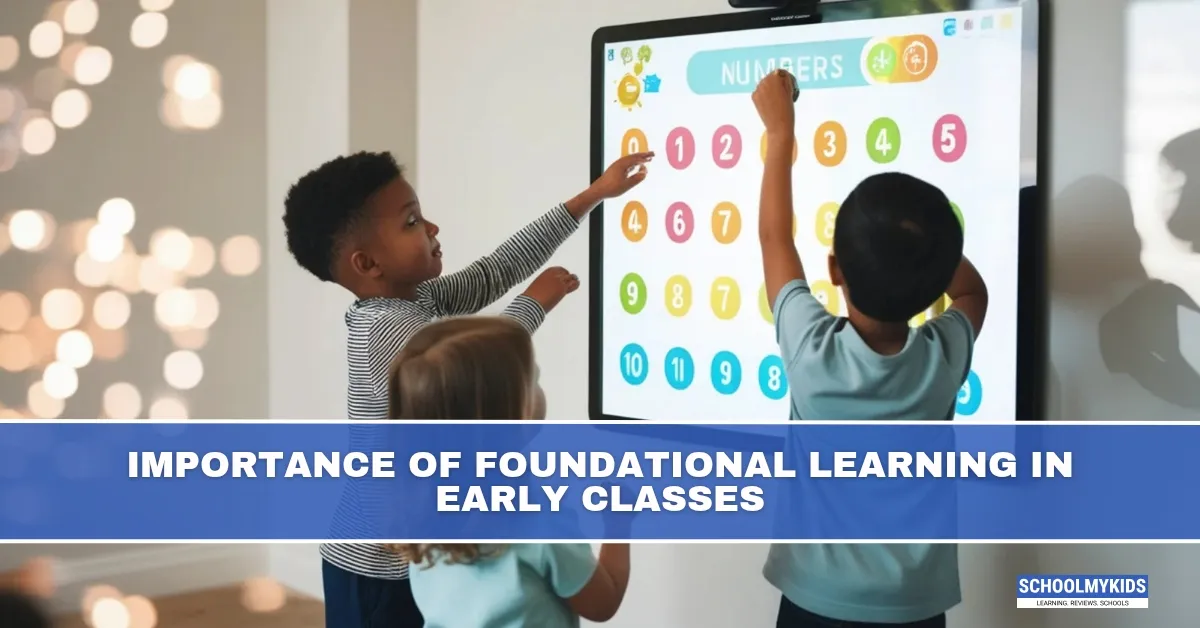
Foundational learning in early classes forms the bedrock of a child's entire educational journey in India. As parents and teachers focus on building strong early education skills, understanding why these initial years matter has never been more critical. With the National Education Policy (NEP) 2020 and initiatives like NIPUN Bharat aiming for universal foundational literacy and numeracy by 2026-27, foundational learning in India is receiving renewed national attention.
In 2026, as PARAKH rolls out its digital Foundational Learning Study (FLS) for Grade 3 students across CBSE and other boards, schools and families are reassessing how best to support young learners. This article explains what foundational learning entails, why it is indispensable, and how stakeholders can nurture it effectively.
Foundational Learning Explained – Why It Matters
Foundational learning refers to the core competencies in literacy, numeracy, and socio-emotional skills that children develop primarily between ages 3 and 8, the Foundational Stage under NEP 2020's 5+3+3+4 structure. This stage covers three years of preschool (Bal Vatika/Anganwadi) and Grades 1–2, emphasizing play-based, activity-oriented learning rather than rote memorization.
Why does it matter so much? Research indicates that the early years are a period of rapid brain development, with most neural connections forming before age 6, making this a critical window for learning and development.
Strong early education skills in this window create neural pathways that make all future learning faster and more effective. Without solid foundations, children struggle with higher concepts, leading to learning gaps that widen over time. NEP 2020 emphasizes that foundational literacy and numeracy are the highest priority because future learning depends on these basic competencies.
In the Indian context, foundational learning addresses a long-standing learning crisis. Recent data from initiatives under NIPUN Bharat shows gradual improvement. For instance, some states reported rises in Grade 3 reading proficiency between 2022 and 2024. Yet challenges remain, making targeted efforts through PARAKH assessment and state-level interventions essential in 2026.
The Role of NEP 2020 and NIPUN Bharat in Strengthening Foundations
The NEP 2020 revolutionized early education by integrating Early Childhood Care and Education (ECCE) into the formal structure. The Foundational Stage prioritizes holistic development through play, discovery, and meaningful interactions. NIPUN Bharat, launched in 2021, sets the ambitious target of every child attaining foundational literacy and numeracy (FLN) by the end of Grade 3 by 2026-27.
As of 2026, the mission continues with renewed focus on sustaining gains. PARAKH's FLS 2026, a tablet-based, one-on-one digital assessment covering over 1 lakh Grade 3 students in 10,000+ schools, serves as a mid-term review. CBSE has urged affiliated schools to cooperate fully, ensuring data drives targeted interventions. This PARAKH assessment helps identify state-wise variations in early education skills and inform policy corrections.
Key Components of Foundational Learning
Literacy: Oral language, phonological awareness, decoding, reading comprehension, and fluency.
Numeracy: Number sense, operations, measurement, patterns, and basic data handling.
Socio-emotional Skills: Self-regulation, collaboration, empathy, and confidence.
These early education skills are interconnected. A child who enjoys stories develops better vocabulary, which supports math word problems later.
Benefits of Strong Foundational Learning for Lifelong Success
Investing in foundational learning in India yields compounding returns:
Academic Advantages: Children with solid FLN perform better in subsequent grades. They transition smoothly to abstract thinking in higher classes.
Cognitive Development: Early mastery builds critical thinking, problem-solving, and creativity; skills valued in 21st-century careers.
Reduced Learning Poverty: Addressing gaps early prevents dropout and inequity, particularly in rural and underserved areas.
Socio-economic Impact: Research worldwide suggests that strong early learning foundations are associated with better educational attainment, employability, and long-term economic outcomes.
Recent progress under NIPUN Bharat demonstrates that focused interventions can yield visible improvements even in large states. Play-based approaches aligned with NCF for the Foundational Stage (2022) enhance engagement and retention.
Here is a comparison table highlighting typical outcomes:
Table 1: Impact of Strong vs. Weak Foundational Learning
Aspect | Strong Foundational Learning | Weak Foundational Learning |
|---|---|---|
Reading by Grade 3 | Reads Grade 2 text with comprehension | Struggles with basic words or meaning |
Numeracy Skills | Handles basic operations and patterns | Difficulty with number sense and measurement |
Higher Grade Performance | Confident in complex subjects | Persistent gaps leading to lower achievement |
Socio-emotional Growth | Better self-regulation and collaboration | Lower confidence and engagement |
Long-term Outcomes | Higher lifelong learning capacity | Increased risk of dropout or limited opportunities |
(Data informed by PARAKH FLS frameworks and NIPUN Bharat progress reports as of 2026.)
Challenges in Implementing Foundational Learning in India
Despite policy momentum, several hurdles persist in 2026:
Teacher Preparedness: Many educators need training in play-based pedagogy and competency-based assessment.
Infrastructure Gaps: Especially in Anganwadis and government schools serving the Foundational Stage.
Assessment Transition: Moving from traditional exams to PARAKH's holistic, digital PARAKH assessment requires capacity building.
Parental Awareness: Some families still prioritize rote learning over early education skills development.
The shift to tablet-based FLS 2026 aims to provide more accurate, timely data to tackle these issues at scale.
Strategies for Parents and Teachers to Build Early Education Skills
Parents and teachers play complementary roles. Here are practical, actionable tips:
For Parents:
Engage in daily read-aloud sessions and storytelling to build vocabulary and comprehension.
Use everyday activities (counting groceries, sorting objects) to develop numeracy.
Limit screen time and encourage hands-on play that fosters creativity and problem-solving.
Communicate regularly with teachers about your child's progress in foundational milestones.
For Teachers:
Adopt multi-level, activity-based teaching as recommended in NCF-FS.
Use formative assessment techniques to identify and support children lagging in early education skills.
Integrate local languages and cultural contexts to make learning relatable.
Collaborate with parents through workshops on supporting learning at home.
Integrating Technology Wisely
In 2026, digital tools can supplement but not replace human interaction. Simple apps for phonics or number games, when guided by adults, reinforce classroom efforts without overwhelming young children.
How PARAKH Assessment Supports Foundational Learning
PARAKH assessment represents a significant step toward evidence-based improvement. The 2026 FLS uses a digital platform for oral and performance-based evaluation of FLN competencies. Results will help CBSE and state boards design targeted teacher training and resource allocation.
This competency-focused approach moves away from rote testing toward holistic progress cards (HPC) that capture cognitive, affective, and psychomotor growth; aligning perfectly with NEP's vision.
Measuring Progress and Looking Ahead Beyond 2026-27
As India approaches the NIPUN Bharat deadline, sustaining momentum is key. Post-2026 strategies include extending support to Grades 4–5 for children who need catch-up, strengthening ECE workforce training, and increasing budgetary focus on the Foundational Stage.
Parents and educators should view foundational learning not as a one-time goal but as an ongoing commitment to nurturing curious, confident learners.
Table 2: Recommended Activities to Develop Early Education Skills by Age Group
Age Group | Literacy Activities | Numeracy Activities | Socio-emotional Focus |
|---|---|---|---|
3–5 years (Preschool) | Picture books, rhymes, storytelling | Counting toys, shapes sorting | Sharing, turn-taking in games |
6–8 years (Grades 1–2) | Simple reading, writing short sentences | Basic addition/subtraction, patterns | Group projects, expressing feelings |
These activities align with play-based pedagogy and can be adapted using free or low-cost resources.
Conclusion: Building India's Future One Foundation at a Time
The importance of foundational learning in early classes cannot be overstated. By prioritizing foundational learning in India, embracing tools like PARAKH assessment, and actively developing early education skills, we equip children not just for exams but for life.
Every parent, teacher, and policymaker has a role. Small consistent efforts in the early years create ripple effects that strengthen individuals, families, and the nation. As we navigate 2026 and beyond, let us commit to making quality foundational education accessible to every Indian child.
FAQ
What is foundational learning in the Indian education system?
Foundational learning encompasses basic literacy, numeracy, and socio-emotional skills developed in the early years (ages 3–8) that enable all future academic success. Under NEP 2020, it is the highest priority for the Foundational Stage.
How does PARAKH assessment help in foundational learning?
PARAKH's digital FLS 2026 evaluates Grade 3 FLN competencies across states using tablet-based one-on-one assessments. It provides reliable data for targeted interventions, helping CBSE schools improve teaching practices and close learning gaps.
Why are early education skills important for children in India?
Strong early education skills build cognitive pathways during peak brain development years. They reduce learning poverty, improve higher-grade performance, and support long-term socio-economic outcomes.
What role do parents play in foundational learning?
Parents reinforce school efforts through daily reading, counting activities, and emotional support. Regular communication with teachers ensures consistent progress in early education skills at home and school.
When is the target year for universal foundational literacy and numeracy in India?
NIPUN Bharat aims for every child to achieve FLN by the end of Grade 3 by 2026-27, with sustained efforts continuing thereafter.
How can schools strengthen readiness for future PARAKH foundational assessments?
Schools should focus on competency-based teaching, train teachers in play-based methods, and ensure sampled classes remain supportive environments during the March 2026 FLS.
What changes has NEP 2020 brought to early classes?
NEP introduced the 5-year Foundational Stage with emphasis on ECCE, play-based learning, and holistic development instead of early formal academics.







Be the first one to comment on this story.