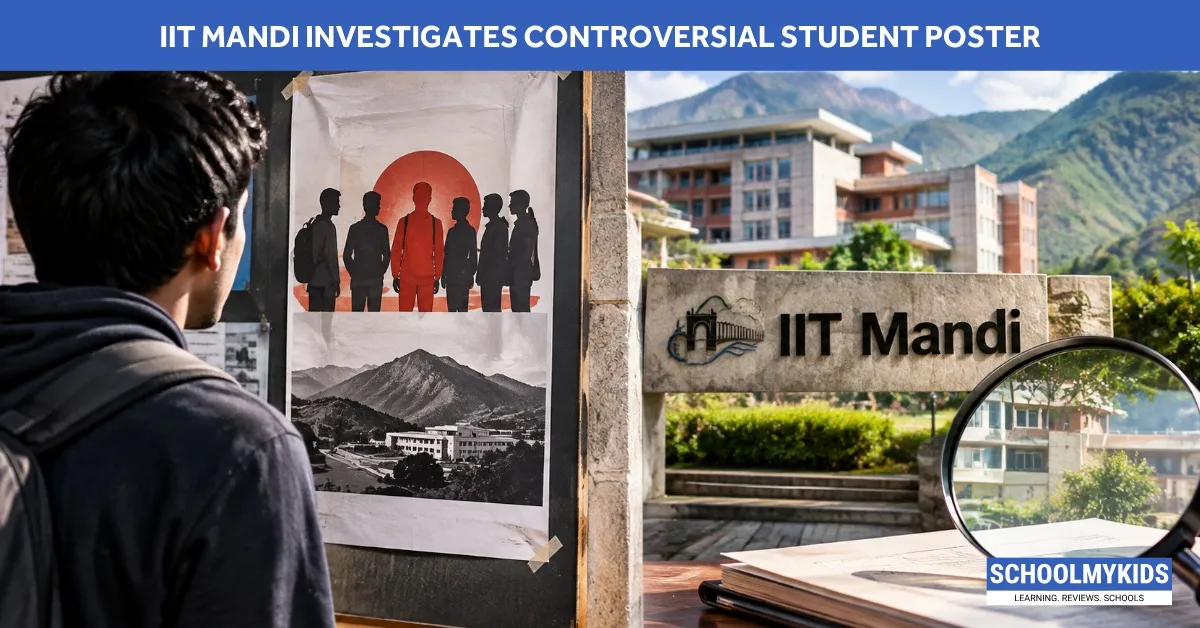
IIT Mandi put up a poster during Janmashtami celebrations. The poster was about the Bhagavad Gita. It showed how society is divided into four groups based on Hindu philosophy.
The problem. One group called Shudras was described as needing to "serve higher classes."
People got upset. This seemed to support caste-based discrimination. India’s Constitution prohibits discrimination by the State on grounds including caste, and Article 17 abolishes untouchability. Caste-based discrimination can also violate specific criminal and civil-rights laws, depending on what happened.
The director got involved. He ordered an investigation to find out who made the poster and why.
Breaking Down What The Poster Actually Said
The poster referred to four varnas: Brahmanas, Kshatriyas, Vaishyas and Shudras.
Brahmanas - “spread God’s message”
Kshatriyas - “protect society and spirituality”
Vaishyas - “drive economy, support others”
Shudras - “serve higher classes”
That last line caused the problem. "Serve higher classes" sounds like the poster was saying Shudras are lower and should be servants. That's old thinking. That's caste discrimination.
The Bhagavad Gita is an ancient Hindu scripture, but scholars differ on its precise date of composition. It describes an ancient social system. The question is whether displaying this in a modern college campus is educational or harmful.
Some saw it as an explanation of a religious text; critics said its wording reproduced a caste hierarchy. The inquiry matters because it must establish how and why the poster was prepared and displayed.
Understanding The Director's Statement
IIT Mandi Director Laxmidhar Behera said he was “shocked” by the poster and stated that it had not been endorsed by the institute. He said the display formed part of a student-led event and that an inquiry committee had been set up.
Behera also wrote that the institute was committed to ensuring its campus was not used in a way that violated social harmony, and said he empathised with people hurt by the incident.
The inquiry should clarify how the poster came to be displayed, whether any approval process applied, and whether existing event-review safeguards were followed.
When something controversial goes up on campus, the question isn't just who made it. It's why nobody stopped it.
Why This Matters Beyond One Poster
As a public higher-education institution, IIT Mandi has a responsibility to uphold equality, dignity and a learning environment in which students can raise concerns safely.
Also. This happened at a college for young adults. Not kids. These students should know that caste discrimination is illegal. That it's harmful. That it has no place in modern India.
The poster raises questions about how caste, religious interpretation, equality and social harm are discussed on campus. The inquiry should not be used to assume the views or motives of the wider student body before its findings are known.
What This Reveals:
The wording can cause harm by presenting one social group as subordinate to another.
Campus event processes need clear accountability.
Institutions need reliable ways for students to report concerns.
Any wider conclusions about campus attitudes should wait for verified findings.
Caste Discrimination In Modern India: Why This Isn't Just History
India's constitution abolished the caste system in 1950. It's illegal to discriminate based on caste. No job, school, or service can treat you differently because of your caste.
Critics objected that describing Shudras as meant to “serve higher classes” normalised a caste hierarchy through religious language.
The danger is when discrimination hides behind tradition or scripture. That makes it harder to fight.
How To Recognize Discriminatory Language: A Practical Guide For Students
If you're at college and see something that makes you uncomfortable, this is how to know if it's actually discriminatory:
Red Flags To Watch For:
Language that ranks groups as "higher" or "lower"
Descriptions that assign different worth to different people
Rules or ideas that apply differently based on identity
Historical practices presented as current guidance
Religious or traditional justifications for inequality
The poster did this. It said certain people should "serve" others. That's ranking. That's hierarchy. Critics said that wording was discriminatory even if it was wrapped in ancient philosophy.
Understanding Religious Texts in a Modern Context
The Bhagavad Gita is a real religious text. Millions of Indians study and respect it. Understanding it is legitimate.
But there's a difference between:
Educational Approach: "In ancient India, society was organized like this. Let's understand the historical context."
Problematic Approach: "This is how society should be organized. This is still relevant guidance."
An educational display should clearly distinguish historical or theological interpretation from present-day norms of equality and dignity. Critics said the IIT Mandi wording failed to make that distinction.
Religious texts need to be studied. But not used to justify modern discrimination. That's the balance that matters.
What The Investigation Will Reveal: What To Expect
IIT Mandi has said its inquiry committee will examine how the poster was prepared and displayed. Reported accounts say the committee includes faculty members and representatives from different social groups, including Scheduled Castes and Other Backward Classes.
They want to know:
Who prepared the poster
How it came to be displayed
Whether required permissions or review processes were followed
The circumstances surrounding the student-led event
Any action, if warranted, should follow IIT Mandi’s applicable rules, the inquiry findings and principles of procedural fairness. The institute has not publicly announced a disciplinary outcome or timeline.
What Inclusive Campus Culture Actually Looks Like
What should a top institute do to prevent this?
Real Steps Institutions Take:
Diversity and inclusion training for all students
Clear guidelines on what's acceptable
Quick response when issues arise
Diverse committees reviewing events
Open conversations about caste and discrimination
Support for students from marginalized groups
Regular monitoring of campus culture
IIT Mandi needs to look at whether they're doing these things. One investigation won't fix deep issues. Real change requires sustained effort.
What Students Can Actually Do
If you're at any college and see something like this:
Immediate Steps:
Report it to administration or student council
Document it (take photos, note the date)
Talk to other students about it
Contact the appropriate student-welfare, grievance, anti-discrimination or equal-opportunity office, if your institution has one
Don't let it pass silently
Longer Term:
Push for workshops on discrimination
Join or start groups focused on inclusion
Ask questions in classes about these issues
Support marginalized students
Challenge discrimination when you see it
Students can strengthen accountability by documenting concerns, using formal reporting routes and seeking support from trusted peers, faculty members or student-welfare services.
What Parents Should Do If Your Child Is At IIT Or Similar Institutes
Ask Your Child Specific Questions:
Do they feel safe and included on campus?
Have they seen or heard anything discriminatory?
How does the institute respond to complaints?
What does diversity look like in their classes?
Are there support systems for students from marginalized groups?
Take Action If Needed:
Ask your child what support they want, and help them use the institute’s formal student-welfare or grievance process where appropriate.
Connect your child with counseling if they're affected
Ask for consent before sharing their experience with others, unless there is an immediate safety risk
Join parent groups to advocate for change
Don't minimize what your child reports
Document incidents and follow up
The Bigger Picture: What This Reveals About India
This isn't just about one poster at one institute. It's about where India is right now.
We have constitutional protections against caste discrimination. Yet caste thinking persists. Education is supposed to reduce prejudice. Yet even educated people hold onto caste ideas.
This poster reveals that gap between what we say we believe and what we actually do.
Real change requires:
Honest conversations about caste
Education that doesn't hide history
Institute leadership taking it seriously
Students understanding their responsibility
Society accepting that caste discrimination still exists
This incident gives IIT Mandi a chance to do all of that.


Be the first one to comment on this story.