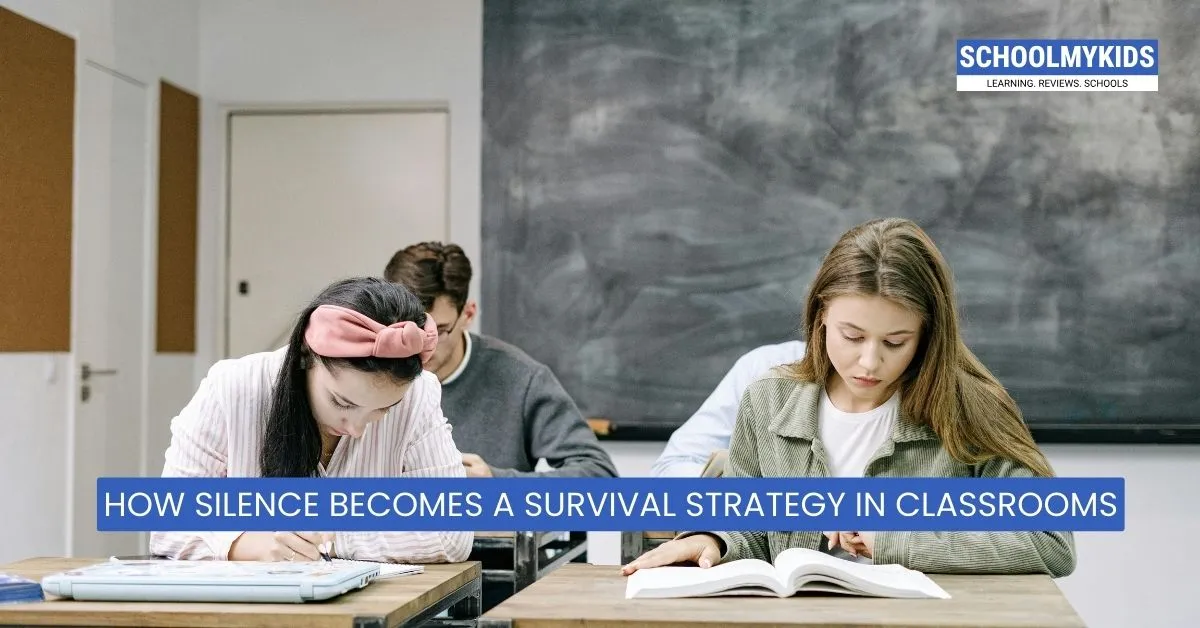
Silence Is Not the Absence of Thought
In many classrooms, silence is mistaken for discipline, focus, or understanding. A quiet class is praised. A silent student is assumed to be attentive.
But silence does not mean clarity. Often, it means calculation.
Students learn very early that speaking has consequences. Saying the wrong thing can invite correction, laughter, labeling, or judgment. Staying silent avoids all of that. Over time, silence stops being passive. It becomes strategic.
How Silence Is Slowly Taught
No teacher explicitly tells students to stop speaking. The lesson is delivered indirectly, repeatedly, and efficiently.
Early Signals That Shape Behavior
A raised eyebrow. A rushed “we already covered this.” A sarcastic correction. A classmate’s laugh after a wrong answer.
Each moment is small. Together, they teach a powerful rule: speaking is risky.
Students notice which voices are welcomed and which are brushed aside. They adjust accordingly.
Speed Is Rewarded, Hesitation Is Punished
Classrooms often value quick answers. Students who think aloud, pause, or explore ideas are interrupted or corrected mid-sentence.
The message is clear. Thinking out loud is inefficient. Silence is safer.
Why Silence Feels Smarter Than Participation
Silence offers protection.
It Avoids Public Mistakes
A student who stays quiet cannot be publicly wrong. In competitive classrooms, this matters more than understanding.
It Preserves Reputation
Students fear being seen as slow, confused, or “not smart enough.” Silence protects their image, even if it harms their learning.
It Reduces Emotional Exposure
Speaking requires vulnerability. Silence creates distance. For many students, that emotional distance feels like control.
The Role of Assessment in Enforcing Silence
Evaluation systems unintentionally reward quiet compliance.
Marks Speak Louder Than Questions
When success is measured almost entirely through written exams, verbal thinking loses value. Students learn that speaking does not improve grades, but mistakes can damage confidence.
So they optimize. They save their energy for what is rewarded.
Participation Without Safety Is Performance
When participation is graded, students speak to impress, not to understand. Those unsure simply opt out.
Silence becomes the rational choice.
Peer Dynamics Strengthen the Strategy
Classrooms are social ecosystems, not neutral spaces.
Group Judgment Is Powerful
Students observe how peers react to questions. One mocking comment can silence someone for months.
Even supportive classes develop unspoken hierarchies. Certain voices dominate. Others disappear.
Comparison Turns Questions Into Weakness
In rank-focused environments, asking doubts feels like admitting inferiority. Silence maintains competitive standing.
Online Classrooms Made Silence Easier
Digital learning did not create silence. It made it invisible.
Muting Is Effortless
Cameras off. Microphones muted. Students can disappear without confrontation.
Teachers often mistake this for engagement. Students experience it as relief.
Questions Feel Permanent
Online doubts feel recorded. The fear of saying something wrong increases. Silence feels safer than a digital footprint of confusion.
The Long-Term Cost of Survival Silence
What helps students survive classrooms hurts them later.
Poor Communication Skills
Students who rarely speak struggle to articulate ideas clearly. Knowledge stays internal and untested.
Reduced Critical Thinking
Questioning sharpens thinking. Silence dulls it. Students learn to accept information rather than interrogate it.
Erosion of Academic Confidence
Over time, silence convinces students they are not articulate or insightful. They stop trusting their own thoughts.
Why “Participate More” Advice Fails
Telling students to speak up ignores the environment that trained them to stay quiet.
Silence is not a confidence issue. It is a safety response.
No amount of encouragement works if the classroom punishes uncertainty.
How Classrooms Can Break the Silence Pattern
Make Confusion Visible and Normal
When teachers openly acknowledge difficulty, students feel less exposed for not understanding.
Value Questions More Than Speed
Praising thoughtful questions shifts incentives. It tells students that thinking matters more than instant answers.
Create Low-Risk Ways to Speak
Small-group discussions, anonymous questions, and reflective writing allow students to re-enter participation safely.
Slow Down the Pace
Silence thrives in rushed environments. Thinking needs time.
Reframing Silence for What It Is
Silence is not disinterest. It is adaptation.
Students do not stop speaking because they have nothing to say. They stop because classrooms teach them that saying it is unsafe.
When classrooms protect dignity, reward curiosity, and tolerate uncertainty, silence loses its purpose.
And voices return.






Be the first one to comment on this story.