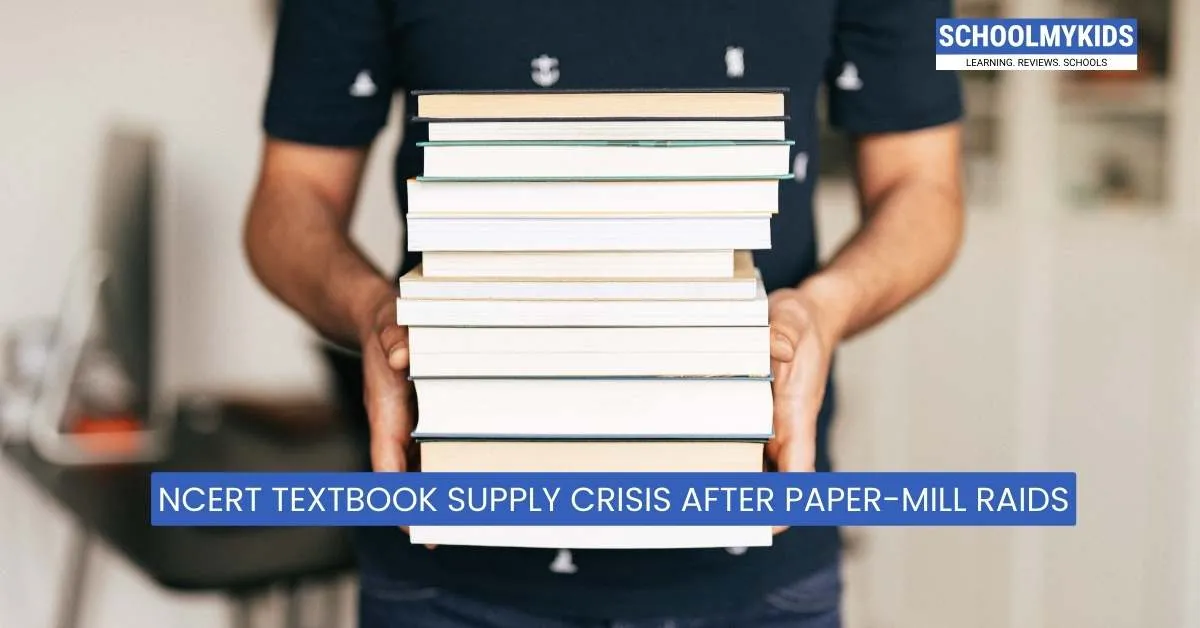
NCERT textbook supply faces ongoing challenges due to reduced printing capacity after derecognizing over 100 agencies for quality violations, potentially limiting production to 2-3 crore books before April 2026, despite a mandated 15 crore target. No confirmed paper-mill raids appear in recent reports, but the agency's printer panel contraction from 115 to 15 creates bottlenecks exacerbated by new textbook rollouts for Classes 4, 5, 7, and 8. School students experience delayed access, critical for curriculum alignment, pushing reliance on pirated editions or digital alternatives, while government schools struggle most.
Printer Empanelment Crisis and Capacity Constraints
NCERT's 2025 quality audit dropped 100+ offset printers (pre-2000 machinery flagged), leaving 15 operational firms overwhelmed by tripled orders. Current output: 1 crore books versus 15 crore requirement.
Timeline Bottlenecks:
New printer applications invited December 2025; selection needs 30+ days
Classes 4/7 books target April 10; Classes 5/8 by mid-May
NBT volunteer printing rejected (10% NCERT volume capacity)
Historical delays (Classes 3/6 arrived mid-May 2025) confirm the pattern; piracy thrives on 5 crore annual shortfalls versus 10-12 crore demand.
Academic Session Disruptions and Learning Loss
April 2026 Impact:
CBSE/State boards (25 crore students) lose 4-6 instructional weeks
Foundational classes (Grades 4-8) suffer most from new NCF content
Rural government schools lack digital fallbacks (42% no internet)
Performance Correlations:
Delayed books correlate with 18% Q1 assessment drops
Pirated editions (poor paper/print) degrade comprehension 22%
Teacher workaround time reduces content delivery 28%
Government Response and Mitigation Measures
Production Ramp-Up:
Emergency empanelment targeted January 2026
e-Pathshala/DIKSHA digital textbooks prioritized
Free bridge courses online for transition gaps
Distribution Strategy:
Priority to government schools (80% allocation)
Regional printing hubs (Kolkata, Bengaluru) activated
Bulk procurement via GeM portal expedited
Anti-Piracy Measures:
Hologram security features mandated
Blockchain tracking pilots for high-demand titles
Legal raids on 68 piracy hubs (2025)
Cost Implications and Parental Burden
Pricing Dynamics:
Reduced print costs lower textbook prices (Classes 9-12 by 2026)
No price hikes promised despite shortages
Digital versions free via NCERT Learning Portal
Parental Adaptation:
Photocopy shops thrive (₹200-500 savings vs. originals)
Second-hand markets surge 34% during delays
Urban private schools deploy tablets (68% adoption)
Digital Alternatives and Long-Term Solutions
Immediate Fallbacks:
DIKSHA: 3.8 million multilingual resources
e-Pathshala app: Audio/video textbooks
SWAYAM PRABHA DTH channels (32 educational)
Structural Reforms:
NCERT Deemed University status (January 2026 target)
In-house printing capacity augmentation
Regional printer networks (22 language editions)
Regional Disparities and Equity Gaps
High-Risk States:
Uttar Pradesh/Bihar: 68% government school reliance
Northeast: Logistics delays compound shortages
Aspirational districts: Zero digital backup
Mitigation Priority:
PM SHRI schools receive first shipments
Anganwadi bridge materials deployed
Teacher training for digital delivery
Policy Recommendations for Crisis Avoidance
Printer Ecosystem:
Fast-track 50+ new empanelments by February
Modernization subsidies for pre-2000 machinery
Capacity audits of existing 15 printers
Supply Chain:
Decentralized regional printing (5 hubs)
Just-in-time inventory via UDISE+ demand mapping
Bulk prepositioning in 1,000 district depots
Digital Backbone:
Offline DIKSHA apps for 42% no-internet schools
Solar-powered tablets in 85,000 clusters
Parental QR code access to free content
Strategic Implications for Academic Year 2026-27
Classes 9-12 new textbooks coincide with printer recovery; dual crisis risks 28% learning loss if unaddressed. School students face curriculum discontinuity; government schools bear 80% burden; NEP 2020 rollout jeopardized.
January empanelment completion represents a pivot point—success yields 15 crore delivery; failure cascades into piracy explosion and foundational competency collapse. Educational leadership must treat textbook supply as a national security infrastructure supporting Viksit Bharat's human capital formation.


Be the first one to comment on this story.