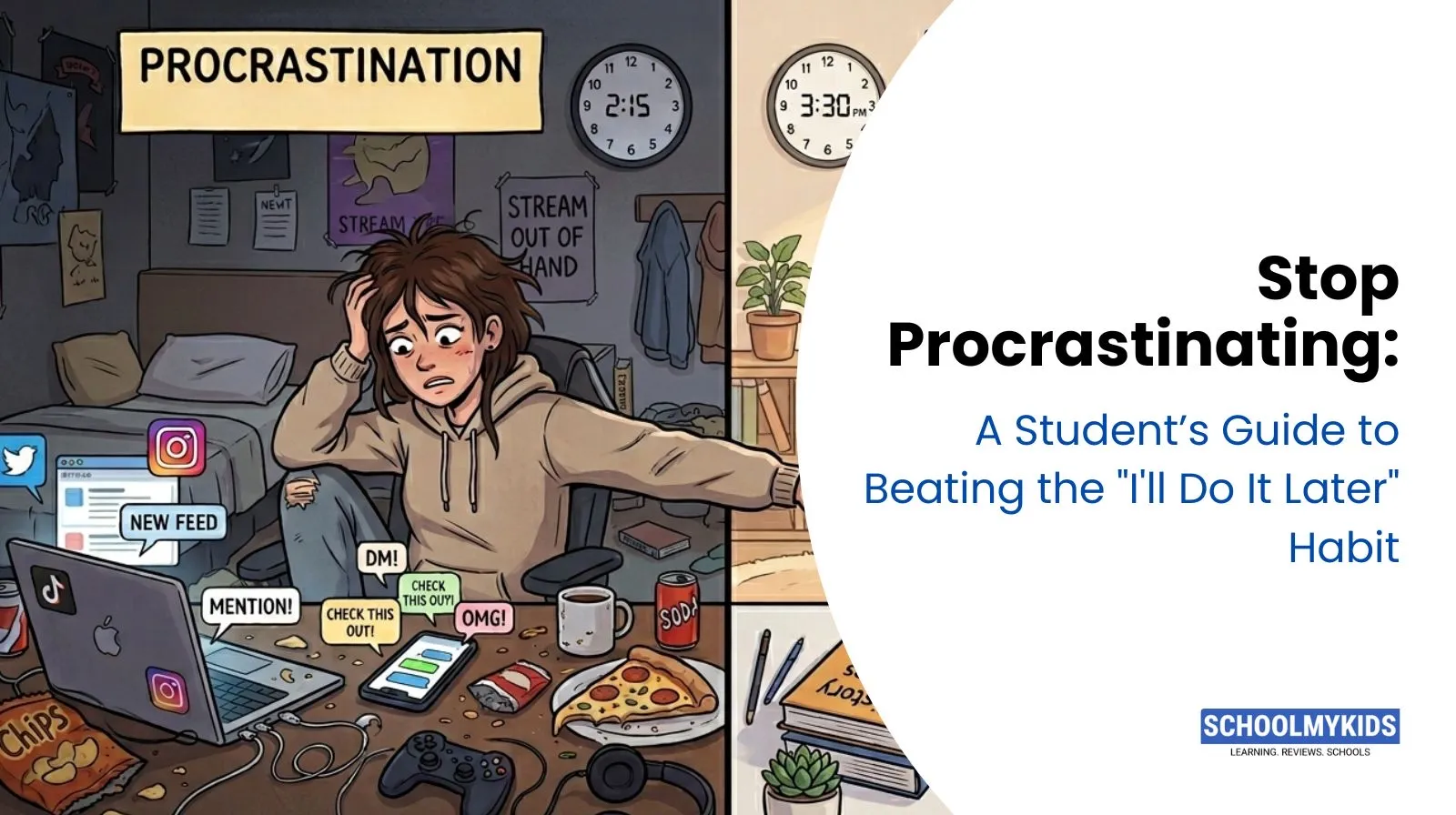
Every student has experienced it at some point: staring at a homework assignment, promising themselves they’ll start “in five minutes,” and then suddenly realizing hours have passed.
In today’s digital world, where smartphones, social media, and streaming platforms constantly compete for attention, procrastination has become extremely common. Studies between 2023 and 2025 estimate that 80–95% of college students procrastinate occasionally, and around 50% struggle with chronic procrastination.
For many students who procrastinate, the challenge is not intelligence or discipline. Modern psychological research shows that procrastination is primarily an emotional regulation issue, not simply a time management problem. When a task feels stressful, boring, or overwhelming, the brain naturally tries to avoid it.
The good news is that procrastination is a habit that can be changed. By understanding how the brain works and using proven strategies like the Pomodoro Technique, better time management, and motivation-building techniques, students can regain control of their focus and productivity.
What Is Procrastination in Students?
Procrastination is the habit of delaying important tasks even when you know the delay may create problems later.
Students who procrastinate often experience situations such as:
Delaying homework until late at night
Waiting until the day before exams to revise
Avoiding difficult assignments
Spending study time scrolling on phones or watching videos
Psychologists now explain procrastination through the brain’s internal conflict between two systems:
The Limbic System vs. the Prefrontal Cortex
The limbic system controls emotions and seeks immediate rewards.
The prefrontal cortex handles planning, decision-making, and long-term goals.
When a task feels uncomfortable, the brain may trigger an avoidance response that overpowers rational planning. This emotional reaction can overpower rational planning, making procrastination feel almost automatic.
Understanding this conflict helps explain why procrastination is not laziness. Instead, it is closely related to Executive Function, emotional regulation, and how the brain manages effort and reward.
Expert Note: To help your Prefrontal Cortex win the battle, you must lower the "activation energy" of the task. If your desk is messy, your Limbic System sees "work" as a threat. A clean desk is a signal to your brain that it is safe to focus.
Why Do Students Procrastinate?
Several psychological and environmental factors contribute to procrastination.
Fear of Failure
Many students delay starting tasks because they worry about performing poorly. Avoiding the task temporarily protects them from the feeling of failure.
Perfectionism
Perfectionism can lead to analysis paralysis. Students feel pressure to do everything perfectly, so they delay starting until they feel “ready.”
Lack of Clear Study Goals
When assignments feel large or confusing, students may not know where to begin. This uncertainty increases cognitive load, making it harder for the brain to start working.
Too Many Digital Distractions
Notifications, games, and social media provide quick dopamine rewards. Compared to studying, these activities feel easier and more enjoyable.
Emotional Regulation Difficulties
Recent research shows procrastination often happens when students try to avoid negative emotions such as boredom, stress, or frustration.
Poor Time Management for Students
While procrastination is not purely a time management issue, weak planning skills can still make the problem worse.
Without proper time management, assignments accumulate and increase stress.
How Procrastination Affects Academic Performance
Although procrastination may feel harmless in the moment, it can have serious long-term consequences.
Increased Stress and Anxiety
Last-minute studying often leads to panic before deadlines and exams.
Lower Quality of Work
Assignments completed in a rush usually lack depth, research, and clarity.
Reduced Confidence
Repeated procrastination can make students feel incapable of managing their workload.
Poor Learning Retention
Cramming before exams prevents the brain from processing information effectively.
Over time, these patterns can reduce study motivation and academic confidence.
Practical Tips to Stop Procrastination While Studying
The good news is that overcoming procrastination does not require extreme changes. Small habits practiced consistently can significantly improve productivity.
Break Tasks into Smaller Steps
Large assignments often feel overwhelming.
Instead of thinking about finishing the entire project, divide it into smaller actions such as:
Research the topic
Create a simple outline
Write the introduction
Complete one section at a time
This method reduces cognitive overload and makes it easier to begin.
The 2-Minute Rule for Getting Started
One powerful strategy used by productivity experts is the 2-Minute Rule.
The rule is simple:
If a task takes less than two minutes to start, do it immediately.
Examples include:
Opening your textbook
Writing the first sentence of an essay
Creating a study outline
This approach helps bypass the mental resistance that often stops students from starting tasks.
Once students begin working, momentum usually follows.
Research shows that “If-Then” planning can significantly improve follow-through and task initiation.
Instead of "I will study tonight."
Try, "If it is 4:00 PM and I am in the library, then I will open my biology notes and set a 25-minute timer." This removes the need for "willpower" because the decision has already been made.
Remove Distractions
Your environment strongly influences productivity.
Students can improve focus by:
Keeping phones away from the study desk
Turning off social media notifications
Using “Focus Mode” or app blockers
Studying in a quiet location
These small adjustments reduce unnecessary cognitive load and support better time management.
Pomodoro Technique for Students: A Simple Focus Strategy
One of the most effective productivity methods used worldwide is the Pomodoro Technique for Students.
This method divides studying into short, focused sessions followed by regular breaks.
How the Pomodoro Technique Works
The process is simple:
Choose one study task.
Set a timer for 25 minutes.
Study with full focus until the timer rings.
Take a 5-minute break.
After four sessions, take a 15–20 minute break.
This structure helps maintain concentration while preventing mental fatigue.
Why the Pomodoro Technique Is Effective
The Pomodoro Technique for Students works because it:
Makes large tasks feel manageable
Reduces mental exhaustion
Builds consistent study habits
Improves productivity and focus
Research in recent years shows that short focus sessions can improve engagement and reduce academic boredom.
However, some students prefer flexible break systems such as the Flowtime method during longer study sessions. The key is to experiment and discover which method works best for your learning style.
Use Active Recall During Pomodoro Sessions
Instead of simply rereading notes, students can improve their learning through Active Recall.
Active recall techniques include:
Testing yourself with practice questions
Writing down everything you remember from memory
Explaining concepts aloud
This approach strengthens memory and improves long-term understanding.
Energy Mapping: Study When Your Brain Is Most Productive
Traditional advice focuses only on scheduling time, but modern productivity research highlights the importance of Energy Mapping.
Energy mapping means identifying the times of day when your brain works best.
For example:
Morning: Ideal for difficult subjects like mathematics or physics
Afternoon: Good for revision and practice problems
Evening: Better for lighter tasks like reviewing notes
Matching study tasks with energy levels can improve both productivity and study motivation.
Quick Comparison: Which Strategy Should You Use?
Strategy | Best For... | Why it Works |
|---|---|---|
Pomodoro Technique | Heavy reading or long assignments | Prevents burnout by pacing your mental energy. |
2-Minute Rule | When you feel "stuck" or overwhelmed | Lowers the barrier to entry by focusing only on the start. |
Energy Mapping | Complex problem solving (Math/Science) | Ensures your brain is at peak performance for hard tasks. |
Active Recall | Exam revision and memorization | Strengthens neural pathways for better long-term retention. |
Building Long-Term Study Motivation
Motivation plays an important role in reducing procrastination.
Connect Studying to Future Goals
Students often feel more motivated when they understand the purpose behind their studies.
Education helps students:
prepare for college admission
build career opportunities
achieve personal goals
Linking daily tasks to long-term aspirations strengthens study motivation.
Use Positive Rewards
Small rewards can reinforce productive habits.
Examples include:
watching an episode of a favorite show after studying
enjoying a snack break
taking a short walk
Positive reinforcement helps maintain momentum.
Try a “Dopamine Detox”
A dopamine detox means temporarily reducing activities that provide instant rewards, such as social media or gaming.
When students limit these distractions, studying becomes less mentally difficult.
Simple Daily Habits to Avoid Procrastination
Building small routines can prevent procrastination before it begins.
Students can try habits such as:
Starting with the easiest task
Using the Pomodoro Technique for Students for difficult subjects
Reviewing notes daily
Creating a fixed study schedule
Tracking progress in a study journal
Over time, these habits improve time management and strengthen learning discipline.
Conclusion
Procrastination is one of the most common challenges students face today. Research shows that most students struggle with it at some point, especially in environments filled with digital distractions.
The key to overcoming procrastination is not simply forcing yourself to work harder. Instead, it involves understanding how the brain handles stress, emotions, and motivation.
By breaking tasks into smaller steps, applying the Pomodoro Technique, improving time management, and strengthening study motivation, students can gradually build healthier study habits.
Consistent effort creates stronger results than waiting for the perfect moment. Even one distraction-free 25-minute study session can help students rebuild focus and develop healthier academic habits.
If procrastination begins to seriously affect grades, mental health, or daily life, students may benefit from speaking with a counselor or academic advisor. Procrastination is often linked to anxiety or emotional stress, and professional support can help address these underlying challenges.
Frequently Asked Questions
Why do students procrastinate while studying?
Students procrastinate due to emotional factors such as fear of failure, perfectionism, stress, and digital distractions. Researchers now believe procrastination is often connected to how people handle uncomfortable emotions, rather than being caused only by weak discipline or laziness.
What is the Pomodoro Technique for Students?
The Pomodoro Technique for Students is a productivity method where students focus on studying for 25 minutes followed by a 5-minute break. After four sessions, a longer break is taken.
How can students improve time management?
Better time management for students involves using planners, setting clear study goals, prioritizing tasks, and following consistent study routines.
How common is procrastination among students?
Research shows that 80–95% of students procrastinate occasionally, and about 50% experience chronic procrastination.
When should students seek help for procrastination?
If procrastination severely impacts grades, stress levels, or mental health, it may be helpful to speak with a teacher, academic advisor, or counselor.







Be the first one to comment on this story.