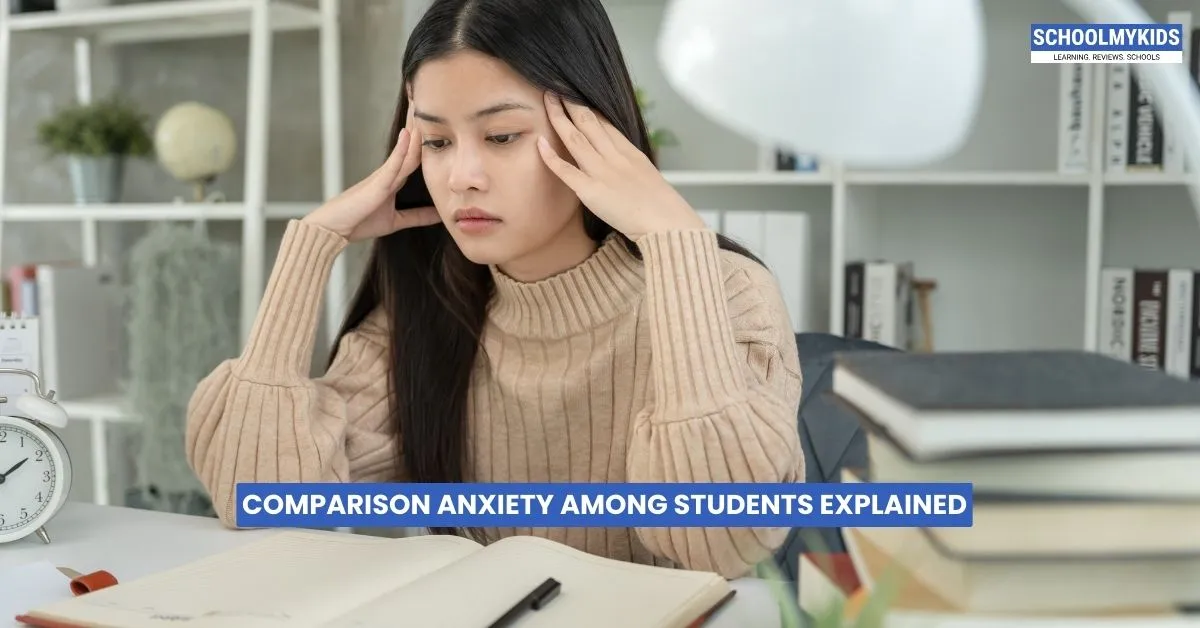
When Measuring Yourself Becomes the Main Task
Students compare themselves constantly. Marks, ranks, speed of learning, confidence, clarity about the future, even how calm others look during exams. Comparison feels unavoidable, especially in academic environments built on ranking and visibility.
Over time, this comparison stops being occasional and becomes habitual. Students no longer evaluate progress internally. They measure themselves against peers first. This is where comparison anxiety begins, not as insecurity, but as a learned response to how education defines success.
How Education Normalizes Constant Comparison
Schools are structured around relative performance.
Grades, ranks, percentiles, toppers’ lists, and public recognition make comparison central rather than incidental. Even when competition is not explicit, it is implied. Students learn quickly where they stand and who stands above them.
This system does not ask whether comparison helps learning. It assumes comparison motivates effort. For some students, it does temporarily. For many others, it creates persistent anxiety.
Why Comparison Feels Unavoidable to Students
Comparison is reinforced socially and emotionally.
Students see peers answering faster, scoring higher, appearing more confident, or managing pressure better. Social media amplifies this effect by showcasing selective success without context.
The result is distorted perception. Students compare their internal struggles with others’ external performance and conclude they are falling behind, even when they are not.
The Psychological Mechanics of Comparison Anxiety
Comparison anxiety is not about jealousy. It is about uncertainty.
When students lack clear internal measures of progress, they rely on external benchmarks. Every difference feels like evidence. Every setback feels amplified.
This keeps the mind in a constant evaluative state. Instead of focusing on understanding, students monitor position. Anxiety rises because position is unstable and largely outside their control.
Why High-Achieving Students Are Not Immune
High-performing students often experience comparison anxiety more intensely.
Their identity is tied to achievement. Small drops feel threatening. They compare upward constantly, noticing only those who perform better.
This creates a fragile sense of self-worth. Success feels temporary. Anxiety persists even when results are strong.
How Comparison Affects Learning Quality
Comparison shifts attention away from learning.
Students choose subjects, strategies, and even study hours based on what others are doing. They avoid areas where peers seem stronger. They rush understanding to keep pace.
Learning becomes reactive rather than reflective. Curiosity narrows. Mistakes feel dangerous because they affect perceived standing.
The Emotional Cost Students Rarely Voice
Comparison anxiety produces quiet emotional strain.
Students feel pressure to appear calm, capable, and confident even when they are not. They hesitate to ask doubts. They hide confusion. They suppress rest.
Over time, this leads to exhaustion, self-doubt, and disengagement. The anxiety is constant but normalized, so it goes unnoticed.
Why “Stop Comparing” Advice Doesn’t Work
Students are often told to stop comparing themselves to others.
This advice ignores context. Comparison is built into the system. As long as the evaluation is relative and visible, comparison will continue.
Telling students to ignore comparison without changing structures places responsibility on individuals instead of environments.
What Reduces Comparison Anxiety in Practice
Comparison anxiety reduces when focus shifts from position to progress.
When feedback emphasizes improvement over rank, when mistakes are treated as part of learning, and when private reflection is valued over public performance, anxiety eases.
Students need stable internal metrics, not constant external reference points.
The Role of Parents and Teachers
Adults often unintentionally fuel comparison.
Praising ranks, comparing siblings or classmates, and emphasizing outcomes over growth reinforce anxiety. Supportive responses focus on effort, understanding, and resilience rather than relative success.
Language matters more than intention.
The Deeper Issue Beneath Comparison Anxiety
Comparison anxiety thrives when education defines worth externally.
When students are trained to measure value through relative performance, self-trust weakens. Learning becomes a race rather than a process.
The Core Reality Students Are Responding To
Comparison anxiety among students is not a personal flaw. It is a rational response to systems that prioritize ranking over understanding. When progress is constantly evaluated relative to others, anxiety becomes unavoidable. Reducing this anxiety requires shifting attention from comparison to growth, from visibility to reflection, and from position to learning itself. Until education values progress more than placement, students will continue to feel anxious not because they are failing, but because they are being compared.








Be the first one to comment on this story.