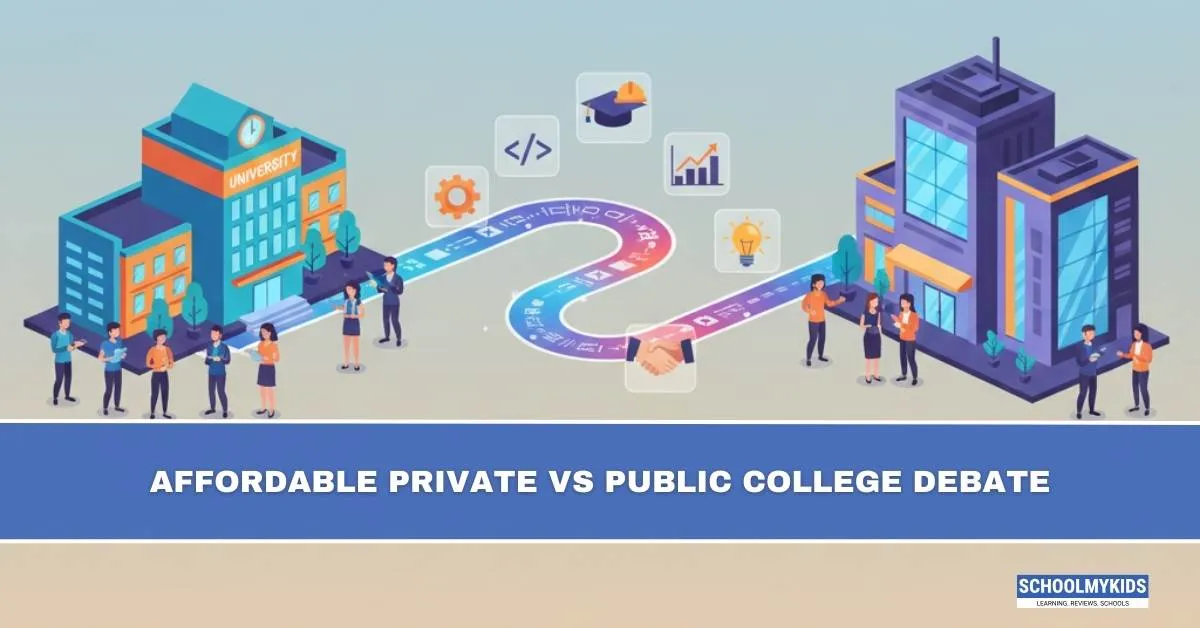
Choosing between an affordable private college and a public (government) college is no longer a simple “government is best, private is bad” equation. That logic worked 20 years ago. Today’s education system is more complicated, more commercial, and more uneven than people like to admit.
For school students, college aspirants, and families planning education on tight budgets, this debate directly affects money, career outcomes, and mental peace.
Let’s break it down honestly.
Understanding the Core Difference
Before comparing quality or prestige, understand what actually separates these two systems.
What Public Colleges Offer
Public colleges are funded by the government and heavily subsidized.
- Low tuition fees
- Established reputation
- Large student intake
- Standardized admission processes
They are often seen as the “safe” choice, especially for middle-class families.
What Affordable Private Colleges Claim
Affordable private colleges sit in an uncomfortable middle zone.
- Fees higher than public colleges, but not elite-private levels
- Better infrastructure than many public colleges
- Industry-oriented courses
- Aggressive marketing and promises
Some deliver real value. Many don’t. That distinction matters.
Fees and Affordability: The Obvious but Incomplete Argument
Public Colleges Win on Paper
There’s no denying it. Public colleges are cheaper. Sometimes shockingly cheaper.
For families with limited income, this can be the difference between studying and not studying at all.
But affordability is not just about fees. It’s about return on effort and outcome.
Hidden Costs Students Ignore
Public colleges often come with:
- Overcrowded classrooms
- Limited mentorship
- Delayed academic calendars
- Minimal career guidance
These don’t show up on fee receipts, but they cost students time, confidence, and opportunities.
Affordable private colleges charge more but often bundle:
- Better facilities
- Structured academic support
- Internship exposure
- Placement cells
Not always. But often enough to matter.
Quality of Teaching: Reality vs Reputation
Public Colleges: Brilliant Faculty, Broken System
Public colleges do have highly qualified professors. That’s not a myth.
The problem is:
- Faculty shortage
- Administrative overload
- Little accountability for teaching quality
A great teacher teaching 300 students cannot mentor anyone properly. Talent exists. Systems fail it.
Private Colleges: Inconsistent but Adaptive
Affordable private colleges are hit or miss.
- Some invest in young, motivated faculty
- Others cut corners aggressively
- Teaching quality depends heavily on management intent
The upside is adaptability. Private colleges change curricula faster. Public ones move at bureaucratic speed.
Campus Life and Student Experience
This is where the gap becomes visible to students, not parents.
Public Colleges
Pros:
- Strong peer competition
- Diverse student backgrounds
- Historical campus culture
Cons:
- Limited hostels
- Outdated labs
- Poor student support systems
Self-driven students thrive here. Others feel lost.
Affordable Private Colleges
Pros:
- Better infrastructure
- Cleaner campuses
- Organized academic calendars
Cons:
- Sometimes artificial campus culture
- Less diverse peer group
- Overcontrolled environments
Comfort does not always equal growth. But chaos doesn’t guarantee growth either.
Placements and Career Outcomes
This is where marketing lies peak.
Public Colleges
Top public colleges place exceptionally well. Average ones don’t.
Many students rely on:
- Self-preparation
- Off-campus drives
- Competitive exams
The college gives you a brand name. The rest is on you.
Affordable Private Colleges
Some genuinely build industry connections. Others inflate placement data shamelessly.
Students must verify:
- Average package, not highest
- Number of students placed
- Types of companies, not logos
Blind trust here is expensive.
Scholarships and Financial Support
Public Colleges
- Government scholarships
- Fee reimbursements
- Reserved category benefits
These are structured, transparent, and reliable.
Private Colleges
- Merit-based discounts
- Need-based waivers
- Institutional scholarships
Helpful, but often limited and conditional. Students must read the fine print carefully.
Who Should Choose a Public College?
Public colleges suit students who:
- Are academically strong
- Can self-study without constant guidance
- Want minimum financial burden
- Are preparing for competitive exams or higher studies
If you thrive independently, public colleges can be powerful launchpads.
Who Should Consider an Affordable Private College?
Affordable private colleges make sense for students who:
- Need structured academic support
- Want industry exposure early
- Prefer modern infrastructure
- Are okay paying slightly more for guided outcomes
This is not about intelligence. It’s about learning style.
The Brutal Truth No One Likes to Say
A bad public college is worse than a good private college.A bad private college is worse than almost anything.
The institution’s intent matters more than its ownership.
Students fail not because they chose private or public. They fail because they chose blindly.
Conclusion: Stop Asking Which Is Better. Ask Which Is Better for You
The affordable private vs public college debate has no universal winner.
Public colleges offer value through affordability and legacy. Affordable private colleges offer value through structure and adaptability.
Your background, learning style, financial reality, and career goals should decide, not social pressure or outdated prestige.
Education is not about proving a point. It’s about building a future that actually works for you.
Choose deliberately. Question aggressively. And never assume cheaper or costlier automatically means better.






Be the first one to comment on this story.