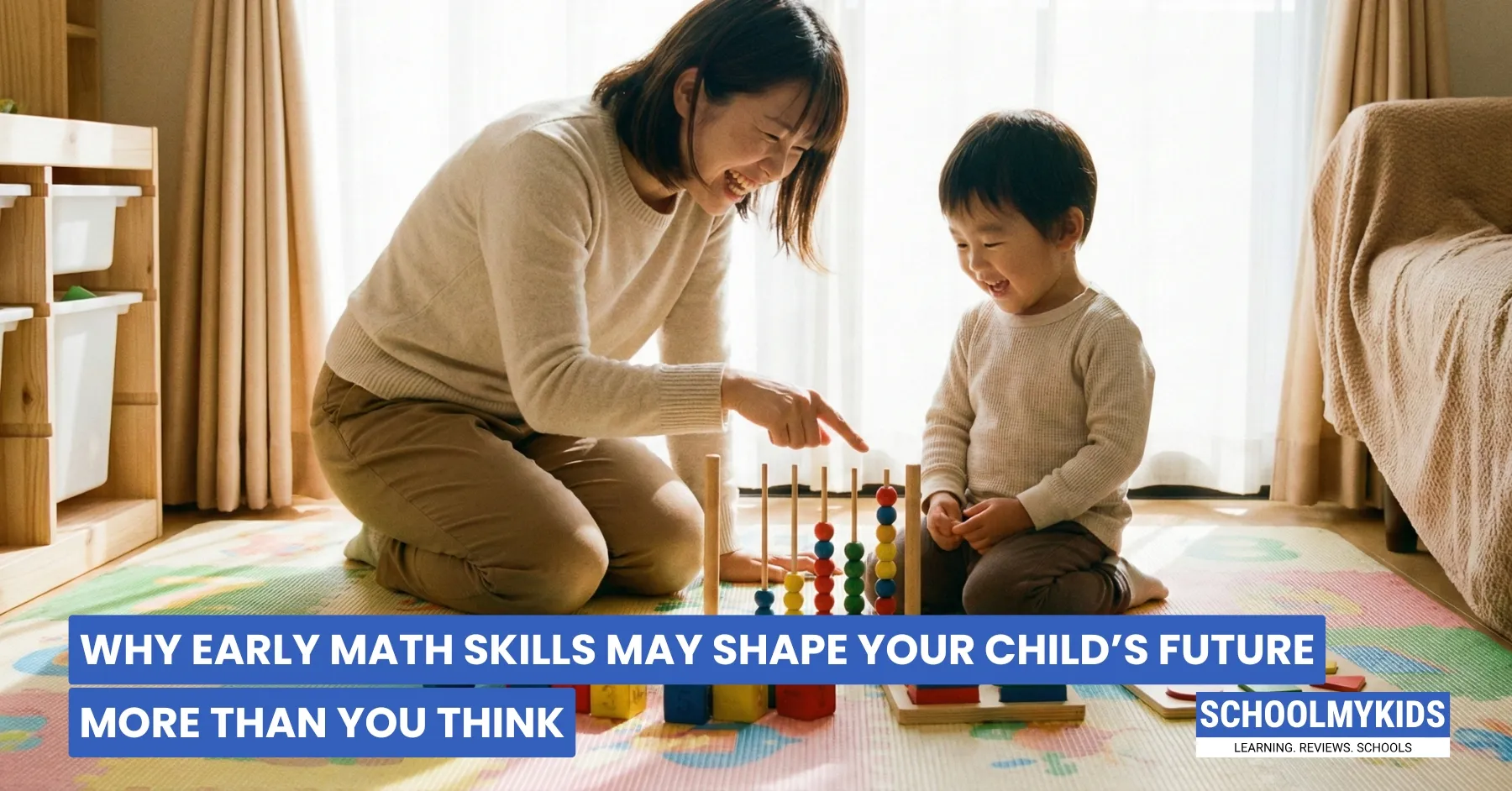
When you think about getting your child ready for life, math probably isn't the first thing on your mind. You're thinking about teaching them to be kind, confident, and happy. And that's exactly as it should be.
But those early math skills your child picks up before they even start school are doing way more heavy lifting than you'd expect.
It's Not About Making Them a Math Genius
This isn't about pushing your five-year-old to solve algebra or turning playtime into a classroom. Early math skills aren't about making your child a calculator. They're about building a way of thinking that helps them navigate pretty much everything.
When your toddler sorts their toys by color or size, they're learning to categorize. When they figure out that three cookies are more than two cookies, they're understanding quantity. When they try to fit blocks into different-shaped holes, they're problem-solving. All of this is math, and all of this matters.
The Real-World Connection
Studies show that kids who have a good grasp of basic math concepts in kindergarten tend to do better academically overall, not just in math, but in reading too. That early number sense unlocks a part of their brain that supports learning in general.
But it goes beyond school. Think about your own daily life. You're constantly using math without even realizing it. When you're figuring out if that "50% off" deal is actually worth it. When you're adjusting a recipe because you have more people coming for dinner. When you're calculating if you have enough time to run those errands before picking up the kids. When you're budgeting your monthly expenses or deciding if you can afford that vacation.
This is the math that actually matters, and it all starts with those early building blocks.
The Career Angle Nobody Talks About
The job market your child will enter looks nothing like the one we grew up with. Technology is everywhere. Even jobs that seem to have nothing to do with math are becoming more data-driven.
A nurse tracks patients' vital signs and medication dosages. A chef manages inventory and portion costs. A photographer understands angles, lighting ratios, and editing software. A small business owner analyzes sales trends and manages cash flow. Even social media managers look at engagement metrics and ROI.
Strong math skills don't just open doors to engineering or accounting careers. They give your child options and flexibility in a world that's constantly changing.
Why Kids Fear Math (And What We Can Do About It)
Many kids are scared of math. But that fear usually doesn't come from math itself. It comes from how math is presented, as something cold, rigid, and full of "right or wrong" with no middle ground.
The good news is that you can change this story for your child.
Make math part of everyday life without making it feel like a lesson. Count steps as you walk. Point out shapes in buildings. Let them help measure ingredients while cooking. Play board games that involve counting and strategy. Talk about money when you're at the store.
When your child makes a math mistake, don't panic. Math should feel like a puzzle to solve, not a test to pass.
Starting Early Makes It Easier, Not Harder
Some parents worry that focusing on math early will stress out their child. Actually, it's the opposite. Kids who develop number sense early find math less intimidating later because it feels familiar. They've been playing with these concepts since they were little.
It's like learning a language. Kids who grow up hearing two languages don't find it confusing; they find it natural. Same thing with math. When it's included in their daily life from the start, it's just part of how they see the world.
Conclusion
Your child doesn't need to be a math whiz. They just need to feel comfortable with numbers and patterns. They need to see math as a useful tool, not a scary subject.
Those early years when they're counting toys, sorting snacks, and figuring out if their brother got more juice than they did? That's not just cute. That's foundation-building. That's giving them a way of thinking that will serve them when they're picking a college major, choosing a career, managing their money, or just figuring out everyday problems.
So the next time your kid wants to count their crackers before eating them, or insists on organizing their stuffed animals by size, don't rush them along. They're not just playing. They're building their future, one number at a time.





Be the first one to comment on this story.