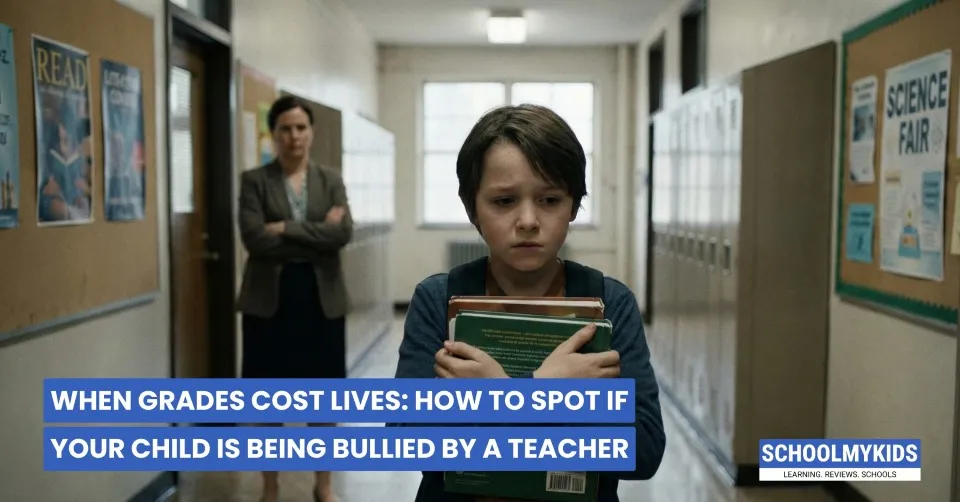
"Teachers are there to guide our children. They would never bully them."
Not every adult in a classroom has your child's best interests at heart. And sometimes, the damage they do can be deadly.
Just a few days ago in Delhi, a 16-year-old Class 10 student named Shourya Patil jumped from a metro station. He left behind a heartbreaking note that said, "Sorry, mummy, I broke your heart many times, and I am doing it for the last time. The school teachers are like this… what can I even say?" He named specific teachers and the principal, saying his last wish was for action against them so no other child would suffer as he did.
This isn't an isolated incident. In Jaipur, a 9-year-old girl named Amaira died by suicide after 18 months of bullying. The CBSE investigation found she had approached her class teacher five times in 45 minutes on the day of her death, begging for help.
And it's not just in India. An 11-year-old boy in Florida took his own life after his fifth-grade teacher repeatedly called him "stupid" and publicly humiliated him for months.
These aren't stories we want to hear. But we have to.
What Teacher Bullying Actually Looks Like
Let's be clear about what we're talking about. Teacher bullying isn't just about being strict or having high standards. It's repeated, intentional behavior meant to humiliate, control, or harm a child emotionally.
Here's what it can look like:
- Constant public humiliation: Mocking a child in front of classmates. Making fun of how they speak, look, or perform. In Shourya's case, a teacher allegedly mocked him for "overacting" after he fell during a drama class, and told him to "cry as much as you want, I don't care."
- Singling out a child repeatedly: Always calling on them to answer when they don't know. Bringing up their past mistakes over and over. Making them feel like they can never do anything right.
- Threatening and intimidating behavior: "You'll never amount to anything." "You're the worst student I've had." "I'll make sure you fail." These aren't motivational statements; they're abuse.
- Dismissing serious concerns: When Amaira approached her teacher five times for help, she was ignored and then shouted at. When Shourya told school counselors he was having thoughts of suicide, his family was never informed.
- Unreasonable academic pressure: Setting impossible standards and then punishing the child when they can't meet them. Using grades as weapons.
- Physical aggression: While corporal punishment is illegal under the Right to Education Act, studies show it still happens, often disguised as "discipline."
How to Tell if Your Child is Being Bullied by a Teacher
Your child might not tell you directly. In fact, they probably won't. Shourya's aunt said, "He was depressed for so long. He kept complaining, but we stayed quiet because he was in Class 10."
Here's what to watch for:
- Sudden change in attitude about school: A child who loved school suddenly doesn't want to go. They make excuses – stomach aches, headaches. They beg you to let them stay home.
- Stress around specific classes or teachers: Pay attention if they dread a particular period or get anxious when that teacher's name comes up.
- Physical symptoms: Regular headaches, stomach problems, sleep issues, or changes in eating habits that coincide with school days.
- Emotional changes: Becoming withdrawn, anxious, or depressed. Crying more often. Sudden anger outbursts. Loss of confidence.
- Declining grades in specific subjects: If your child was doing fine and then suddenly starts failing one particular class, ask why.
- Not wanting to talk about school: When you ask about their day, and they shut down completely or change the subject.
- Bringing home incomplete work or damaged assignments: Some teachers destroy students' work in front of them as a form of humiliation.
- Mentioning that teachers call parents for minor issues: Multiple students at Shourya's school reported that teachers would call parents for things as small as spilling water, creating constant fear.
- Expressing feeling targeted: If your child says things like "the teacher has it out for me" or "they hate me," don't dismiss it.
- Changes in behavior after parent-teacher meetings: If your child becomes more stressed after you meet with their teacher, something's wrong.
What You Should Do
- Take your child seriously: Don't brush off their complaints because you think teachers know best. They don't always. Shourya told his counselors he was having thoughts of suicide. No one told his parents.
- Document everything: Write down dates, times, and specific incidents your child reports. Keep copies of assignments, messages, and any physical evidence.
- Talk to other parents: Find out if other children are having similar experiences with the same teacher. There's often a pattern.
- Request meetings with both the teacher and principal: Don't go alone. Take another parent or family member with you. Be specific about your concerns.
- Check if your child has expressed concerns to school counselors: Ask directly. Shourya had. His family never knew until after his death.
- Don't wait for board exams or the "right time": Shourya's father admitted they delayed action because of upcoming exams. They thought they'd switch schools after. They never got the chance.
- Know your rights: Under the RTE Act, corporal punishment is illegal. Under the CBSE guidelines, schools must have anti-bullying committees. Ask if your school has one and how to file a complaint.
- File formal written complaints: Verbal complaints can be ignored or forgotten. Put everything in writing and keep copies.
- Escalate if necessary: If the school doesn't act, go to the District Education Officer, State Commission for Protection of Child Rights, or file a police complaint if needed.
- Get professional help for your child: A counselor or therapist who isn't connected to the school can provide support and document the emotional impact.
The Bigger Picture
We need to acknowledge that the system is failing our children. Studies show that only 24% of parents are aware when their children are being bullied. School authorities often don't report incidents. There's a culture of silence that protects abusive teachers while leaving children vulnerable.
The Delhi government has now formed an investigation committee after Shourya's death. Four staff members have been suspended. But this came too late for that family. For Amaira's family. For the countless children suffering in silence right now.
Your Child's Life Matters More Than Grades
Your child's mental health and safety are more important than their marks. More important than a good school's reputation. More important than avoiding conflict with teachers.
If your child is showing signs of distress, act now. Don't wait for the "right time." Don't worry about what the school might think. Don't convince yourself it's not that serious.
Trust your instincts. Trust your child. And remember that no grade, no certificate, no teacher's opinion is worth your child's life.
We cannot bring back Shourya, Amaira, or the countless other children we've lost. But we can protect the ones who are still here. We can break the silence. We can demand accountability. We can teach our children that they deserve to be treated with respect and dignity, even by the adults in positions of authority.
Conclusion
Start those conversations today. Ask your child how they're really doing. Look for the signs. Be the protector they need you to be. Because when grades cost lives, we've failed as a society. Let's not fail another child.
If your child is showing signs of severe distress or mentions thoughts of self-harm, please immediately contact to your nearest mental health specialist.







Be the first one to comment on this story.