When Confidence Slowly Goes Quiet
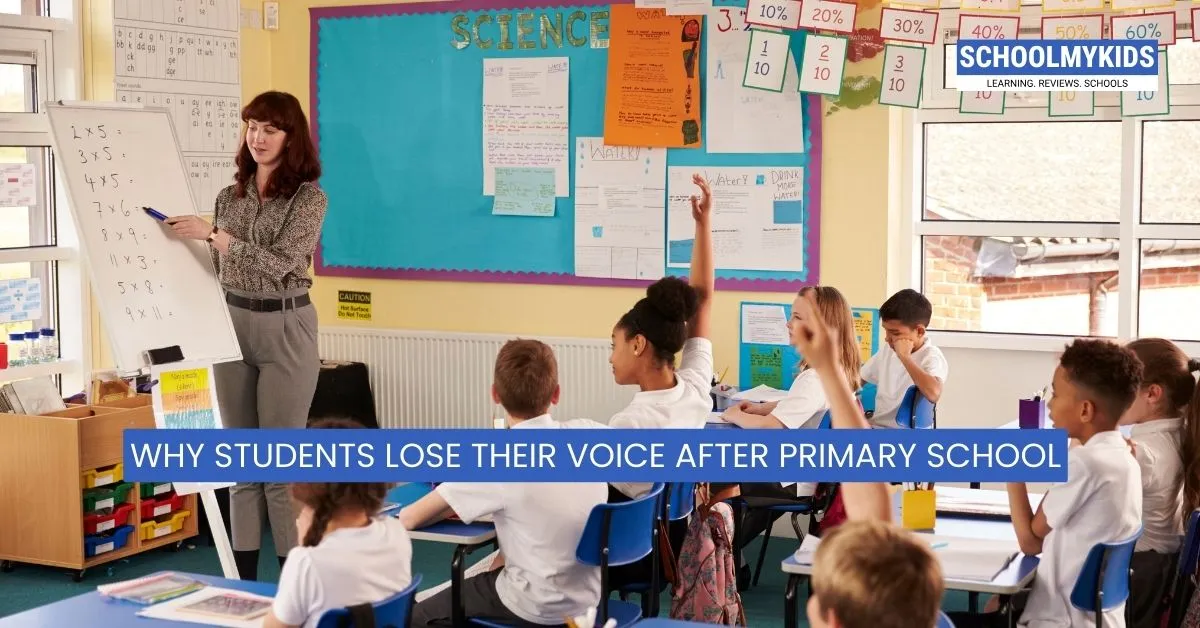
In primary school, classrooms are noisy in the best way. Children ask questions freely. They interrupt with curiosity. They argue, explain, narrate stories, and speak without rehearsing every word in their head.
Then something changes.
By middle school, many of those same students speak less. By secondary school, most only speak when called upon. By senior classes, silence becomes the default. Students know the answers but hesitate to say them out loud.
This loss of voice is not a maturity issue. It is not shyness appearing out of nowhere. It is a learned behavior shaped by the structure and culture of schooling.
How Early Classrooms Encourage Voice
Primary education is designed around expression.
Questions Are Welcomed, Not Judged
Young children are allowed to ask incomplete questions. Teachers often reframe them gently instead of dismissing them. The focus is on participation, not precision.
Mistakes are expected. Curiosity is treated as natural.
Learning Is Social and Verbal
Storytelling, group discussions, show-and-tell, and oral explanations dominate early classrooms. Children learn that speaking is part of learning, not a risk.
Voice equals engagement.
The Shift That Happens After Primary School
As students move into higher grades, priorities change quietly but decisively.
Curriculum Becomes Denser, Time Becomes Scarce
Syllabi expand. Teachers rush to “finish portions.” There is less room for open discussion and more pressure to deliver content efficiently.
Questions begin to feel like interruptions instead of contributions.
Correctness Replaces Exploration
Answers now have fixed formats. There is a right way to explain and many wrong ones. Students learn quickly that speaking without certainty can cost marks or invite embarrassment.
Silence starts feeling safer.
How Evaluation Trains Students to Withhold Voice
Assessment culture plays a major role in muting students.
Marks Attach Consequences to Speech
When oral participation is graded, students begin to calculate risk. Speaking becomes a performance, not a process.
Students ask themselves:
- What if this sounds stupid?
- What if I phrase it wrong?
- What if others already know this?
The safest option is often not speaking at all.
Public Correction Feels Personal
Correcting ideas is part of teaching. But when correction is rushed, dismissive, or public, students internalize it as personal failure.
After a few such moments, many students decide to stay quiet permanently.
Peer Dynamics Make Silence Strategic
Classrooms are social ecosystems.
Fear of Peer Judgment
As children grow older, peer opinion matters more. Asking a doubt risks being labeled slow, careless, or attention-seeking.
Even confident students begin protecting their image instead of their understanding.
Comparison Culture Rewards Quiet Compliance
In competitive environments, students learn that visible struggle is dangerous. Silence becomes a way to appear competent.
Understanding becomes secondary to perception.
Why Online and Hybrid Classrooms Made It Worse
Digital learning amplified existing problems.
Disappearing Is Easier Than Speaking
Muted microphones and blank screens allow students to hide confusion effortlessly. Participation drops, but teachers mistake silence for understanding.
Questions Feel Permanent
Online doubts feel recorded, screenshot, or replayable. The fear of “saying something wrong” increases.
Students withdraw further.
The Long-Term Cost of Losing Voice
The consequences extend beyond school.
Weak Communication Skills
Students who rarely speak in class struggle to articulate ideas later. They know things but cannot explain them clearly.
This affects interviews, teamwork, and leadership.
Reduced Independent Thinking
When students stop asking questions, they stop examining ideas critically. Learning becomes passive consumption.
Confidence Erosion
Over time, silence convinces students they are not articulate or capable, even when they are.
Why Telling Students to “Speak Up” Doesn’t Work
Silence is not a personality flaw. It is a rational response to an unsafe environment.
Confidence cannot grow where curiosity is penalized.
Students do not need encouragement speeches. They need structural safety.
How Schools Can Restore Student Voice
Normalize Confusion Publicly
When teachers openly acknowledge that topics are difficult, students feel less exposed for not understanding.
Reward Questions, Not Just Answers
Praising thoughtful questions shifts classroom values. It tells students that thinking matters more than speed.
Create Low-Risk Speaking Spaces
Small-group discussions, anonymous questions, and written reflections help students rebuild confidence gradually.
Slow Down for Thinking
Pauses matter. When classrooms rush, voices disappear.
Reclaiming What Was Lost
Children do not lose their voice because they grow up. They lose it because school teaches them that silence is safer than curiosity.
When classrooms protect dignity, welcome uncertainty, and value expression, voices return.
Students were never incapable of speaking.
They were simply taught not to.







Be the first one to comment on this story.