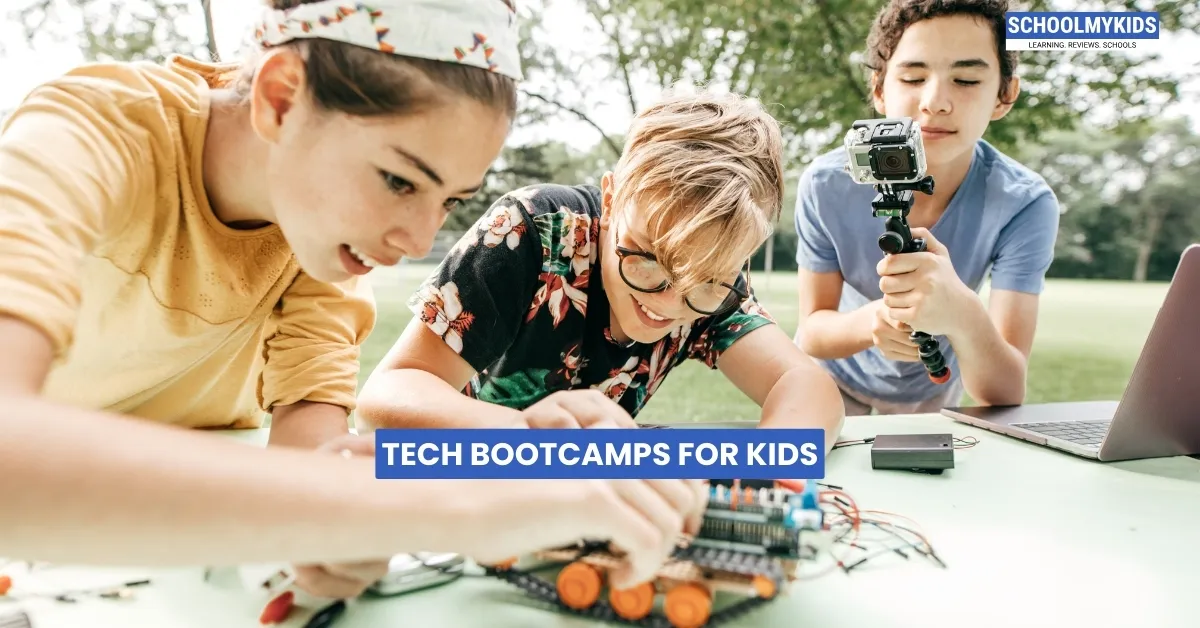
Once upon a time, childhood skills meant handwriting, mental math, and memorising capitals. Now, kids are learning to code before they can write long essays. Tech bootcamps for kids are spreading fast, marketed as future-proofing childhood itself. Some are genuinely valuable. Others are just anxiety packaged as education.
This trend deserves a clear, unsentimental look.
What Are Tech Bootcamps for Kids?
Tech bootcamps are short-term, intensive programs designed to introduce children to technology skills such as:
- Coding and programming basics
- Robotics and hardware tinkering
- Game and app development
- AI and logical thinking
- Digital creativity like animation or design
They are usually:
- Weekend-based or holiday programs
- Online or hybrid
- Marketed for ages 6 to 16
The promise is simple: start early, stay ahead.
Why Parents Are Signing Kids Up
Fear of Being Left Behind
Let’s be honest. Most parents are not enrolling kids out of pure curiosity-building motives. They are responding to fear.
- “Everyone else’s child is learning coding”
- “Tech is the future”
- “If they start late, they’ll struggle later”
Bootcamps thrive on this silent panic.
Schools Are Moving Too Slowly
Formal school systems often lag behind technology shifts. Bootcamps fill that gap by offering skills schools either:
- Do not teach
- Teach too late
- Teach too theoretically
Parents turn to bootcamps to compensate.
What Kids Actually Learn (When Done Right)
Computational Thinking, Not Just Coding
Good bootcamps focus on:
- Logical sequencing
- Problem-solving
- Pattern recognition
- Breaking big problems into smaller ones
These skills transfer beyond technology.
Confidence With Technology
Children stop seeing technology as:
- Mysterious
- Intimidating
- Restricted to experts
Instead, they see it as something they can shape and control.
Creative Expression
Many programs combine tech with:
- Storytelling
- Game design
- Visual creativity
This counters the myth that technology is cold or mechanical.
Where Things Go Wrong
Over-Academicisation of Childhood
Some bootcamps push:
- Rigid curriculums
- Assessments
- Certificates
- “Career-track” language
For younger children, this is unnecessary and often harmful. Curiosity dies when pressure enters too early.
Age-Inappropriate Content
Teaching advanced programming concepts to a 7-year-old looks impressive on marketing posters. It often results in:
- Confusion
- Surface learning
- Loss of interest
Starting early does not mean starting complex.
Credential Obsession
Many bootcamps sell:
- Badges
- Certificates
- “Portfolio projects”
These have little real-world value at that age. Skills matter. Paper does not.
Tech Bootcamps vs School Education
Bootcamps Work Best When They Complement School
Bootcamps should:
- Spark interest
- Build comfort
- Encourage exploration
They should not replace foundational learning in:
- Math
- Language
- Social skills
Tech without fundamentals is fragile.
Schools Still Matter More
Despite marketing claims, bootcamps cannot replace:
- Structured learning
- Peer interaction
- Long-term mentoring
They are supplements, not substitutes.
What Parents Should Look For
Focus on Thinking, Not Tools
Languages and platforms change. Thinking skills last.
Emphasis on Play and Exploration
Especially under age 10, learning should feel like discovery.
Small Group Interaction
Tech learning works best with discussion and guidance.
Honest Communication
Avoid programs that promise guaranteed careers or “future-ready” outcomes for children.
India’s Context: Opportunity and Risk
In India, tech bootcamps:
- Expand access to modern skills
- Democratize early exposure
But they also risk:
- Widening inequality
- Increasing pressure on children
- Turning learning into competition too early
The difference lies in intent and execution.
The Bigger Question No One Asks
The real issue is not whether kids should learn tech. They should.
The real question is:
Are we teaching children to think, or are we teaching them to rush?
Bootcamps that nurture curiosity build future learners. Bootcamps that sell urgency build burnout.
Conclusion
Tech bootcamps for kids are neither magic nor menace. They are tools. Used well, they empower children with confidence, logic, and creativity. Used poorly, they turn childhood into a résumé-building exercise before life has even started.
Technology will still be there when kids grow up. Curiosity, once crushed, rarely comes back.
The goal should not be to raise the youngest coder.It should be to raise children who are comfortable learning whatever the future demands.






Be the first one to comment on this story.