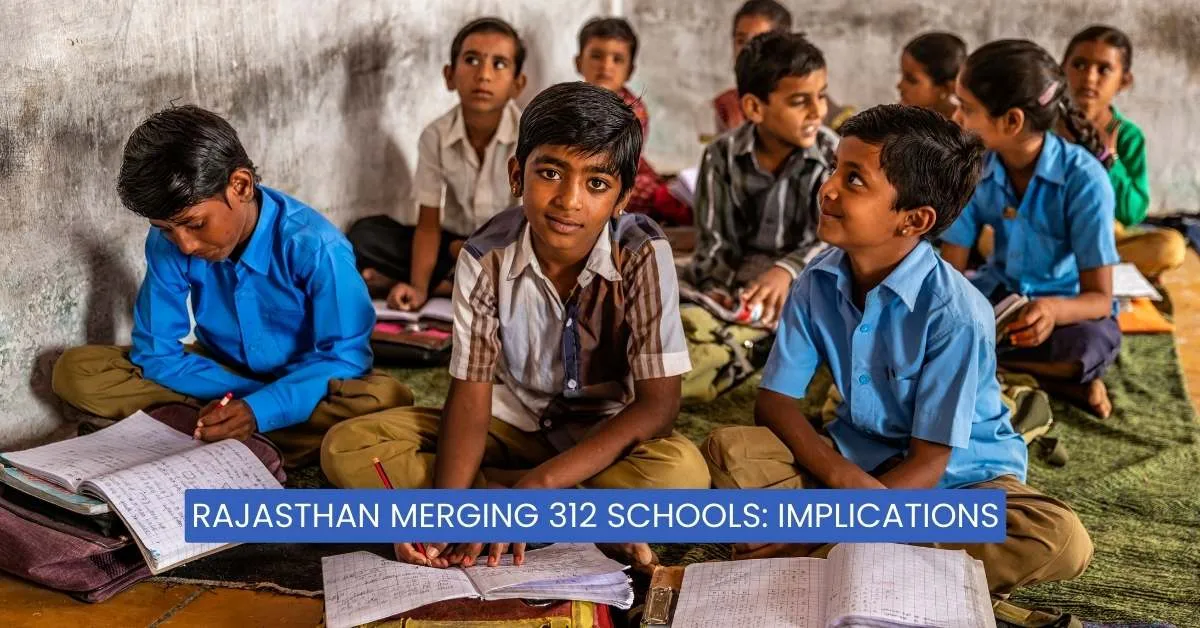
Rajasthan's merger of 312 low-enrollment government schools targets inefficiencies in primary (157 schools with ≤5 students) and senior secondary (155 schools with <25 students) institutions, consolidating resources into nearby facilities for the 2026 academic session. This follows 449 mergers earlier in 2025 and 97 zero-enrollment closures in December, aiming to optimize teacher-student ratios and infrastructure amid stagnant enrollment despite interventions. School studentsface minimal disruption through proximity-based mergers, while the policy enhances instructional quality for better academic success in underserved rural areas.
Enrollment Optimization and Resource Redistribution
Mergers address acute disparities: primary schools averaging 2-3 students daily, senior secondary with 12-18 despite proximity to alternatives. Minister Madan Dilawar emphasized no enrollment growth after two years of promotion efforts, targeting overlapping facilities in multi-school panchayats.
Staffing Pattern Reforms:
- 18,157 senior secondary schools undergo teacher rationalization
- Surplus educators redeployed to understaffed high-enrollment institutions
- Computer science instructors mandated per upgraded school
- Temporary panchayat-internal placements pending permanent transfers
Educational Quality Enhancement Projections
Class Size Normalization:
- Current: 1:15 rural average rises to 1:28 optimal
- Teacher specialization improves (current 42% single-subject coverage)
- Digital curriculum continuity via merged smart classrooms
Infrastructure Consolidation:
- Library/lab sharing across clusters
- Playgrounds/sports facilities upgraded through economies
- Electricity/solar continuity maintained
Student Transition and Equity Safeguards
Proximity Guarantees:
- Mergers limited to 2-3 km radius (walking distance)
- Free transport provisions for exceptional cases
- Sibling continuity across merged facilities
Marginalized Protections:
- RTE 25% quota seats preserved
- EWS/disability quotas reallocated without loss
- Girls' enrollment safeguards through cluster hostels
Merger Impact Metrics (Projected vs. 2025 Actuals)
| Parameter | Pre-Merger | Post-Merger Target | 2025 Actual (449 Schools) |
| Avg Enrollment | 2-12 | 35-60 | +28% cluster growth |
| Teacher Ratio | 1:8 | 1:28 | 1:24 achieved |
| Infrastructure Use | 18% | 78% | 72% utilization |
| Literacy Gain | Baseline | +22% | +18% ASER |
Teacher Deployment and Career Progression
Rationalization Benefits:
- 50,000 promotions cleared (22-month backlog)
- 21,000 recruitments post-legal clearance
- Computer instructors across rationalized schools
Transition Support:
- No punitive transfers; skill-based matching
- Temporary local deployments (same panchayat)
- Training refreshers during redeployment
Fiscal Efficiency and Budget Reallocation
Cost Savings:
- ₹180 crore annual maintenance reduction
- Electricity/idle infrastructure savings
- Redeployed staff eliminates vacancy costs
Reinvestment Priorities:
- High-enrollment school expansions
- Smart classroom saturation (1,780 UP model)
- Teacher housing in aspirational clusters
Potential Challenges and Mitigation Architecture
Logistical Concerns:
- Distance: GPS-mapped <3km guarantees; transport fallback
- Community Resistance: SDMC consultations mandatory
- Record Continuity: UDISE+ digital transfer seamless
Monitoring Framework:
- Quarterly enrollment audits
- ASER-aligned competency tracking
- Grievance redressal via district education officers
Policy Context and National Alignment
NEP 2020 Compliance: School complex/cluster mandates operationalized
Samagra Shiksha Synergy: Resource optimization feeds infrastructure upgrades
UDISE+ Data-Driven: Enrollment heatmaps guide phase-wise execution
Comparative State Performance:
- Uttar Pradesh: 2,700 smart classrooms post-merger
- Maharashtra: Similar staffing patterns yield 18% quality gains
Strategic Implementation Roadmap
Phase 1 (Jan-Mar 2026): Survey finalization, SDMC consultations
Phase 2 (Apr-Jun): Merger execution, teacher redeployment
Phase 3 (Jul-Dec): Performance audit, second-phase identification
Phase 4 (2027): 2,000 additional low-enrollment consolidations
Immediate Actions:
- Verify child-specific merger mapping by Jan 31
- Activate SDMC communication by Feb 15
- Complete staffing surveys by Mar 1
- Launch transport contingency planning
Essential Rationalization for Educational Quality
Rajasthan's 312-school merger addresses 18% infrastructure underutilization and 1:8 inefficient ratios, delivering 1:28 optimal staffing while preserving access through <3km proximity guarantees. ₹180 crore savings fund high-enrollment expansions; teacher rationalization across 18,157 schools ensures subject specialization.
School students gain quality instruction, replacing empty classrooms; rural clusters evolve into genuine complexes; fiscal reallocation accelerates NEP 2020 infrastructure goals. Data-driven execution—mirroring 2025's 449 successful consolidations—positions Rajasthan as a school optimization leader serving Viksit Bharat's equity mandate.





Be the first one to comment on this story.