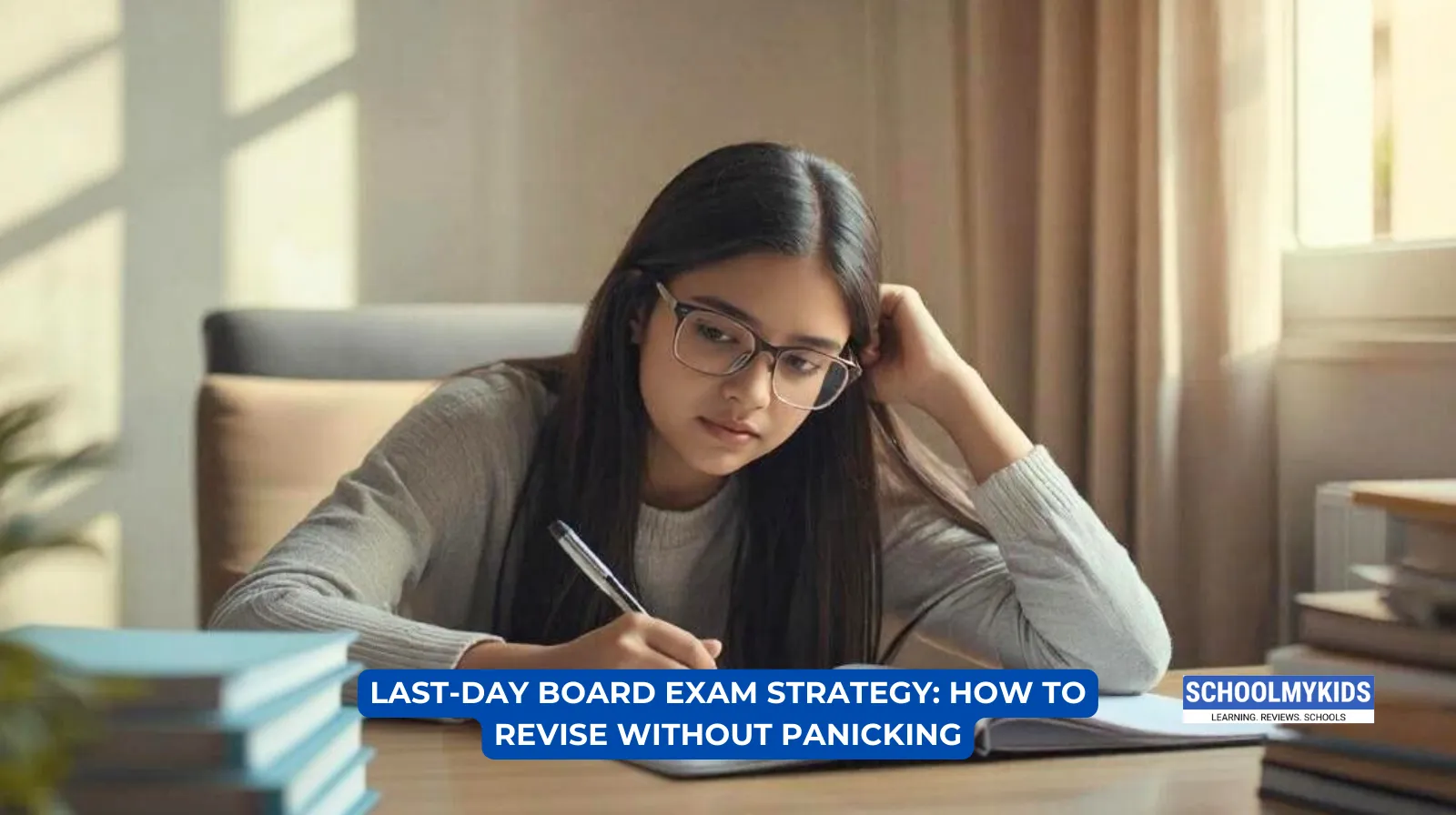
The date of your first exam is coming up fast, and if you're reading this close to your CBSE Class 10 or 12 board exams, you're probably feeling that familiar knot in your stomach. The one that says "I should have started earlier" or "There's too much left to cover."
But panicking won't help you now. What will help is a solid strategy for these last crucial hours. So let's talk about what actually works when you're down to the wire.
Understanding Your Current State of Mind
Stop beating yourself up. Whatever you've studied till now is what you've studied. Wishing you'd done more won't magically put information in your brain. The goal right now isn't to learn everything from scratch; it's to make the most of what you already know and add a few smart finishing touches.
Common Mistakes to Avoid on the Last Day
Before we jump into what you should do, let's talk about what you definitely shouldn't:
- Don't try to read the entire textbook cover to cover. You won't remember most of it, and you'll just tire yourself out.
- Don't start a new chapter you've never touched before. Unless it's super high-weightage and you're confident you can grasp it quickly, your time is better spent elsewhere.
- Don't study all night. Your brain needs rest to actually retain information and perform well tomorrow. A tired brain makes silly mistakes.
- Don't compare yourself with that friend who claims they've "done everything three times." They're probably exaggerating, and even if they're not, it doesn't matter. Focus on your own game.
Effective Last-Minute Revision Strategy
1. Stick to What You Know
This is not the time for experiments. Revise the chapters and topics you're already comfortable with. Make them rock-solid. It's better to score full marks in what you know than to score zero in something you tried to cram at the last minute.
2. Your Best Friends Right Now: Previous Year Questions (PYQs)
If you haven't solved PYQs yet, do it now. Even if you just go through them and check the solutions. Board examiners often repeat question patterns, and PYQs show you exactly what kind of questions actually appear in exams. Plus, they give you a reality check about the difficulty level.
3. Sample Papers Are Gold
Pick one or two sample papers, don't try to do ten. Time yourself if possible. This does two things: it builds your confidence when you can solve most of it, and it shows you where you're weak, so you can do quick targeted revision.
4. Formula Sheets and Short Notes
If you've made formula sheets, revision notes, or flashcards earlier, now's the time to use them. If you haven't, quickly jot down important formulas, definitions, dates, or key points on a single sheet. Writing them down once helps memory, and you can glance at this sheet tomorrow morning.
5. Focus on High-Weightage Topics
You know which chapters carry more marks. If you're short on time, be strategic. A 5-mark question is more valuable than five 1-mark questions in terms of time investment. Give priority accordingly.
6. Mock Tests—Only If You Have Time
If you've been doing mock tests regularly, one more won't hurt. But if you haven't, don't stress about it now. Mock tests are great for practice, but last-day panic is not the best time to start a full 3-hour paper. Better to do targeted revision.
Managing Stress and Staying Focused
Take Breaks
Seriously. Your brain isn't a machine. Study for 45-50 minutes, then take a 10-minute break. Walk around, drink water, stretch. You'll actually remember more this way.
Eat Proper Food
Not just chips and chai. Your brain needs fuel. Eat a decent meal. Stay hydrated. Don't skip breakfast tomorrow morning.
The Night Before
Stop studying at least an hour before bed. Do something relaxing. Keep your bag, admit card, stationery, and everything you need ready tonight. You don't want tomorrow morning chaos.
Set two alarms and maybe ask someone to wake you up too.
Exam Day Morning: Final Preparation Tips
Wake up with enough time to not rush. A quick 15-20 minute revision of your formula sheet or notes is good. Don't try to study something completely new.
Read the newspaper or listen to music or whatever calms you. Some people like a quick revision, others prefer to stay relaxed. Do what works for you.
Conclusion
Boards aren't the end of the world. We understand that they matter, but they're also just one exam. You're more than your marks. Do your best with what you have right now, and that's enough.
Thousands of students are exactly where you are right now: nervous, hoping they've done enough, wondering about tomorrow. You're not alone in this.
Trust yourself. You know more than you think you do. When you sit in that exam hall tomorrow, take a deep breath, read the questions carefully, and start with what you know best.
You've got this. All the best for your board exams!



Be the first one to comment on this story.