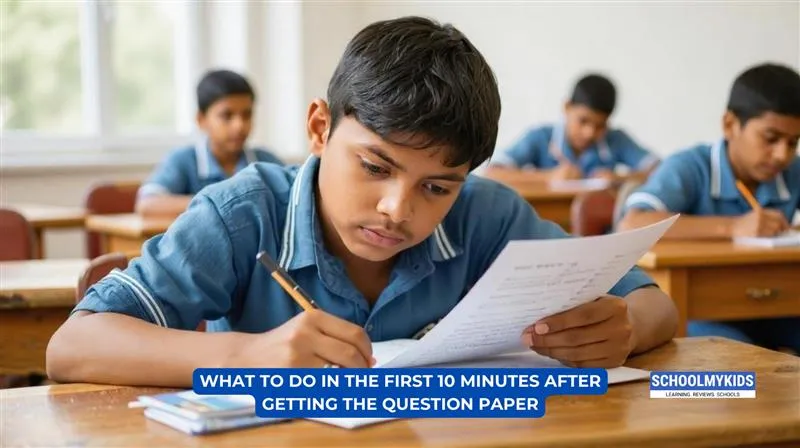
The moment that the question paper lands on your desk, your heart starts racing. Your hands might even shake a little. With CBSE board exams starting soon, that pressure is real. But those first 10 minutes can literally make or break your exam. And we’re not talking about some fancy strategy that sounds good in theory but is impossible to follow when you're actually sitting there, nervous and sweating.
Let us walk you through what actually works.
Minute 1-2: Breathe and Write Your Details
First things first, breathe. Take three deep breaths. We know it sounds too simple, but your brain needs oxygen to work properly. When you're nervous, you take shallow breaths, and that makes you more anxious. It's a cycle. Break it.
While you're doing this, write your roll number, name, and all those basic details. This gives your hands something to do and your brain a simple task to warm up. You've written your name thousands of times; it's automatic. Let that familiar action calm you down.
Minutes 3-5: Read the Instructions
This is where most students mess up. They either skip the instructions completely or skim them so fast they miss important details. The paper might have changed the marking scheme slightly, or there might be internal choices you didn't expect. Maybe one section is optional this time. You won't know if you don't read.
Read slowly. If something doesn't make sense, read it again. This isn't wasting time; this is saving yourself from disaster later when you realize you answered the wrong section or missed easy marks.
Minutes 6-8: Scan the Entire Paper
Now flip through every single page. Don't start solving, just look. You're doing a quick survey of the battlefield. Notice which questions look familiar from your sample papers or PYQs. Spot the ones that make you smile because you practiced them yesterday. Also notice the scary ones, the topics you were hoping wouldn't show up but did anyway.
This scanning does something powerful to your brain. It stops the exam from feeling like this massive, unknown monster. Instead, it becomes a set of specific questions, some easy, some hard. That's manageable.
Also, check if all pages are printed clearly. Sometimes pages are blank or blurry. Better to know now than when you're halfway through.
Minutes 9-10: Make Your Answering Strategy
This is the game-changer that most students skip. Take your pen and lightly mark questions:
- Put a small star next to questions you're confident about
- Circle the question numbers that seem tricky
- Note which ones carry more marks
Your strategy should be simple: start with questions you know well. Build momentum. Build confidence. Get those marks in the bag first. The psychological boost of answering three questions correctly is huge, as it makes your brain sharper for the tough ones later.
If you've practiced with mock tests, you already know your weak areas. Don't start with those. Save them for when you're warmed up and thinking clearly.
Why These 10 Minutes Actually Matter
We know you're probably thinking, "But I could solve two questions in this time!" Sure, you could. But when you skip this step, you panic midway, you miss easy questions, you run out of time because you didn't plan, and you leave the exam hall thinking, "I knew this stuff, I just messed up."
Those 10 minutes aren't extra. They're an investment. Every mock test you've taken, every sample paper you've solved, every PYQ you've practiced; all of that preparation works better when you have a clear head and a clear plan.
Think of it like this: would you run a race without knowing the route? Would you cook without checking if you have all ingredients? Then why would you tackle a 3-hour exam without a 10-minute plan?
Managing Exam Anxiety in the Initial Minutes
If you feel panic creeping in during these 10 minutes, remind yourself: you've prepared for this. All those late nights, all those practice papers, all those revisions, they've loaded your brain with information. These 10 minutes are just about organizing that information properly.
The students who score well aren't always the smartest; they're often the calmest and most strategic. And strategy starts with these first 10 minutes.
So when you sit for your CBSE boards, don't rush. Use these minutes wisely. Your future self, walking out of that exam hall with a smile, will thank you.
Good luck. You've got this.






Be the first one to comment on this story.