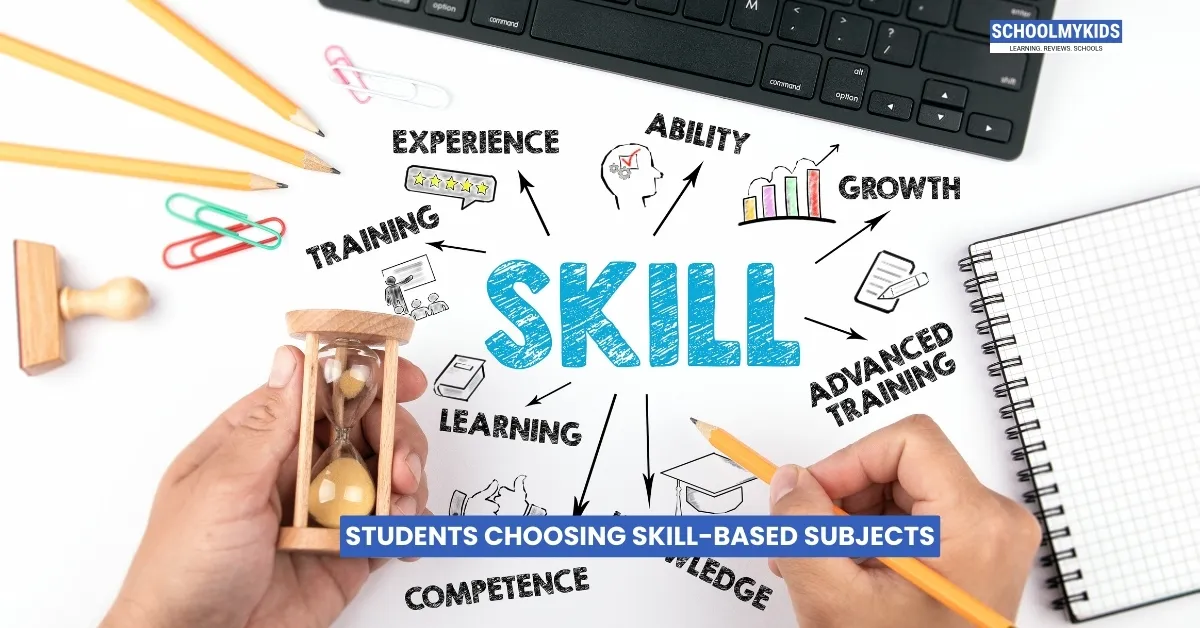
Why Skill-Based Subjects Are Still Treated as “Second Choice”
In many education systems, subjects are quietly ranked. Science and mathematics sit at the top. Commerce follows. Skill-based subjects are placed somewhere near the bottom, often described as “backup options” or “for students who can’t cope academically.”
This hierarchy is rarely stated openly, but students feel it early.
As a result, many students avoid skill-based subjects not because they lack interest, but because they fear being judged as less capable. The decision is driven by perception, not potential.
That fear costs students more than they realize.
What Skill-Based Subjects Actually Offer
Skills Translate Faster Than Syllabi
Skill-based subjects focus on application. Coding, design, media, electronics, vocational sciences, data handling, communication, craftsmanship. These subjects require students to do, not just remember.
The advantage is simple: skills transfer quickly to real contexts.
A student who learns how to design, analyze, build, or communicate can adapt that ability across industries. Memorized content expires faster than applied skill.
Learning Becomes Visible
In skill-based subjects, progress is tangible. Students can see what they have built, improved, or solved. This visibility builds confidence and clarity.
Unlike abstract marks, skill growth feels real.
This is especially powerful for students who struggle in traditional exam-heavy subjects but think deeply when allowed to apply ideas.
Why Students Hesitate to Choose Skills
Fear of Closing Doors
Students are often warned that choosing skill-based subjects will “limit options.” This advice usually comes from outdated models where careers followed narrow paths.
In reality, skills often open doors by making students adaptable.
The fear persists because systems change slower than markets.
Pressure From Comparison
When peer groups follow conventional academic tracks, deviation feels risky. Students fear being left behind or misunderstood.
Social pressure plays a bigger role than aptitude in subject selection.
The Role of Schools in This Choice
When Counseling Is Biased
Many schools unintentionally push high-performing students away from skills and toward theory-heavy subjects, even when interest lies elsewhere.
This reinforces the false idea that skills are for “average” students.
In reality, complex skills demand high-level thinking, problem-solving, and creativity.
Assessment Shapes Perception
When skill-based subjects are poorly assessed or treated as less important, students internalize that message.
What schools assess seriously, students take seriously.
What Happens When Students Choose Skills Early
Motivation Improves
Students who work with their hands or ideas see purpose faster. Learning feels connected to outcomes, not just exams.
This reduces disengagement and academic fatigue.
Career Clarity Develops Earlier
Skill-based learning exposes students to real work patterns. They learn what they enjoy, what frustrates them, and where their strengths lie.
This clarity reduces confusion later, even if students change paths.
Skill-Based Subjects and Academic Rigor
Skills Do Not Mean Easy
There is a dangerous assumption that skill-based subjects are simpler. They are different, not easier.
Mastery requires practice, feedback, iteration, and patience. Poor work is immediately visible. There is nowhere to hide behind memorized answers.
In many cases, skill-based learning is more demanding than theory.
Skills and Academics Are Not Opposites
The strongest education systems integrate both. Theory supports skill. Skill gives theory meaning.
Forcing students to choose one at the expense of the other creates imbalance.
How Students Should Approach This Decision
Interest Plus Effort Matters More Than Status
Students should ask:
- Do I enjoy the process of this subject?
- Am I willing to practice it consistently?
- Can I see myself improving over time?
Status fades. Engagement lasts.
Skills Are Buildable, Not Fixed
Choosing a skill-based subject does not lock students into one career. It builds capacity to learn faster in any field.
Flexibility is the real advantage.
A More Balanced Way to View Subject Choice
Skill-based subjects are not fallback options for weaker students. They are valid pathways for learners who develop understanding through application and practice. When schools and parents stop ranking subjects by prestige and start valuing real outcomes, students are able to choose more honestly and confidently.
The purpose of subject selection is not to protect tradition or reputation. It is to equip students with abilities that adapt to change. Choosing skills is not a compromise. It is a deliberate step toward relevance, competence, and long-term growth.







Be the first one to comment on this story.