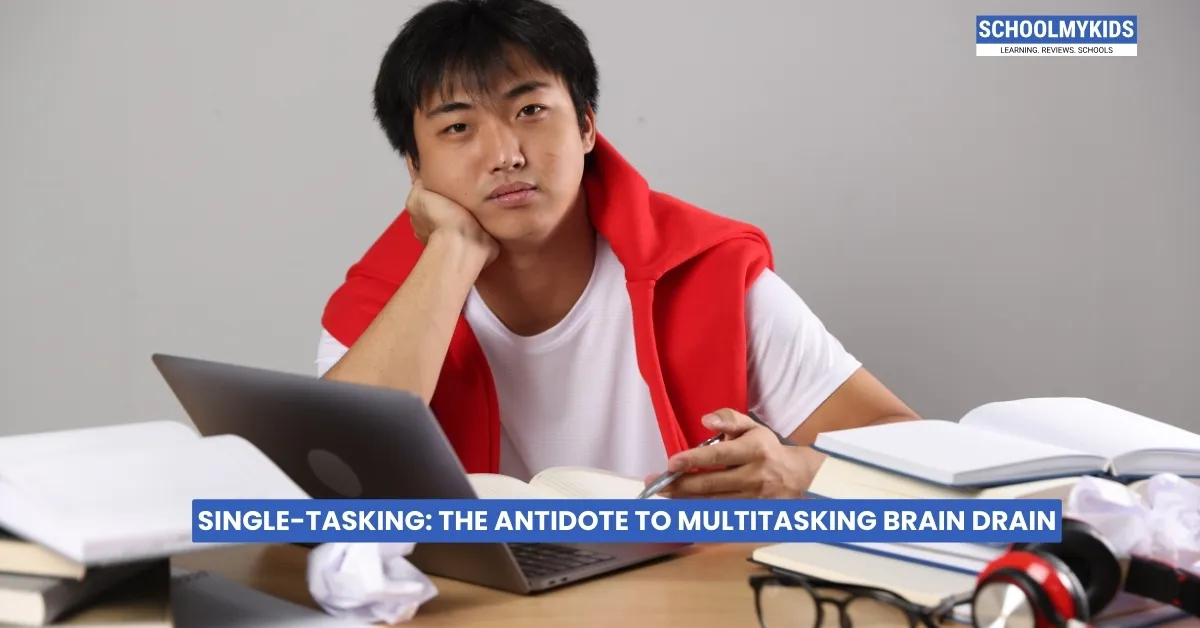
Why Multitasking Feels Smart but Makes You Slower
Students multitask because it feels efficient. Studying while replying to messages. Watching lectures with tabs open. Revising while music, notifications, and half a conversation run in the background.
The brain interprets busyness as productivity.
But cognitively, multitasking is a myth. The brain does not do multiple demanding tasks at once. It switches rapidly between them. Every switch costs time, energy, and accuracy. Over hours, that cost becomes exhaustion without progress.
Multitasking doesn’t save time. It steals depth.
What Actually Happens Inside the Brain
Attention Is a Limited Resource
Attention works like a spotlight. It can illuminate one area clearly or several areas poorly. Multitasking spreads attention thin, reducing clarity everywhere.
This is why students often finish long study sessions feeling tired but remembering very little.
Energy was spent switching, not learning.
Task Switching Creates Cognitive Residue
When the brain switches tasks, part of it stays stuck on the previous one. This “residue” slows comprehension and increases mistakes.
Single-tasking clears residue. Multitasking piles it up.
Why Students Default to Multitasking
Discomfort With Focus
Deep focus feels uncomfortable. Silence feels heavy. One task feels exposed.
Multitasking numbs that discomfort by providing constant stimulation. It reduces boredom but also reduces thinking.
Students confuse comfort with effectiveness.
Digital Environments Encourage Fragmentation
Phones, apps, and platforms are designed to interrupt. Notifications are not neutral. They train the brain to expect novelty constantly.
Single-tasking is not natural anymore. It has to be protected.
What Single-Tasking Really Means
One Cognitive Demand at a Time
Single-tasking does not mean sitting rigidly for hours. It means choosing one mentally demanding task and removing competing demands.
Studying biology while listening to lyrics is multitasking. Studying biology with instrumental background noise may not be.
The test is simple: does this compete for thinking?
Depth Over Duration
Single-tasking prioritizes quality of attention over length of time.
Thirty minutes of true focus often beats two hours of fragmented effort.
How Single-Tasking Improves Learning
Faster Understanding
With fewer interruptions, the brain follows ideas to completion. Concepts connect. Confusion resolves faster.
This is why single-tasking often feels slower at the start but accelerates learning overall.
Better Memory Encoding
Focused attention strengthens memory encoding. Information processed deeply sticks longer.
Multitasking creates shallow impressions that fade quickly.
Reduced Mental Fatigue
Ironically, doing one thing at a time is less tiring. The brain expends less energy managing switches.
Single-tasking conserves cognitive fuel.
Practical Ways Students Can Single-Task
Design the Environment First
Single-tasking is easier when distractions are removed, not resisted.
- Phone out of reach
- Unnecessary tabs closed
- One notebook, one subject on the desk
Environment shapes behavior more than willpower.
Define the Task Clearly
Vague goals invite distraction. “Study chemistry” is too broad.
Clear tasks like “solve 10 equilibrium problems” or “summarize this chapter section” anchor focus.
Use Time Blocks Without Fragmentation
Set a block where only one task is allowed. No switching. No checking.
If focus breaks, pause. Do not substitute with another task.
Common Misunderstandings
Single-Tasking Is Not Slow
It feels slower because the brain is no longer stimulated by novelty. But output quality rises sharply.
Speed without understanding is not speed.
It Is Not About Perfection
Single-tasking does not require monk-level discipline. Even a partial reduction in multitasking improves clarity.
Progress matters more than purity.
When Multitasking Is Actually Fine
Routine tasks that require little thinking can coexist. Listening to music while organizing notes. Walking while reviewing flashcards.
The rule is simple: never combine two tasks that both require reasoning.
A Healthier Productivity Mindset
Being busy is easy. Being focused is rare.
Single-tasking is not about doing less. It is about doing what matters with full attention.
Students who single-task learn faster, remember longer, and feel less mentally drained. Not because they work harder, but because they stop fighting their own brains.
Focus is not a personality trait. It is an environmental and behavioral choice.
Choose one thing. Do it properly. Then move on.








Be the first one to comment on this story.