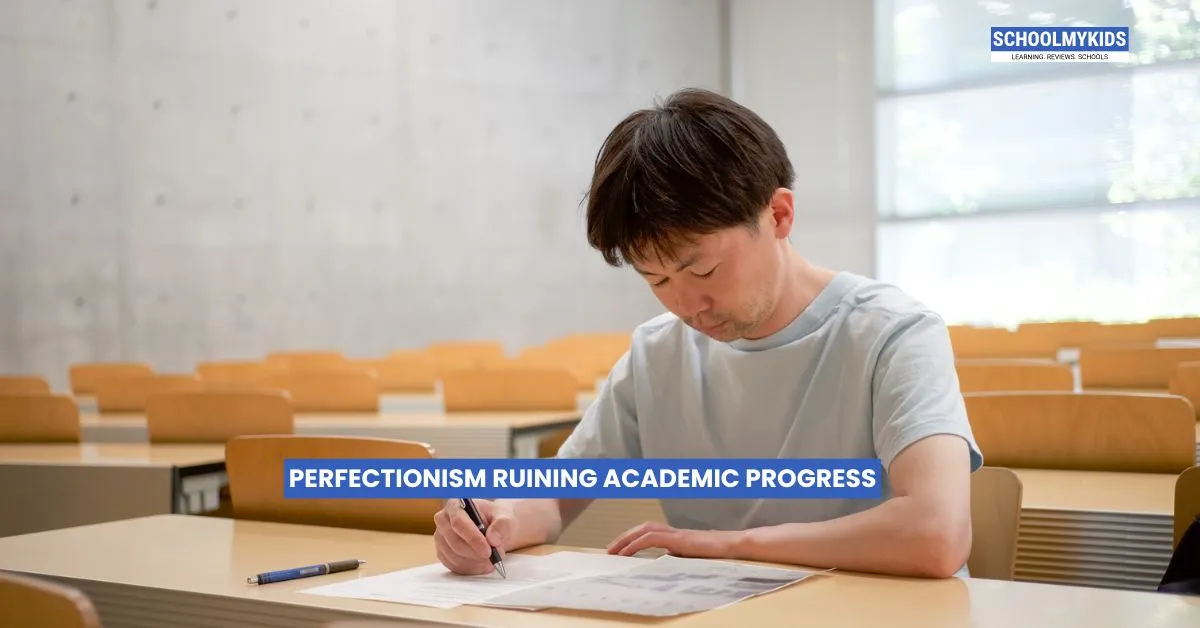
When “Doing Well” Quietly Turns Into Self-Sabotage
Perfectionism often disguises itself as discipline. It looks responsible. It sounds ambitious. Teachers praise it. Parents admire it. But for many students, perfectionism is not pushing them forward. It is slowly freezing them in place.
The student wants to do everything properly. So properly that they wait too long to start. They revise the same chapter repeatedly. They hesitate to submit work unless it feels flawless. Over time, progress slows down, confidence drops, and learning becomes exhausting.
This is not laziness. It is fear wearing the costume of high standards.
What Academic Perfectionism Really Looks Like
Perfectionism in school rarely means scoring full marks all the time. It shows up in quieter, more damaging ways.
Constant Over-Preparation
Some students keep preparing but never feel ready. Notes are rewritten multiple times. Syllabi are “almost done” for weeks. Revision never ends because the material never feels complete.
Fear of Making Visible Mistakes
Raising a hand in class feels risky. Answering questions becomes stressful. The student knows the idea but stays silent, worried it might be phrased imperfectly.
Delayed Action
Assignments are postponed, not because the student does not care, but because starting feels overwhelming. If the work cannot be excellent, it feels pointless to begin.
This is how perfectionism quietly eats time, energy, and motivation.
Why Schools Accidentally Encourage Perfectionism
Most school systems reward outcomes more than process.
Marks Over Meaning
When grades are highlighted and mistakes are penalized without explanation, students learn one lesson quickly: errors are dangerous.
Instead of thinking, “Mistakes help me improve,” they think, “Mistakes expose me.”
Praise Focused on Being “The Best”
Labels like “topper,” “brilliant,” or “gifted” sound positive but can trap students. Once praised for being perfect, students become afraid of falling short of that image.
They stop learning for growth and start performing for approval.
The Emotional Cost Students Rarely Talk About
Perfectionism does not just affect academics. It quietly impacts mental well-being.
Chronic Stress and Burnout
Trying to meet impossible internal standards is exhausting. Even good results feel unsatisfying because the student focuses on what could have been better.
Loss of Curiosity
When every task is judged, curiosity feels unsafe. Students stop exploring ideas and stick to what they know will be accepted.
Reduced Confidence Over Time
Ironically, perfectionism lowers confidence. The student begins to believe that their worth depends entirely on flawless performance.
Progress vs Perfection: The Shift That Changes Everything
Real academic growth does not come from doing everything right. It comes from moving forward consistently.
Imperfect Action Beats Perfect Planning
Writing a rough answer builds more understanding than planning a perfect one that never gets written. Attempting a problem and getting it wrong teaches more than avoiding it entirely.
Learning Is Meant to Be Messy
Confusion is not a sign of failure. It is a sign that learning is happening. Students who allow themselves to struggle develop deeper understanding and resilience.
How Students Can Break the Perfectionism Loop
Set “Good Enough” Goals
Instead of aiming for perfect notes, aim for usable notes. Instead of full mastery, aim for basic clarity. Progress compounds when goals are realistic.
Separate Self-Worth From Results
Marks measure performance, not intelligence or potential. One test cannot define capability.
Practice Visible Learning
Answer questions. Attempt problems publicly. Make mistakes where feedback exists. Growth happens in the open, not in hiding.
How Parents and Teachers Can Help Without Adding Pressure
Normalize Mistakes at Home and School
When adults treat mistakes calmly, students learn that errors are part of learning, not evidence of failure.
Praise Effort and Strategy, Not Just Outcomes
Comments like “I like how you approached this” matter more than “You scored highest.”
Create Safe Spaces for Questions
Students ask better questions when they know they will not be judged for not knowing.
A Healthier Definition of Academic Success
Success in education is not about being flawless. It is about being flexible, curious, and willing to improve.
Perfectionism promises excellence but often delivers paralysis. Progress, on the other hand, may feel uncomfortable, incomplete, and uncertain. But it actually moves students forward.
And forward is where learning lives.







Be the first one to comment on this story.