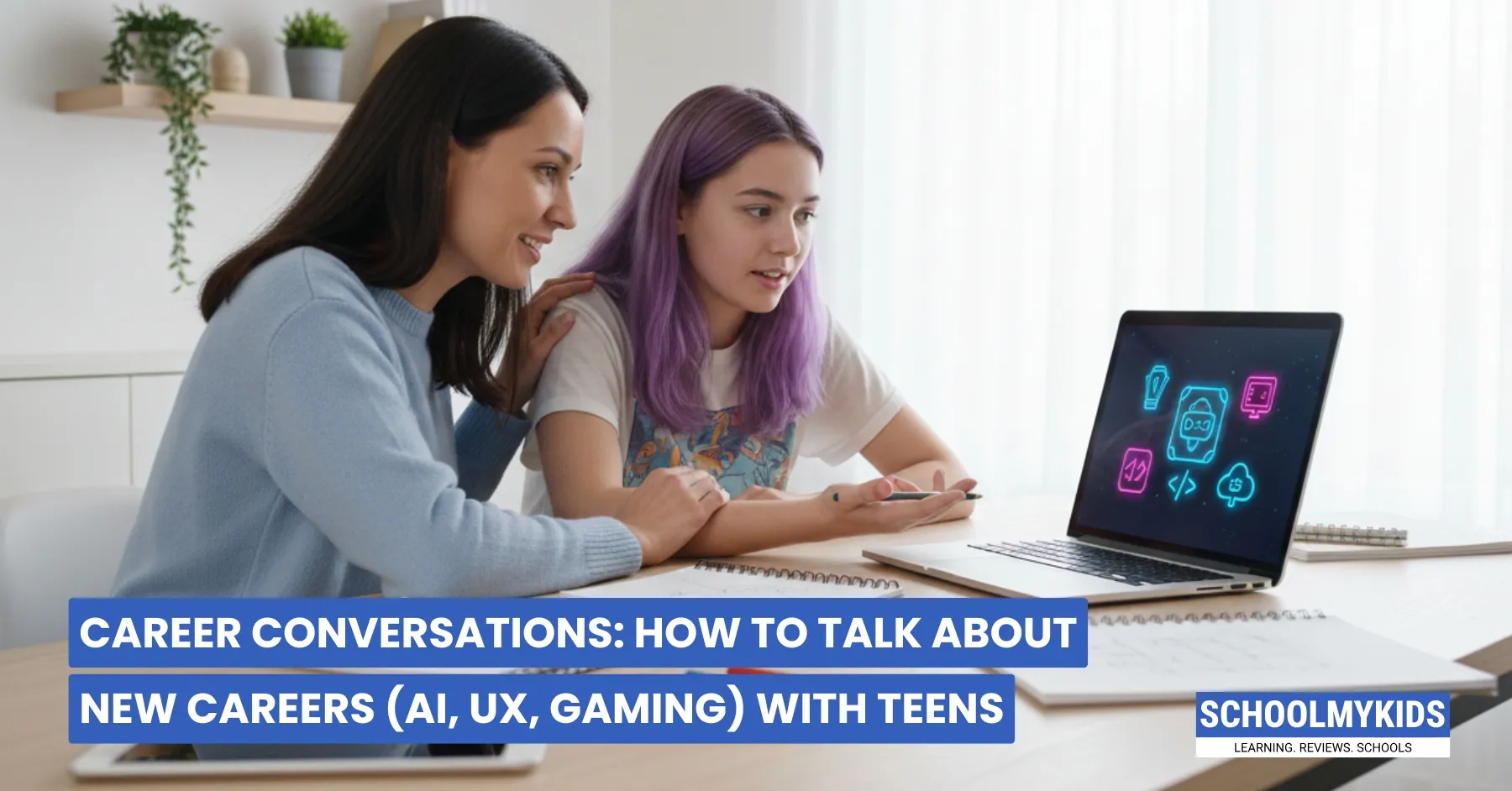
Remember when career choices were simple? Doctor, engineer, teacher, government job. Your child studied hard, and you felt secure knowing exactly what their future looked like. But walk into your teenager's room today, and you might hear them talk about becoming a "UX designer," or "AI engineer," or "game developer," and it's okay if you have no idea what these even mean.
You're not behind the times. The world has genuinely changed, and changed fast.
What's Actually Happening Out There
India is expecting 2.3 million AI-related job openings by 2027. The gaming industry in India crossed $3.1 billion in 2023 and is projected to generate over 2.5 lakh jobs by 2025. UI/UX designers with just 2-5 years of experience are earning ₹6-12 lakhs annually.
These aren't just numbers in a newspaper. These are actual salaries, actual jobs, actual careers that your neighbor's kids might already be pursuing.
The digital revolution isn't coming; it's already here. Companies from healthcare to banking, from education to retail, all need technology professionals. And not just coders. They need people who understand how users think, people who can make AI systems work better, and people who can create engaging digital experiences.
Understanding What These Careers Actually Mean
Let's break down the three in simple terms:
Artificial Intelligence (AI) professionals teach computers to think and learn. They create the technology behind voice assistants like Alexa, recommendation systems on Netflix, or smart features in apps. Entry-level AI engineers in India earn ₹5-10 lakhs, and with 3-5 years of experience, this can go up to ₹12-25 lakhs or more.
UX/UI designers make apps and websites easy and enjoyable to use. Ever noticed how some apps feel natural while others confuse you? That's UX design. Freshers earn ₹3-6 lakhs annually, and experienced designers make ₹12-20 lakhs. The best part is that people from any background, like engineering, arts, or commerce, can become UX designers with the right training.
Gaming professionals don't just play games; they create them. This includes game designers who imagine the game concept, developers who build it with code, artists who create characters and environments, and many more roles. Entry-level positions start at ₹3-5 lakhs, while experienced professionals earn ₹8-15 lakhs. India's gaming market is exploding, with over 500 million gamers creating massive opportunities.
Why Parents Find This Difficult
- We can't relate to these careers personally: When your child says they want to be a doctor, you can picture what that means. When they say "UX designer," you're trying to connect dots you can't see.
- We worry about job security: In our generation, government jobs meant lifetime security. These new careers feel uncertain because they're so new.
- We fear our children will struggle financially: What if this "AI thing" is just a trend? What if companies stop hiring game designers?
- We don't know how to guide them. How do you advise your child about a career you don't understand? How do you help them make the right choice?
- We compare these with traditional careers: "Why not engineering + MBA?" or "Medicine is still the most respected profession." These thoughts are natural, but they limit your child's potential.
These concerns are valid. But here's what might help: these careers aren't less stable than traditional ones. They're just different. The skills your child learns, like problem-solving, creativity, and technical ability, will stay relevant because every industry needs them.
How to Actually Have These Conversations (Without It Becoming a Lecture)
- Start with curiosity, not judgment: Instead of "Is gaming really a career?" try "Tell me what exactly you'd do as a game designer. Walk me through a regular day." When your child explains, you learn. When you interrogate, they shut down.
- Make it a two-way conversation: Share what you know about traditional careers: the good and the challenges. Ask them to share what they know about their interests. You might discover your child has researched more than you thought.
- Choose the right time and place: Not during exam stress. Not when they're exhausted. Maybe during a Sunday breakfast, during a car ride, or during a walk. Casual settings lead to honest conversations.
- Ask about their interests, not just their career goals: "What do you enjoy about technology?" can reveal more than "What do you want to become?" Understanding their natural inclinations helps both of you see which careers might fit.
- Share your own career journey, including doubts: Tell them about times you were uncertain, choices you made, and things you learned. This normalizes their confusion and shows that career paths are rarely straight lines.
The Practical Steps: What You Can Actually Do
- Learn together: Tell your child, "I don't understand what UX design is. Can we watch a YouTube video about it together?" This positions you as allies, not adversaries. There are excellent creators on YouTube explaining these careers.
- Connect them with professionals: Do you know someone working in tech? Even a friend of a friend? A 30-minute conversation with a real professional can answer questions no article can. LinkedIn makes it easier to find and message professionals. Many are happy to guide young people.
- Encourage exploration without immediate commitment: Your child doesn't need to decide their whole life at 15. Let them try a free online course in Python. Let them experiment with design tools. Let them attend a gaming workshop. Exploration helps them make informed decisions.
- Look for the middle ground: If you are worried about stability, then suggest pursuing a B.Tech in Computer Science with a specialization in AI. This gives them the degree you're comfortable with, plus the specialization they want. Many colleges now offer AI, gaming, and UX tracks within traditional courses.
- Visit career counselors together: Professional career counselors use scientific assessments to identify your child's strengths. This takes the emotion out of decisions and gives you both objective data to work with.
- Focus on skills, not just degrees: These new careers value what you can do more than where you studied. A strong portfolio matters more than a prestigious college. This is actually good news, since it means pathways are more accessible.
Conclusion
Your child is growing up in an India that's different from the one you knew. That's not bad. It's just different. And in this different India, there are extraordinary opportunities for young people who are willing to learn, adapt, and work hard.
These new careers might sound strange, but they're built on the same foundations you value: education, skill development, hard work, problem-solving, and contributing something meaningful to the world.
Your role isn't to become an expert in technology. Your role is to remain what you've always been: a guide who loves them, a support system they can rely on, and a voice of wisdom (even when you're learning alongside them).
The conversation about careers doesn't have to be perfect. It just has to be ongoing, honest, and rooted in mutual respect.







Be the first one to comment on this story.