Introduction: When Schools Stop Treating Entrepreneurship as “Too Early”
For a long time, entrepreneurship was treated like something students should think about after college, after a job, after “real life” begins. School was meant for textbooks, exams, and safe answers. Risk-taking was discouraged. Failure was penalized. But that mindset is cracking. Today, many schools are actively encouraging teen startups, not as side projects, but as part of learning itself. These school-led entrepreneurship movements are quietly reshaping what education prepares students for. Not just employment, but initiative, ownership, and real-world problem solving.
What Teen Startups Actually Mean in Schools
More Than a Business Club
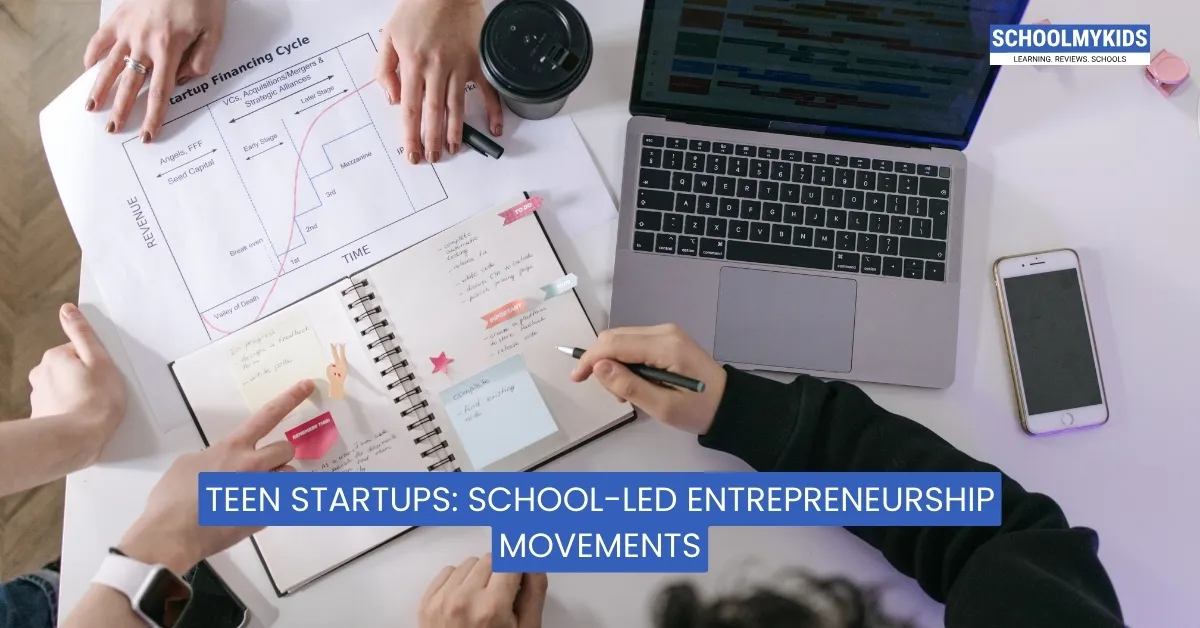
Teen startups in school settings aren’t just commerce clubs or weekend competitions. They’re structured programs where students identify problems, design solutions, test ideas, and sometimes even earn revenue. The goal isn’t profit alone. It’s learning how ideas move from thought to action.
Entrepreneurship as a Learning Method
In these models, entrepreneurship isn’t an extracurricular reward for toppers. It’s a teaching approach. Subjects like math, economics, design, communication, and technology come alive when students use them to build something real.
Why Schools Are Pushing Entrepreneurship Earlier
The World Doesn’t Wait for Degrees Anymore
Students can build apps, run online stores, create content, or offer services with minimal resources. Schools are realizing that delaying practical exposure until adulthood wastes formative years where curiosity and energy are highest.
Exams Don’t Teach Initiative
Marks measure memory and compliance. Startups measure initiative, resilience, collaboration, and decision-making. Schools pushing entrepreneurship are admitting a hard truth. Exams alone don’t prepare students for uncertainty.
Teenagers Are Already Experimenting Anyway
Many students already run Instagram pages, YouTube channels, freelance gigs, or small online businesses informally. School-led programs simply bring structure, ethics, and reflection into what was already happening underground.
How School-Led Entrepreneurship Programs Work
Idea Generation Inside the Classroom
Students are encouraged to observe daily problems. In school, at home, in their community. Ideas don’t come from textbooks. They come from lived experience. This trains students to see the world as improvable.
Mentorship Instead of Instructions
Teachers act as guides, not bosses. External mentors from industry are often involved. Students learn by asking questions, making mistakes, and iterating, not by following fixed steps.
Real Constraints, Real Learning
Budgets are limited. Time is limited. Teams face disagreements. Customers don’t always care. These constraints teach lessons no worksheet ever could.
What Students Learn That Exams Can’t Teach
How to Handle Uncertainty
There are no model answers in entrepreneurship. Students learn to make decisions without certainty and adjust when things fail. This builds mental resilience early.
Communication and Persuasion
Pitching ideas, explaining value, negotiating roles. Students quickly realize that good ideas fail without clear communication.
Collaboration and Conflict
Working in teams exposes differences in effort, thinking, and priorities. Learning to navigate conflict respectfully becomes part of the education.
Ownership of Outcomes
When students build something, success feels earned and failure feels instructive. Responsibility shifts from “teacher expectations” to “our choices.”
Why Teen Startups Benefit Academic Learning Too
Motivation Becomes Internal
Students care more when learning serves their idea. Math for pricing. Science for product design. Language for pitching. Subjects stop feeling abstract.
Learning Becomes Sticky
Concepts applied in real projects are remembered longer. Students don’t ask, “Will this come in exams?” They ask, “Will this help my idea work?”
Confidence Transfers Across Subjects
Students who successfully build or attempt a startup often participate more in class. Confidence gained in one area spills into others.
Common Concerns Parents and Schools Have
“Won’t This Distract From Studies?”
Poorly designed programs can. Good ones integrate learning with curriculum. The goal isn’t replacing academics, but grounding them in reality.
“What If Students Fail?”
Failure is the point. Controlled failure inside school is safer than uncontrolled failure later. Students learn to recover, reflect, and retry.
“Isn’t Entrepreneurship Only for Certain Students?”
That belief is exactly what these programs challenge. Entrepreneurship is a skill set, not a personality type. Curiosity can be taught. Initiative can be practiced.
What Makes a Good School-Led Entrepreneurship Program
Safe Space for Failure
Students must know failure won’t be punished academically or socially. Without safety, innovation dies.
Guidance Without Micromanagement
Too much control turns startups into assignments. Too little support creates chaos. Balance matters.
Ethical and Social Awareness
Schools play a key role in teaching responsibility. Profit without ethics creates the wrong incentives early.
Reflection Built Into the Process
Journals, discussions, and reviews help students connect experience with learning. Reflection turns action into insight.
The Long-Term Impact on Students
Better Career Clarity
Students who try building early make smarter choices later. They understand what they enjoy and what they don’t.
Reduced Fear of Starting
Entrepreneurship stops feeling mythical. Starting something becomes a process, not a personality trait.
Adaptability in Any Career
Not all teen founders become entrepreneurs. But the mindset transfers to jobs, research, leadership, and creative fields.
Why This Movement Is Growing Quietly
Results Take Time
Unlike marks, the impact of entrepreneurship shows up years later. Schools committed to this approach are playing the long game.
Systems Change Slowly
Education systems prefer predictability. Entrepreneurship is messy. Change happens school by school, not overnight.
Success Looks Different Here
Success isn’t always a profitable startup. Sometimes it’s clarity, confidence, or courage to try again.
What This Means for Students Today
You’re Allowed to Build Before You’re “Ready”
Readiness comes from doing, not waiting. School is a safer place to experiment than the real world.
Ideas Don’t Need Permission
With the right guidance, curiosity can become action. Schools embracing entrepreneurship are giving students permission to try.
Conclusion: Schools That Teach Creation, Not Just Consumption
Teen startups driven by schools represent a shift from passive education to active learning. From memorizing answers to creating value. These programs don’t turn every student into a founder. They turn students into thinkers who aren’t afraid to act. In a future defined by change, that may be the most important education a school can offer.






Be the first one to comment on this story.