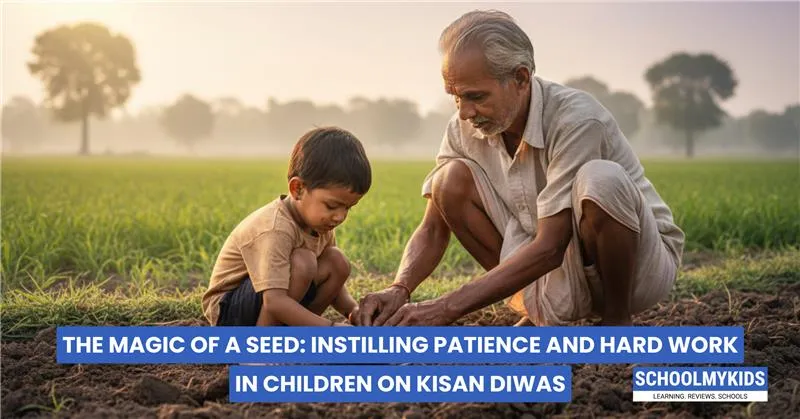
A child plants a tiny seed today, checks the pot every two hours asking, "Has it grown yet?", and by bedtime, declares it "broken" because nothing has appeared. This Kisan Diwas, celebrated on December 23rd to honor our farmers and the birth anniversary of Chaudhary Charan Singh, let's flip the script. Instead of another lecture about patience, let's give our children something real to watch, nurture, and wait for; something that teaches them what our farmers know by heart.
Why This Kisan Diwas Matters More Than Ever
Every year on December 23rd, India celebrates Kisan Diwas to honor farmers and commemorate Chaudhary Charan Singh, our fifth Prime Minister, who championed farmers' welfare from 1979 to 1980. But this day isn't just about honoring farmers; it's about understanding what makes them extraordinary.
Our farmers work with nature's timeline, not the instant gratification our kids are drowning in. They plant in hope, work through uncertainty, and harvest through sheer persistence. These aren't motivational poster quotes; this is their daily reality. And it's exactly what our children need to learn.
Why Most "Patience Building" Activities Fail
You've probably tried:
- Setting a timer and asking them to wait
- Making them earn screen time
- Long talks about "good things take time."
And it probably lasted a day, maybe two.
Children don't learn patience from being told to wait. They learn it from having something worth waiting for. Something they can check on, obsess over, and finally celebrate when it arrives. Something that connects them to the millions of farmers doing exactly this across India every single day.
The Seed Activity That Actually Works
Give each child one pot, some moong dal seeds, and this challenge. "Let's see whose seed grows taller by Republic Day."No lectures. Just seeds, soil, and a friendly competition.
For the first week, nothing will happen. Children will water dutifully, but keep asking when something will show up. Then one morning, a tiny green shoot will appear. The excitement will be genuine. Suddenly, they'll be checking twice or thrice daily, comparing growth, researching why one plant is growing faster.
By Republic Day, the plants will hopefully be thriving. But more importantly, those children will have spent 30 days learning to wait, work, and watch, without realising that they were learning.
How to Make This Work in Your Home (Even in a Small Apartment)
What You Need:
- One small pot per child (even a cut plastic bottle works)
- Soil (ask your building's gardener or buy a small bag)
- Fast-growing seeds: moong dal, methi seeds, or coriander
- A sunny spot; even a windowsill works
The Setup (takes 10 minutes):
- Let them pick their seeds: Take them to the local vegetable vendor. Let them see, touch, and choose. This ownership matters.
- Plant together, not for them: Show once, then let them do it. Messy hands? That's the point. This is how farmers work: hands in soil, connecting with the earth.
- Create a simple routine: Every morning before school, water the plant. That's it. No complicated schedules that you can't maintain.
- Make it visible: Keep the pot where they'll see it daily, not hidden away. Near the breakfast table works great.
The Kisan Diwas Connection: Make It Real
On December 23rd, while watering their plants, tell them this story:
Chaudhary Charan Singh came from a small farming family in Uttar Pradesh and went on to become India's fifth Prime Minister, implementing key policies for agricultural development and farmers' rights. He understood that farmers, known as 'Annadatas' or food providers, play a crucial role in building a self-reliant India.
But don't stop at history. Connect it to their plant:
"See this seed you planted? Farmers across India are planting lakhs of seeds right now. They don't know if there will be enough rain. They don't know if pests will come. But they plant anyway, water every day, and wait months, not days, for harvest. And because they do this, we have food on our table."
Then ask, "How many days have you been waiting for your plant? How do you think farmers wait for 90 days for wheat, or 120 days for rice?"Watch their perspective shift.
Beyond the Pot: Two More Ways to Build This Understanding
1. The Lunch Plate Game (Works During Meals)
Pick one item from their plate, say, rice. Ask: "How do you think this reached our plate?" Let them guess, then walk backwards:
- From our kitchen
- From the shop
- From the wholesale market
- From the mill
- From the farmer's field where someone planted, watered, and protected it for months
The lesson: Every grain represents someone's hard work and patience.
2. The Farmer Watching Activity (Weekend Plan)
If you have access to any farming area, even a small urban farm or a roadside vegetable patch, take them there. Just to observe.Watch together:
- How bent over the farmer works
- How carefully they tend each plant
- How early they start
On the way back, ask: "What did you notice?" Let them tell you. Their observations matter more than your explanations.
When Things Don't Go According to Plan (Because They Won't)
- Seed doesn't sprout: Perfect. Take them to the farmer's market again. Buy new seeds. Try again. Tell them: "Farmers deal with crop failure, too. They don't give up; they plant again next season. Let's do what they do."
- Child loses interest: Don't force it. But keep watering it yourself. When something finally grows, show them: "Look what patience did." Sometimes, watching someone else's patience pay off is the best teacher.
- Plant dies after growing: Absolutely okay. Discuss why; too much water? Not enough sun? Problem-solving is farming. It's life. Farmers don't always get it right either, but they learn and adapt.
The Bigger Picture: What You're Really Teaching
When your child waters that pot every morning, they're not just learning patience. They're learning:
- Consistency: Daily effort, even when nothing visible changes
- Delayed gratification: Working now for rewards that come later
- Resilience: Starting over when things fail
- Connection to nature: Understanding that growth has its own timeline
- Respect for farmers: Realizing that what farmers do is actual hard work, not just "a job"
These aren't lessons you can lecture into existence. They have to be lived, even in small ways.
The first Kisan Diwas was celebrated in 2001, but its spirit, honoring those who feed our nation, needs to live in our homes every day. Not through grand gestures, but through simple acts that help our children understand: food doesn't appear magically, patience isn't passive, and hard work means showing up consistently, even when results aren't immediate.
Conclusion
This Kisan Diwas, don't just honor farmers with words. Honor them by helping your children understand what makes them remarkable, and by giving them a tiny taste of that remarkable patience and hard work themselves.
Start with one seed. That's all any farmer ever starts with too.







Be the first one to comment on this story.