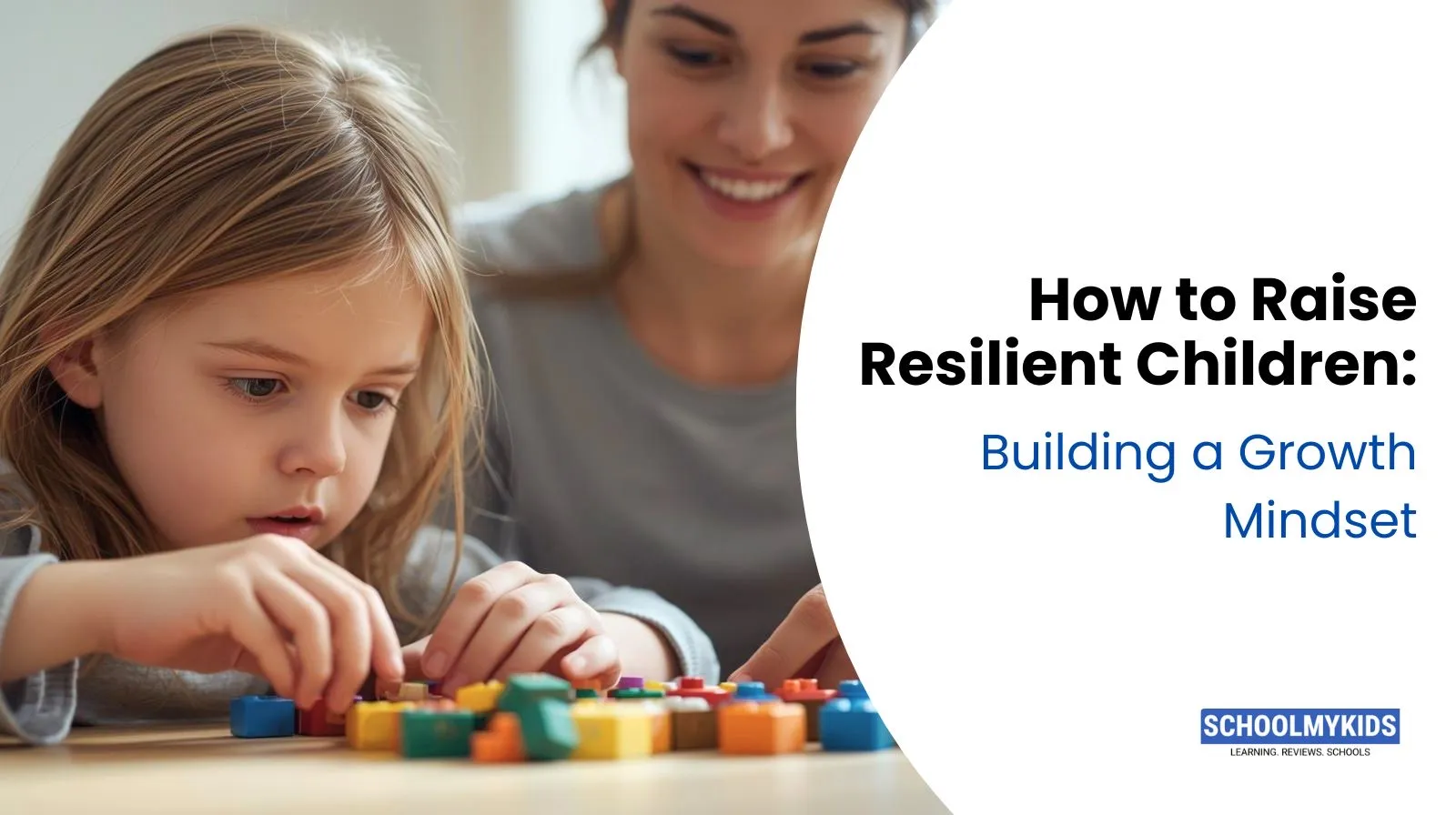
When your child faces a setback, do they bounce back quickly or struggle with disappointment? The ability to recover from challenges defines resilience, one of the most valuable life skills you can nurture. Building a growth mindset alongside resilience creates children who view obstacles as learning opportunities rather than failures.
This comprehensive guide explains how to raise resilient children using practical, evidence-based strategies that fit the realities of modern Indian family life.
What is Resilience and Why Does It Matter for Children?
Resilience is the capacity to recover from difficulties and adapt to change. Children with high levels of resilience handle academic pressures, social challenges, and family transitions more effectively. They develop persistence, problem-solving abilities, and emotional regulation skills essential for success in school and life.
In today’s competitive Indian education system, building resilience in children can support mental well-being, academic engagement, and healthy coping skills during periods of stress. Resilient children experience lower anxiety, better relationships, and stronger self-confidence.
Understanding Growth Mindset in Child Development
Growth mindset, a concept developed by psychologist Carol Dweck, refers to believing that abilities can be developed through effort and practice. Children with growth mindset view intelligence as flexible rather than fixed. They embrace challenges, learn from feedback, and persist through difficulty.
Contrast this with a fixed mindset, where children believe abilities are unchangeable. They avoid challenges, give up easily, and see effort as fruitless. In Indian households emphasizing achievement, instilling growth mindset becomes crucial for long-term child development.
What Do Resilient Children Typically Do Differently?
Resilient children are not fearless or unaffected by difficulties. They experience disappointment, frustration, and setbacks like everyone else. The difference is how they respond.
Many resilient children:
Recover more quickly after mistakes or failures
Ask for help when needed
Continue trying after encountering obstacles
Adapt to unexpected changes
Show confidence in learning new skills
Maintain supportive relationships with family and friends
Learn from feedback instead of viewing it as criticism
Parents should remember that resilience does not mean children never struggle emotionally. In fact, resilience often develops because children learn how to manage challenges rather than avoid them.
Physical Development and Building Resilient Bodies
Physical strength and body confidence contribute to overall resilience. Activities that challenge children physically build both competence and courage.
Encourage age-appropriate physical activities like sports, dance, martial arts, or outdoor play. These activities teach children that their bodies can improve through practice, directly supporting growth mindset development.
Sleep quality significantly impacts a child’s ability to bounce back from stress. Children aged 6-12 years generally need 9-12 hours of sleep per night, while teenagers aged 13-18 years need 8-10 hours. Consistent, adequate sleep supports emotional regulation, learning, attention, and stress management.
Nutrition matters too. A balanced diet supports brain development and mood stability, enabling children to handle challenges more effectively.
Cognitive Development Strategies for Resilience
Cognitive development involves how children think, learn, and problem-solve. To foster growth mindset through cognitive development, use these approaches:
Encourage curiosity: Ask open-ended questions. Instead of “What’s the answer?” ask “How did you figure that out?” This positions problem-solving as a process rather than a destination.
Teach metacognition: Help children understand their own thinking. Ask them to reflect on what strategies worked when they succeeded.
Break challenges into smaller steps: Large problems overwhelm children. Breaking goals into manageable parts teaches them that big challenges become manageable through persistence.
Model learning from mistakes: When you make errors, talk through them openly. Show your child that mistakes are information, not failures.
Social and Emotional Development for Stronger Resilience
How children manage emotions and relationships directly affects resilience. Social-emotional development involves self-awareness, relationship skills, and responsible decision-making.
Validate emotions without validating poor behavior: Say, “I see you’re frustrated. Let’s find a solution together,” rather than dismissing feelings or allowing disrespect.
Build a supportive community: Resilience grows within connected relationships. Encourage friendships, family time, and connections with mentors and teachers.
Teach emotion vocabulary: Children who can name their feelings manage them better. Use age-appropriate language like “frustrated,” “anxious,” or “disappointed” regularly.
Practice empathy: When children understand others’ perspectives, they build social skills and resilience through meaningful connections.
Building Resilience in the Indian Family Context
Indian children often grow up in closely connected family systems that provide strong emotional support. This can be a significant advantage for resilience development.
Parents can strengthen resilience by:
Encouraging children to express opinions respectfully
Allowing age-appropriate independence in daily decisions
Encouraging balanced routines that include sleep, play, physical activity, and family time
Celebrating improvement rather than only top performance
Involving grandparents and extended family members in positive mentoring relationships
Teaching children that setbacks in exams, competitions, or activities do not define their worth
When children feel valued for who they are rather than only for their achievements, they are more likely to develop lasting confidence and emotional strength.
Language Development and Resilience Building
Language skills enable children to express needs, ask for help, and learn from others. Strong communication supports resilience directly.
Encourage storytelling where children explain challenges they overcame. Narrate their efforts positively: “You kept trying even though it was hard.” This language reinforces growth mindset.
Reading stories about characters overcoming obstacles expands children’s understanding of resilience possibilities. Indian literature offers wonderful examples of perseverance and determination.
Common Parenting Habits That Can Reduce Resilience
Parents naturally want to protect their children from discomfort. However, some well-intentioned habits may unintentionally limit resilience development.
Examples include:
Solving every problem on a child's behalf
Avoiding all situations that might cause disappointment
Focusing only on results rather than effort and learning
Comparing children with siblings or classmates
Expecting perfection in academics, sports, or extracurricular activities
Shielding children from age-appropriate responsibilities
Children develop resilience when they experience manageable challenges while knowing they have supportive adults available when needed.
How to Raise Resilient Children: Practical Activities and Strategies
Here are five actionable strategies to implement immediately:
1. The Challenge-Practice-Success Cycle: Choose activities slightly beyond your child’s current ability. Provide guided practice, then celebrate improvement. This cycle builds competence and confidence.
2. Failure Festivals: Create a safe space to discuss past failures. Talk about how mistakes led to learning and growth. This destigmatizes failure and builds resilience.
3. Gratitude Practice: Daily gratitude shifts focus from problems to resources. Ask children what they’re grateful for, building a more positive and resilient outlook.
4. Problem-Solving Dialogues: When your child faces a problem, resist solving it immediately. Ask, “What have you already tried? What else could work?” This develops agency.
5. Growth Mindset Language: Replace “You’re smart” with “Your effort paid off.” Change “You can’t do this” to “You can’t do this yet.”
Child Development Milestones and Resilience Indicators
Age Group | Resilience Indicators | Growth Mindset Signs | Key Activities |
|---|---|---|---|
3-5 years | Separates from parents with comfort, attempts tasks independently | Tries again after failure, copies others’ efforts | Simple problem-solving, imaginative play |
6-8 years | Handles frustration with words, shows persistence in tasks | Asks how to improve, learns from peer examples | Team sports, skill-building projects |
9-12 years | Sets personal goals, seeks help appropriately | Embraces challenging problems, analyzes mistakes | Complex hobbies, leadership roles |
13+ years | Manages peer pressure, plans for future goals | Seeks feedback actively, takes calculated risks | Mentoring younger kids, goal planning |
Sleep, Nutrition, and Feeding Overview
Resilience depends on foundational health habits.
Sleep Impact: Sleep consolidates learning and emotional regulation. Sleep-deprived children show poor coping skills and increased emotional reactivity. Establish consistent bedtimes, limit screens one hour before sleep, and create dark, cool sleeping environments.
Nutrition Connection: A balanced diet with adequate protein, healthy fats, and complex carbohydrates supports brain function. Include omega-3-rich foods, whole grains, fruits, and vegetables. Hydration matters too; dehydration impairs cognitive function.
Feeding Approach: Family meals provide opportunities to discuss challenges, share successes, and strengthen bonds. These conversations naturally build resilience and growth mindset.
When to Seek Professional Help
Not every struggle requires professional intervention, but certain signs warrant specialist consultation.
Consider professional support if your child:
Shows persistent anxiety or sadness lasting weeks
Withdraws from activities previously enjoyed
Demonstrates aggressive behavior toward self or others
Expresses hopelessness or worthlessness
Shows dramatic changes in sleep or appetite
Struggles academically despite adequate ability and effort
Refuses school or shows extreme social anxiety
These signs indicate your child may benefit from support from a child psychologist, school counselor, or pediatrician. Early intervention provides tremendous benefit.
Frequently Asked Questions
1. What’s the difference between resilience and toughness in children?
Resilience involves flexibility and adaptation, while toughness implies rigidity. Resilient children acknowledge their feelings and find solutions. Tough children suppress emotions, which backfires long-term. Foster resilience, not toughness.
2. How does a growth mindset relate to academic performance?
Children with a growth mindset embrace challenging academics as learning opportunities. They persist through difficulty, use strategies flexibly, and see grades as feedback rather than judgments. Research suggests that a growth mindset can support academic achievement when it is combined with effective learning strategies, constructive feedback, and consistent effort. Simply encouraging children to "try harder" is usually not enough. Children benefit most when they are taught how to improve and given opportunities to practice new skills.
3. Can you develop resilience too late in childhood?
It’s never too late. Teenagers and pre-teens can learn resilience through consistent practice. However, foundational resilience built in early childhood creates stronger patterns. Start whenever you recognize the need.
4. How do I balance supporting my child with building resilience?
Support and resilience-building work together, not against each other. Offer unconditional love and acceptance (support) while allowing natural consequences and challenge-taking (resilience building). This balance matters.
5. What role does failure play in building growth mindset?
Failure provides essential information for learning. Without failure, children can’t discover that effort improves ability. Strategically allow age-appropriate failures, then help your child extract lessons. This develops genuine growth mindset.
6. Can overprotective parenting reduce resilience?
Yes. Children need opportunities to solve problems, make age-appropriate decisions, and experience manageable setbacks. When adults remove every challenge, children may struggle to develop confidence in their own abilities. Supportive guidance is important, but children also need chances to practice independence.
Key Takeaways for Raising Resilient Children
Resilience is learnable. Children aren’t born with fixed resilience levels; it develops through experience and coaching.
Growth mindset frames challenges as growth opportunities, not threats to ability.
Physical health, emotional validation, and social connection form resilience’s foundation.
Language matters. Praising effort builds resilience more effectively than praising intelligence.
Model resilience yourself. Children absorb your approach to challenges.
Professional support helps when children struggle significantly. Early intervention prevents deeper issues.
Conclusion
Learning how to raise resilient children while nurturing a growth mindset is one of the most valuable investments parents can make in a child's future. These qualities serve them through academic challenges, career transitions, relationships, and life’s inevitable difficulties.
Start small. Choose one strategy from this guide and implement it consistently. Notice the changes over weeks and months. As your child experiences success with challenges, learns from mistakes, and develops stronger emotional awareness, you’ll see resilience strengthening naturally.
Your consistent effort, patient guidance, and belief in your child’s ability to grow shapes not just their childhood, but their entire life trajectory.
Resilience develops over years through everyday experiences, supportive relationships, and repeated opportunities to overcome challenges. Parents should focus on steady progress rather than expecting immediate change.







Be the first one to comment on this story.