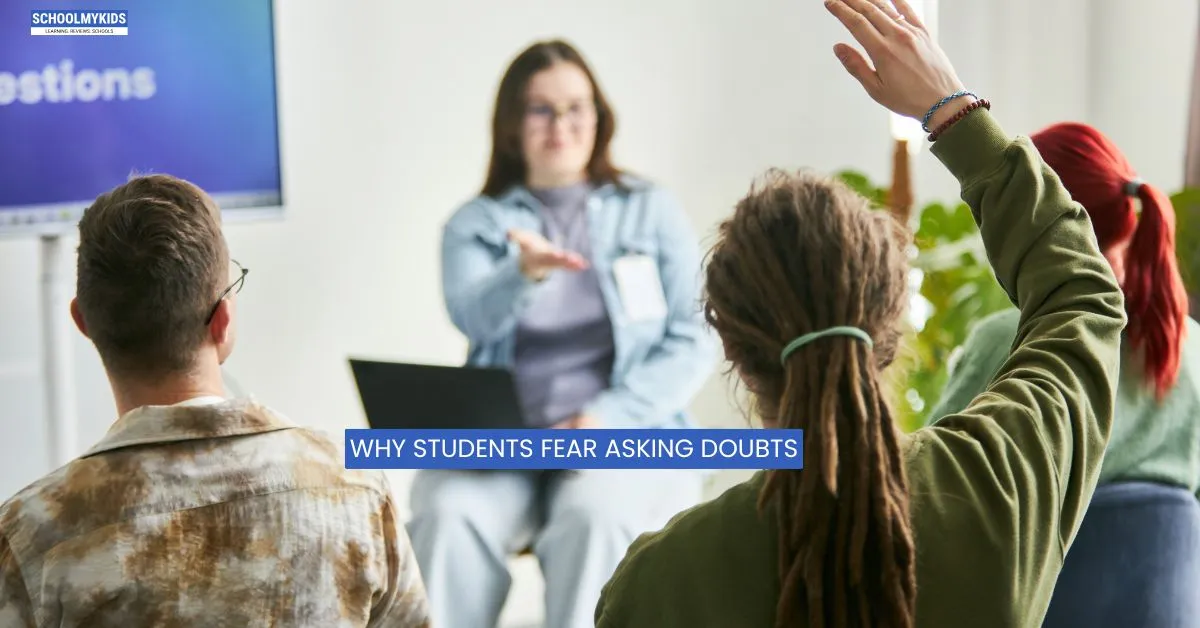
The Classroom Fear Nobody Names
Most students have doubts. Very few ask them.
This silence is often mistaken for understanding. Teachers move on. Parents assume things are fine. Marks may even look decent. But underneath, confusion quietly piles up.
Fear of asking doubts is not about shyness or lack of interest. It is a learned response. Students are trained, over years, to associate questions with risk.
How the Fear Begins Early
This fear does not suddenly appear in higher classes. It is built slowly.
Early Reactions Shape Long-Term Behavior
When a child asks a question and hears “You should know this” or “We already taught this,” something shifts. The message is subtle but clear: doubt equals weakness.
After a few such moments, students stop asking publicly. They decide it is safer to stay quiet than to be exposed.
Mistakes Become Embarrassing Instead of Educational
In many classrooms, wrong answers are corrected quickly but not kindly. Laughter, impatience, or visible disappointment from adults teaches students to avoid speaking unless they are sure.
Certainty becomes more important than curiosity.
The Role of Peer Judgment
Fear does not come only from teachers.
Classrooms Are Social Spaces
Students worry about how they look to classmates. Asking a “basic” doubt feels like announcing ignorance to the room.
Even high-performing students hesitate. They fear losing their image more than losing clarity.
Comparison Culture Makes It Worse
When students are constantly ranked and compared, doubts feel dangerous. If learning is a competition, questions feel like admitting weakness.
So students pretend to understand. Confusion becomes private.
Why Online Learning Did Not Fix This
One might expect digital classrooms to reduce fear. In many cases, they did the opposite.
Silence Is Easier Online
Muted microphones and switched-off cameras allow confusion to hide. Students disappear rather than engage.
Doubts Feel Permanent
Online questions feel recorded. Screenshots exist. Students fear asking something that might be remembered or shared.
So they wait. And waiting turns into avoidance.
The Cost of Unasked Doubts
This silence has real consequences.
Weak Foundations
Concepts build on each other. When doubts remain unresolved, future topics become harder. Students feel “suddenly bad” at subjects they once managed.
False Confidence and Sudden Failure
Students convince themselves they understand until exams expose the gaps. This creates shock and self-doubt.
They blame themselves instead of the silence that caused it.
Loss of Independent Thinking
When students stop questioning, learning becomes passive. They focus on copying, memorizing, and guessing what will be asked.
Thinking shrinks.
Why “Ask More Questions” Advice Doesn’t Work
Telling students to be confident ignores the environment they are in.
Fear is not removed by encouragement alone. It is removed by safety.
If a classroom punishes confusion even subtly, no motivational speech will fix it.
What Actually Helps Students Ask Doubts
Normalizing Confusion
When teachers openly say, “This is usually confusing,” or “Many students struggle here,” the pressure lifts. Students realize doubt is normal, not shameful.
Valuing Questions Over Answers
When good questions are praised more than quick answers, the classroom culture shifts. Students learn that thinking matters more than speed.
Multiple Channels for Doubts
Anonymous question boxes, written reflections, or one-on-one check-ins give students safer ways to ask without public exposure.
Slowing Down the Pace
Rushed teaching leaves no space for processing. When lessons allow pauses, students find the courage to speak.
What Parents Can Do Without Adding Pressure
Parents often say, “Why didn’t you ask?” without realizing the fear involved.
Better questions are:
- “Where did it start feeling unclear?”
- “What part felt uncomfortable to ask?”
Listening without judgment matters more than immediate solutions.
Rebuilding a Question-Friendly Culture
Students are naturally curious. Fear is taught, not innate.
When classrooms reward clarity instead of confidence, questions return. When mistakes are treated as part of learning, silence breaks.
Asking doubts is not a weakness. It is the beginning of understanding.
But students will only believe that when the system proves it.








Be the first one to comment on this story.